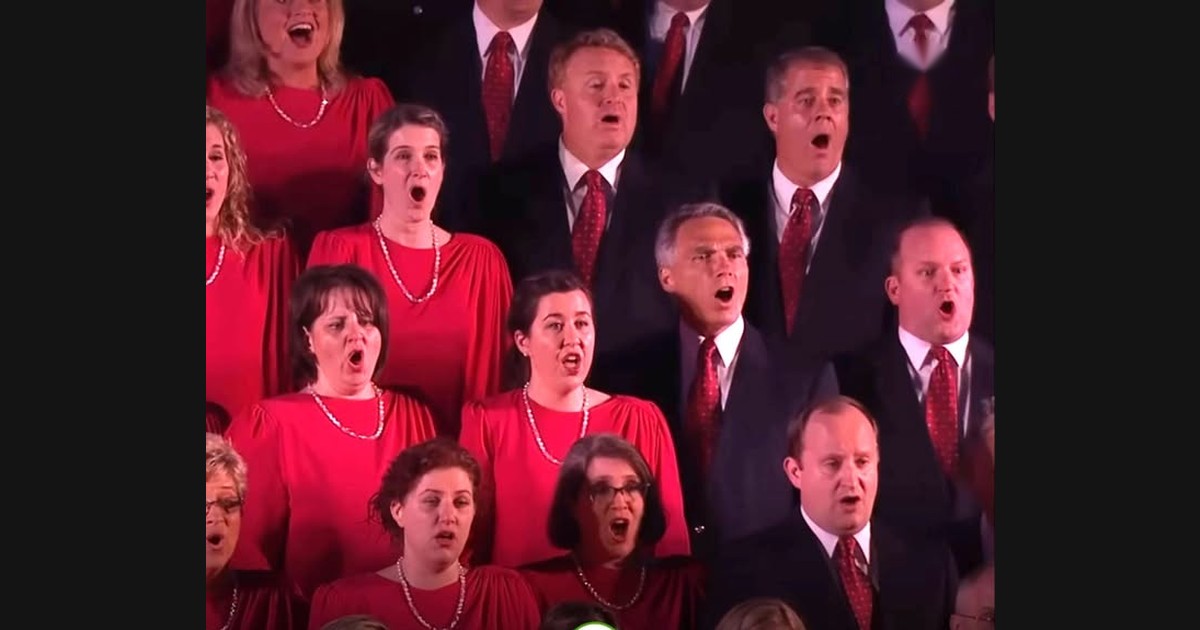
Battle Hymn of the Republic carries several histories at once: a familiar tune, Julia Ward Howe’s Civil War-era words and the arrangements through which later ensembles perform it. The Tabernacle Choir’s West Point recording is clearer when those layers remain visible.
The choir’s own description names the Orchestra at Temple Square strings and the United States Military Academy Band at West Point alongside the singers. It identifies Peter J. Wilhousky’s arrangement and places the performance in the Defending Independence special of Music and the Spoken Word, aired on 1 July 2018.
Watch on YouTube ↗
A familiar melody can acquire another text
The Library of Congress preserves the history of Howe writing her words in 1861 to a tune already circulating as John Brown’s Body. Her poem appeared in the Atlantic Monthly in February 1862. The melody and the text therefore do not begin at exactly the same point.
That is a useful distinction for many traditional and historical songs. Recognizing a tune does not establish that every version carries the same words, purpose or setting. Musical continuity can coexist with a significant change of address.
Howe’s text belongs to the Union side of the Civil War and its religiously expressed moral argument. A later ceremonial performance carries that history with it, even when its immediate occasion is an Independence Day programme.
An arranger shapes the performing version
The Wilhousky credit identifies another layer of work. An arrangement decides how a composition is distributed and developed for particular forces. A melody familiar enough to sing informally can require detailed decisions when presented by a large choir with instrumental support.
Those decisions concern more than volume. They can organize contrast, the relationship between statements and returns, and the route toward a final conclusion. The composition gives the material; the arrangement gives the performing ensemble a particular way to carry it.
The West Point description also makes the collaboration concrete. Choir, strings and military band are named participants rather than a single undifferentiated wall of sound. Their combined scale is one feature of the performance, alongside the structure that gives that scale direction.
Watch on YouTube ↗
The broadcast date belongs to the broadcast
The second upload returns to the West Point collaboration through another online presentation. The official listing gives an air date for the special. That is not automatically a claim about the exact day every part of the programme was recorded.
Keeping those dates separate avoids turning a July broadcast into an invented Independence Day concert date. The particular venue and documented programme already supply a strong context.
Watch on YouTube ↗
A returning work can serve different occasions
The final Tabernacle Choir selection supplies another presentation of the hymn. Its relationship to the first recording is shared repertoire, rather than evidence that every upload documents one continuous event.
Hearing the text, tune and arrangement as distinct contributions gives the music more depth. The West Point performance is one documented occasion in a longer history of words and melody being carried through changing communities and performing forces.


