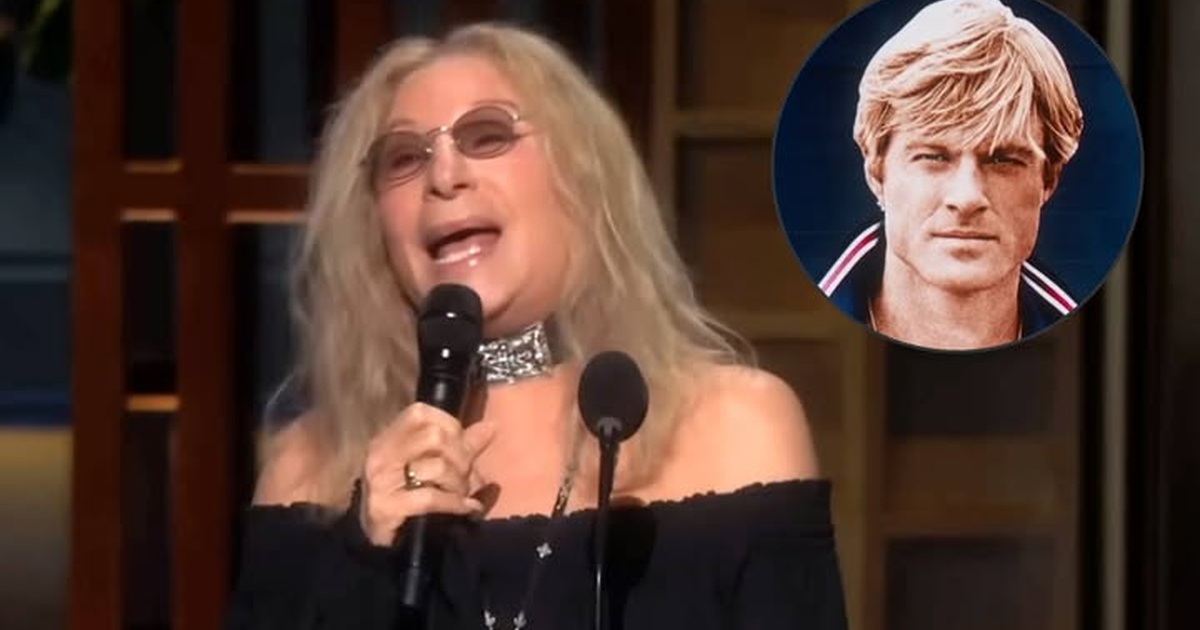
A song can complete a remembrance without becoming a full concert performance. Barbra Streisand’s tribute to Robert Redford at the 2026 Oscars works through that relationship. ABC’s account identifies a spoken remembrance followed by The Way We Were, connecting the musical ending with the film the two performers shared.
The song has music by Marvin Hamlisch and lyrics by Alan and Marilyn Bergman. Its association with the 1973 film gives the title a particular public resonance within the tribute. Authorship, screen partnership and later remembrance are connected layers, rather than the same event repeated.
The tribute as a complete structure
Watch on YouTube ↗
Speech and song do different kinds of work. A spoken remembrance can identify a person, a professional relationship or a shared experience. Familiar music can then carry recognition without requiring all that information to be stated again.
This makes the transition itself worth attention. The listener moves from hearing somebody speak about a subject to hearing material associated with that subject. The song’s earlier life becomes part of the present occasion.
That relationship does not require a claim about every private feeling behind the appearance. The public form is already specific: a colleague remembers a co-star, and a title song linked to their shared film extends the remembrance musically.
A quotation of repertoire is different from a complete rendition
When a song enters a tribute after speech, it can function as a concluding reference. Its job is not necessarily to develop the composition across every section. A short musical ending can rely on the audience’s recognition of a larger work.
Imagine the difference between a film title mentioned in a sentence and a scene replayed in full. Both can point toward the same creative history, but they use different amounts of material for different purposes. A musical reference can operate similarly without being incomplete as a tribute.
The full recording supplies another kind of continuity
Watch on YouTube ↗
Streisand’s official The Way We Were audio allows the composition to occupy its own frame. A listener can follow its complete musical development rather than approaching it mainly as the ending of a spoken appearance.
Compare the role of familiarity in the two settings. In the tribute, recognition connects the moment with a shared film history. In the recording, the arrangement has room to establish, repeat and develop its own material over the course of the song.
These purposes can coexist. The later tribute does not replace the original film association, and the recording does not explain every element of the later occasion. Each selection adds a different route into the repertoire.
A second song broadens the singer’s context
Watch on YouTube ↗
The official Woman in Love audio changes the composition while retaining Streisand’s featured vocal identity. It is related repertoire, not another part of the Redford tribute. Compare how the recorded arrangement organizes attention around the voice.
The three selections become clearer when their boundaries remain intact. The Oscars appearance joins speech and song around remembrance; the full title-song recording provides the composition separately; another recording broadens the picture of the singer. The tribute’s value lies in the relationship between its elements, rather than in pretending that a familiar song has only one public meaning.