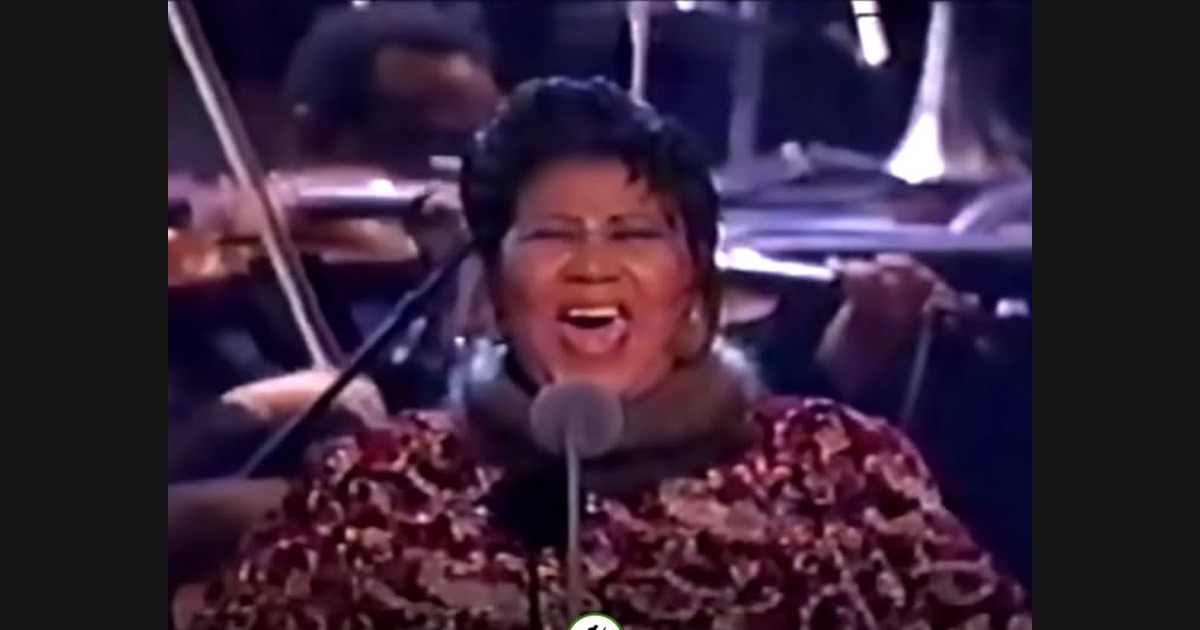
Aretha Franklin’s “Nessun dorma” at the 1998 GRAMMY Awards brings a familiar performer to music associated with another vocal tradition. The aria also belongs to a character inside an opera. Hearing those identities separately gives the performance more context than treating it only as an unexpected display of range.
The Recording Academy confirms that Franklin stepped in when Luciano Pavarotti could not perform. It also records that she had sung the aria at the MusiCares event two days earlier. The broadcast substitution was unexpected, but the music was not wholly unfamiliar to her.
Watch on YouTube ↗
Calaf is the voice inside the composition
“Nessun dorma” comes from Puccini’s Turandot. The Royal Opera describes it as the aria in which Calaf anticipates winning the princess’s hand. That expectation gives the music a dramatic direction beyond the reputation of a famous high note.
A concert excerpt separates the aria from the complete staged story. The singer still needs to make a musical statement understandable, but the audience may not have watched the circumstances that precede it. Knowledge of Calaf’s confidence provides one route into the work; following the melody’s developing arrival provides another.
Interpreter and character are not the same person
A singer does not have to share a character’s biography or circumstances to give the music direction. Interpretation depends on presenting the work coherently, not on making every line a literal account of the performer’s life.
This distinction is especially useful in a crossover appearance. Franklin’s public musical identity remains recognizable while she takes on material written within an operatic drama. The listener can acknowledge both without requiring her to erase herself through an imitation of the intended tenor.
Listen for the arc, not only the destination
For a focused pass, follow how a complete phrase creates expectation. Then consider what happens before the later, more expansive arrival. A destination matters because the music has given the listener a reason to move toward it.
This approach avoids turning the performance into a technical test administered from a video. The clip does not establish every detail of preparation, vocal method or recording conditions. Its musical shape can be examined without an unsupported account of those things.
Another kind of direct statement
Franklin’s official “Respect” lyric video provides a different dramatic reference within her repertoire. Its central address asks for recognition in a direct and recurring way.
Watch on YouTube ↗
Compare the kind of statement each composition offers. A character anticipating an outcome and a speaker making a demand can both be forceful, but the musical situations are not identical. The performer works with a different relationship between expectation and address.
Another interpreter at an honors occasion
Adam Lambert’s official “Believe” performance from the 41 st Kennedy Center Honors offers another example of a familiar work entering a ceremonial setting through a different singer.
Watch on YouTube ↗
The comparison is useful when it remains about interpretation rather than a ranking across genres. Franklin’s “Nessun dorma” retains its distinctive place because a documented concert substitution meets a clearly shaped dramatic work. Knowing the character behind the aria gives the famous occasion another dimension without reducing its music to the surprise surrounding it.