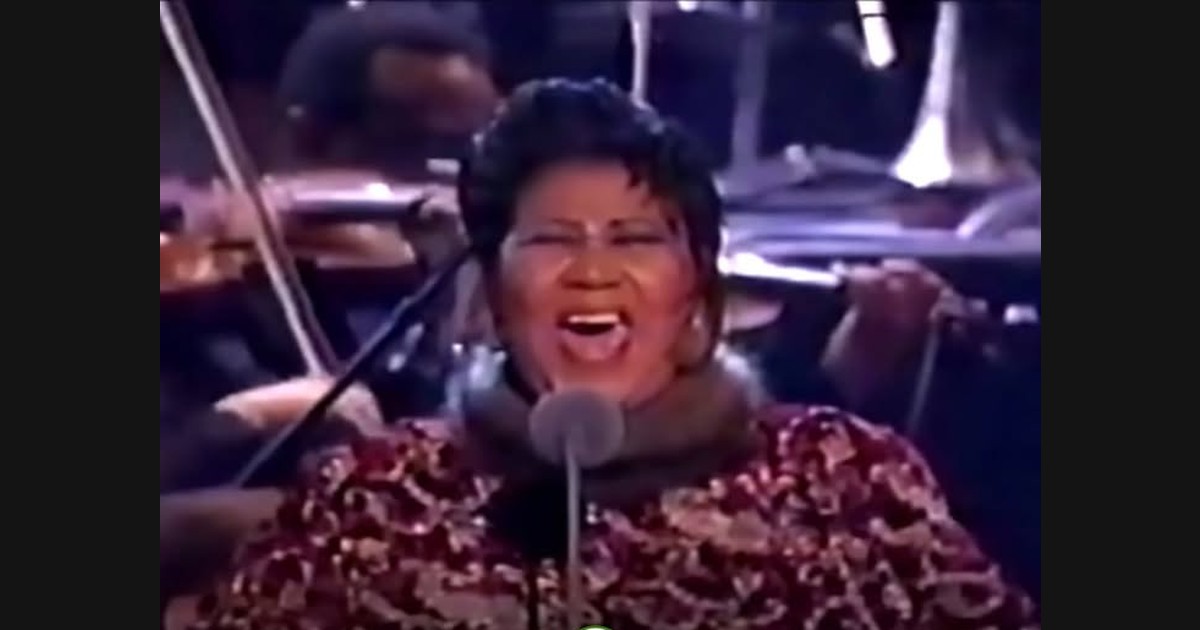
Aretha Franklin’s 1998 Grammy performance of Nessun dorma is remembered through the circumstances of a last-minute substitution. Another useful route into the material concerns the arrangement: how an operatic selection becomes a work another singer can carry in a different performance world.
The Recording Academy’s history confirms Franklin taking Luciano Pavarotti’s place at the fortieth Grammy ceremony. Its later award records also identify Rob Mounsey as arranger of a Franklin Nessun Dorma recording nominated in 1999. Performance history and arrangement credit illuminate different parts of the work’s public life.
Watch on YouTube ↗
An arranger is responsible for relationships
A composition provides material that can be realized in different ways. An arrangement makes decisions about musical forces, accompaniment and the connection between sections. It gives performers a particular route through an existing work.
That role is easy to overlook when a famous voice dominates the account. A singer’s expressive identity is central, but the musical setting around it helps determine how phrases can develop and where tension can be sustained or released.
The useful distinction is between changing a work and replacing its identity. A new arrangement can retain a recognizable melodic argument while finding another way to support it. Its purpose is not automatically to imitate the exact sound of a familiar operatic recording.
A television performance and a nominated recording are separate evidence
The 1999 category record names Mounsey in Best Instrumental Arrangement Accompanying Vocals. It is a nomination for the credited arrangement, not a claim that Franklin won that category or that the nomination itself identifies every sound heard in the 1998 television clip.
That boundary keeps the history precise. A recorded work, its live presentations and later releases can be connected without being assumed to be identical takes.
It also makes the contribution worth noticing on its own terms. Arrangement is creative work with a name attached, rather than a background fact included only to explain the lead performer’s achievement.
Watch on YouTube ↗
The complete line matters more than a substitution headline
The second upload revisits the Grammy appearance. Hearing a complete phrase gives the interpretation a musical scale beyond the story of a replacement being needed.
A phrase has an approach, a point of emphasis and a continuation. The voice and accompaniment have to make those relationships coherent. The memorable circumstances can explain why the moment attracted attention, while the performed work explains why it remains available for listening.
Watch on YouTube ↗
An award category helps identify the responsibility being recognized. Attention to that category restores the difference between a featured vocal performance and the instrumental framework created around it, allowing both contributions to be discussed precisely.
The official audio changes the listening frame
Franklin’s official Nessun Dorma audio supplies the work through an artist-channel presentation. Its description does not establish a new concert date, so it is best kept as a separate audio reference without inventing another occasion.
The wider account therefore includes several kinds of achievement: a singer interpreting established repertoire, musicians supporting a complete musical argument and a named arranger recognized for a recording. Restoring those distinctions gives the famous television moment a fuller musical context.


