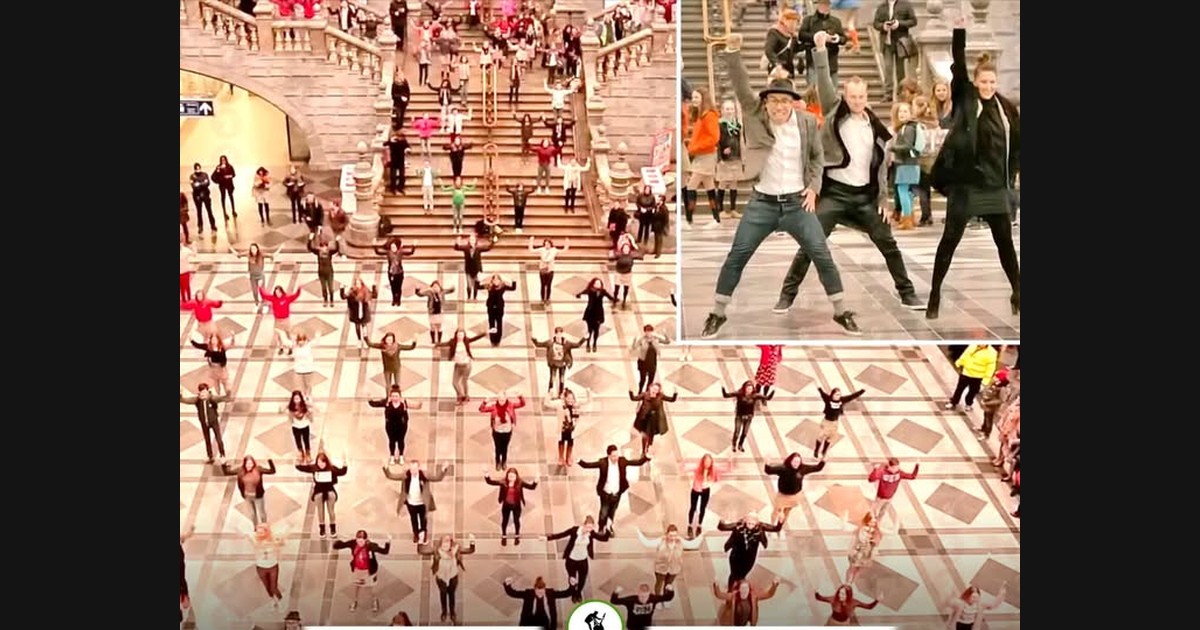
A theater tells an audience where to look before a performance starts. A railway station does something different: people arrive with destinations, routines, and competing reasons for paying attention. The Grease presentation at Antwerp Central uses that difference as part of its appeal. Recognition develops inside a place that already has another purpose.
Music Hall’s video identifies the production and location. The most useful way to approach it is as organized performance in a public setting, without assuming that every apparent passerby is an unprepared participant or that the camera has captured a wholly spontaneous event.
Watch on YouTube ↗
The reveal is part of the arrangement
In a conventional musical, an overture, lighting change, or entrance can announce the beginning. In a station presentation, the boundary between ordinary activity and a performance becomes material for the staging. A viewer tries to determine who belongs to the number and how far the organized action extends.
That makes recognition a separate process from hearing the song. Someone may recognize a melody before understanding the scene; another viewer may notice coordinated movement first. The performance can make those discoveries unfold together, which is a different pleasure from seeing a familiar number on an already designated stage.
Follow the use of space rather than searching for supposedly “real” reactions. Where does coordinated action become legible? How does the framing make a group appear connected? Which sightlines would differ for a person standing on the station floor? These questions concern the design available to viewers, not guesses about strangers’ feelings.
Another camera does not necessarily mean another event
Watch on YouTube ↗
The second Grease clip provides another view associated with Antwerp Central. Its value is perspective. A closer frame can emphasize individual movement; a wider one can make group patterns easier to understand. Camera placement also determines which transitions remain visible and which happen outside the frame.
Compare one recognizable passage across the two recordings if you can identify it confidently. Note how much surrounding space each includes and whether editing changes your sense of scale. Avoid counting the uploads as two separate productions merely because they have different publishers or titles.
The stage musical Grease is credited to Jim Jacobs and Warren Casey. Its stage and screen history should not be collapsed into a claim that every familiar film-associated song has the same authorship. Without identifying a medley’s individual selections, the production title is the clearest reliable reference.
Same station, another musical language
Watch on YouTube ↗
The Sound of Music station video supplies a related idea rather than another Grease chapter. Richard Rodgers and Oscar Hammerstein II’s musical belongs to a different work and repertoire. The shared station does not make the performances one event or give them a shared fictional setting.
Instead, compare how familiar musical material helps a public-space performance become recognizable. One setting can support very different associations, and the architecture remains constant while the chosen songs supply another frame of reference.
A useful final comparison has three headings: place, musical work, and camera viewpoint. Keep each observation under the right heading. The result explains why a station dance can feel distinctive without relying on inflated participant counts, invented crowd responses, or the assumption that coordinated entertainment somehow happened without preparation.


