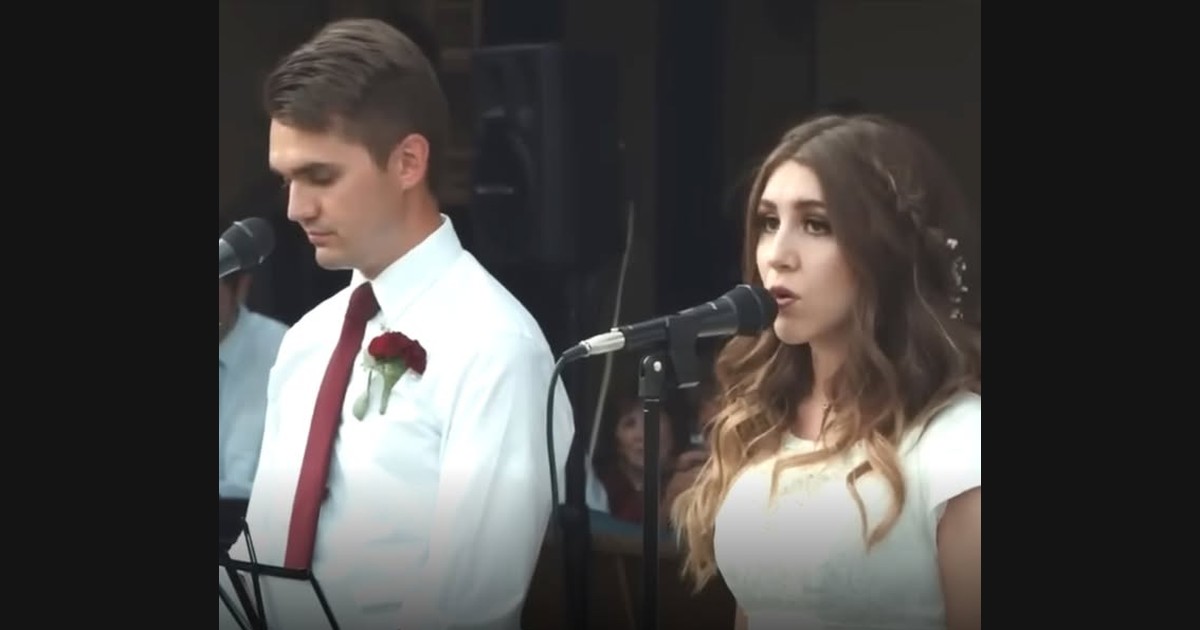
Anna Richey describes The Prayer as a song that gave her and her brother a shared musical language. Her account of singing it with Joseph Gibbons at her wedding is specific: they both loved music, but their tastes had not always provided an easy meeting place.
In her own upload, Richey contrasts her enthusiasm for Hannah Montana with her brother’s love of opera. Hearing The Prayer gave her a song she wanted them to perform together at the wedding. The choice was part of the meaning of the occasion.
Watch on YouTube ↗
A duet can accommodate difference
Common repertoire does not require identical musical backgrounds. A composition can give different voices separate responsibilities within the same overall shape, allowing each participant to bring something recognizable without making the performance disjointed.
That is a more useful idea than treating collaboration as one person adopting the other’s entire style. The shared task is smaller and more concrete: establish the same musical world, carry its phrases and make the relationship between parts intelligible.
Richey’s account gives those practical choices a personal reason. The song was not interchangeable with any other wedding favorite. It connected two approaches to music that the siblings already cared about.
The familiar recording is also a collaboration
Céline Dion’s official album history identifies The Prayer as her duet with Andrea Bocelli on These Are Special Times in 1998. That recording provides the well-known reference named in Richey’s title, while the wedding rendition belongs to different people and another occasion.
A cover can draw on that reference without requiring an imitation of every vocal quality. What matters is how the new performers make the composition’s shared address work together. The source artists’ identities provide context, not a set of biographies the wedding singers must reproduce.
The title also gives the song a clear mode of speech: an appeal for guidance and protection. A duet can make that appeal feel shared while each voice retains its own sound.
Watch on YouTube ↗
The next wedding gives the song another place
Prel and Jer’s own wedding upload credits Aura and Mel with performing the song during the ceremony’s pastoral prayer. Those are different named participants, and the programme placement is explicitly identified by that publisher.
This distinction is important when comparing wedding music. A song can be part of a ceremony in one video and a personally chosen family contribution in another. A shared title does not establish identical roles or arrangements.
Watch on YouTube ↗
A third recording is another ceremony
The final upload identifies The Prayer at J&V’s wedding in May 2010. It offers another example of the composition in use, rather than more footage of Richey and Gibbons.
The opening duet remains strongest when its own reason is preserved. Richey chose a work that could belong to both siblings and carried that choice into a specific family occasion. Their different musical tastes are part of the collaboration’s meaning, while the song gives those differences a workable meeting point.


