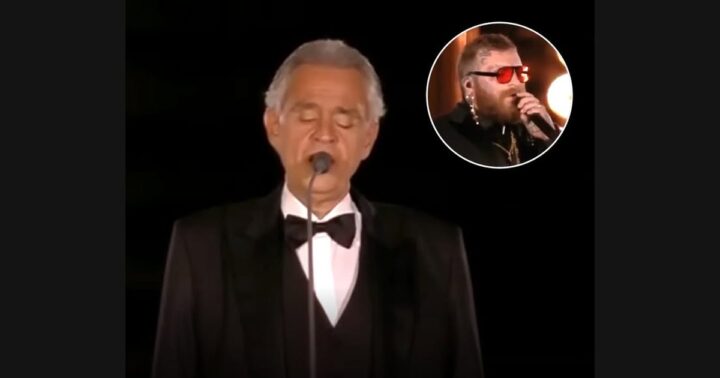
A song can remain closely associated with one singer while continuing to offer material to another. Andrea Bocelli’s Can’t Help Falling in Love selection is useful on those terms. His official upload identifies a 2006 performance at Lake Las Vegas Resort, placing the familiar song in a different vocal and concert setting from the Elvis Presley recording included below.
Association should not be confused with authorship. The Elvis catalogue credits Hugo Peretti, Luigi Creatore and George David Weiss as the song’s writers. A later interpretation engages with that composition as well as with the memory of recordings through which listeners may know it.
The Bocelli selection
Watch on YouTube ↗
A recognizable melody gives a new performance a stable reference. The singer can make choices about emphasis, continuity and the shape of an arrival without needing to disguise the tune. A cover does not become individual only when it changes something conspicuously.
Follow one complete musical sentence. Include the accompaniment before the vocal entrance, the line itself and whatever continues after it. That keeps the singer’s delivery connected to its setting rather than turning a sustained note into an isolated test.
Three things to keep separate
- Vocal color: the recognizable sound of the singer.
- Phrase shape: how a line begins, develops and comes to rest.
- Arrangement: the supporting material that gives the line its musical surroundings.
Two versions can differ in one of these areas while sharing another. Distinct vocal colors may follow a comparable melodic route; similar melodies may be supported by different textures. Keeping the categories separate makes the comparison more informative than simply saying one performance sounds bigger.
For example, accompaniment can continue gently through a vocal pause and preserve the direction of the song. In another version, a more exposed gap can make the next entrance feel like a fresh start. Those possibilities concern the relationship between parts rather than an assumed level of emotion.
The Elvis reference keeps the song constant
Watch on YouTube ↗
The official Elvis audio supplies a direct comparison because the composition remains the same. Listen for where the musical sentence seems to lean and where it feels settled. A difference in vocal identity is expected; the more revealing issue is how each performance organizes the route through a familiar melody.
There is no need to decide which singer owns the song. The history of a widely performed composition includes the possibility of several convincing approaches. A preference becomes more useful when it identifies a particular musical relationship.
A duet creates another kind of continuity
Watch on YouTube ↗
The official Bocelli and Sarah Brightman Time to Say Goodbye selection changes the song and introduces a second featured voice. The center of attention can now pass between singers or be shared. Compare that distribution with the concentrated solo role in the Lake Las Vegas selection.
The three clips show how repertoire travels through recognizable performers without becoming a single fixed delivery. The composition supplies a durable identity; a particular voice and arrangement give it a present form. Bocelli’s selection can be appreciated through that meeting, without needing an imitation contest or a claim that a familiar song has been transformed into something entirely unrelated.