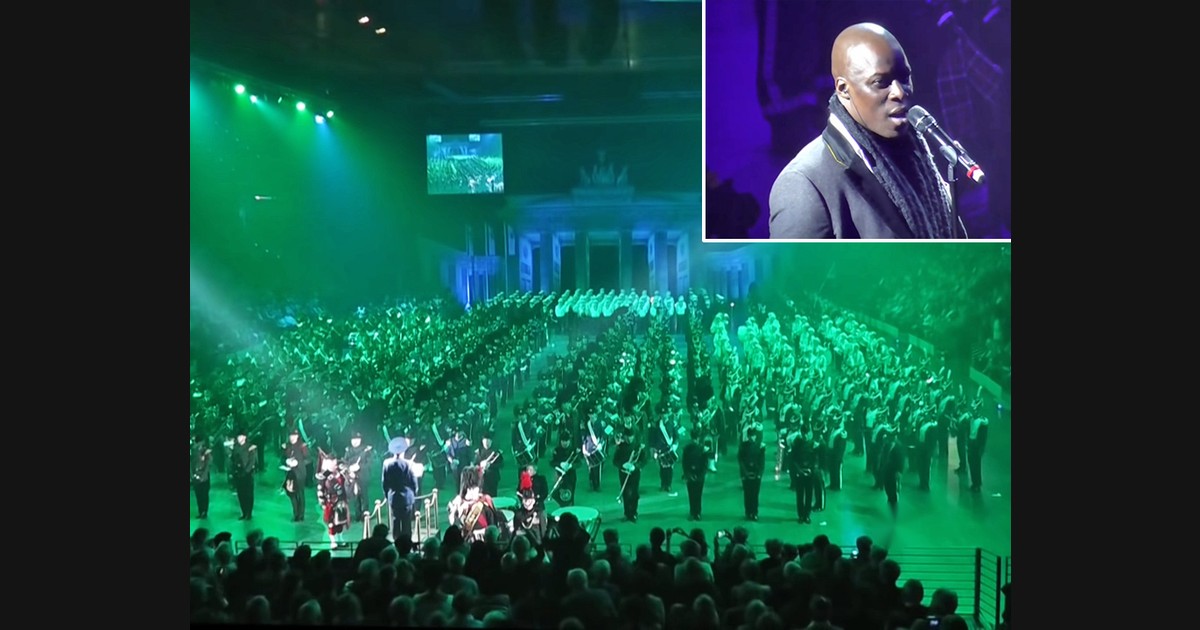
Jelle Boesveld’s Berlin Tattoo recording identifies Carl Ellis as vocalist, Ronnie Bromhead on bagpipe, and Sergey Raibitschuk as conductor. The conductor credit also distinguishes the coordination role from the individual vocal and instrumental contributions. Those credits give this “Amazing Grace” performance a specific ensemble identity rather than leaving it as an anonymous massed-pipes clip.
The large instrumental setting is one layer of the music. The hymn’s words, its familiar tune, and this particular arrangement have different histories. Keeping them separate makes the performance easier to place without assuming that its present sound has always accompanied the text.
Watch on YouTube ↗
The words came first
The Library of Congress documents the first printing of John Newton’s hymn text in Olney Hymns in 1779. The words were published without the melody now most widely associated with them.
The same institutional timeline identifies William Walker’s Southern Harmony of 1835 as the earliest pairing of the text with the “New Britain” tune. That supplies a clear distinction: the date of a text’s publication is not automatically the date of its familiar musical setting.
It also prevents an instrumental association from becoming an origin claim. Hearing a hymn with bagpipes does not establish that the words began as a Scottish bagpipe composition. A later arrangement can create a strong association without rewriting the earlier publication history.
The arrangement adds another set of decisions
A tune and text do not specify every resource needed for a large concert presentation. Decisions remain about who carries a passage, where other parts enter, and how the performance moves between individual and collective sound.
The Berlin recording’s credited singer supplies one kind of musical focus; the participating ensembles supply others. Follow the relationship rather than treating the number of instruments as a complete explanation of the effect.
For example, a familiar melody can remain the point of recognition while its surrounding texture changes. An individual statement and a combined instrumental passage can therefore belong to the same arrangement without doing the same job.
Use a three-layer listening note
| Layer | What to identify |
|---|---|
| Text | The hymn associated with Newton |
| Tune | The familiar New Britain musical setting |
| Arrangement | The distribution among this performance’s credited participants |
You do not need to share a particular religious belief to distinguish those musical and historical layers. The hymn’s devotional identity can be acknowledged accurately while leaving the listener’s own response open.
A second Berlin presentation
Watch on YouTube ↗
Boesveld’s related upload is labeled Berlin Tattoo 2015. Keep that label attached to the release; do not infer that the main video’s later publication date identifies another concert. A video page and a performance occasion are separate records.
Another ensemble keeps the hymn
Watch on YouTube ↗
André Rieu’s official “Amazing Grace” selection retains the hymn while changing the credited performing context. Compare how a passage is distributed rather than deciding that one instrumentation is its only authentic form.
The useful result is a longer view of a familiar piece: a published text, a later familiar tune, and continuing arrangements for different ensembles. The Berlin performance belongs to that ongoing musical life, with its own named participants and concert setting.