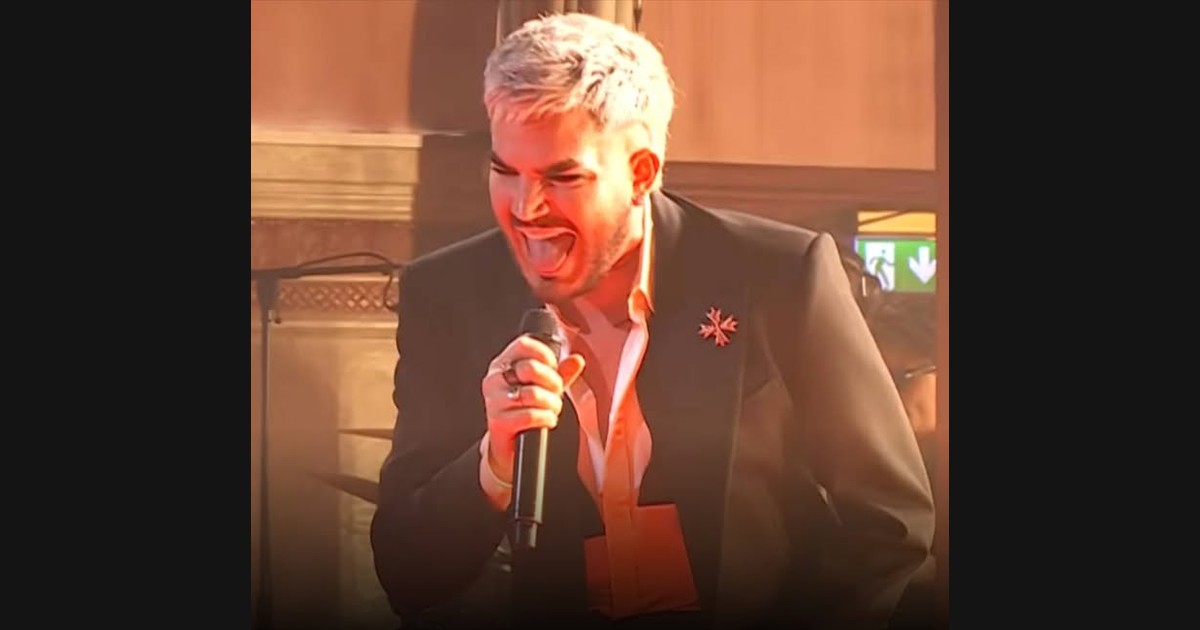
Adam Lambert’s “Who Wants to Live Forever” at the 2025 Polar Music Prize is a performance inside an occasion honoring Queen. The event’s official information places it at Stockholm’s Grand Hôtel on May 27, with Queen among the year’s laureates. Lambert appears among the performers presenting music in their honor.
The Swedish Royal House confirms that Brian May and Roger Taylor represented Queen at the award presentation. That context matters: Lambert’s selection is part of a public recognition of the band, not an audition to establish whether he can sing its repertoire.
Watch on YouTube ↗
A tribute needs a musical point of view
A ceremonial program has a larger subject than a regular set by one performer. Each selection contributes to the portrait of the artist or tradition being recognized. A song can show one aspect of a catalog without attempting to summarize everything that catalog contains.
“Who Wants to Live Forever” offers a useful focus on a sustained vocal line and a composition’s larger arc. Listen to the relationship between a phrase and the space around it. The musical effect depends on preparation and return as well as on any single prominent note.
Recognition without impersonation
Interpreting a Queen song does not require making the featured singer indistinguishable from Freddie Mercury. The composition can remain recognizable while another performer carries it through a different voice. That relationship is especially relevant in a tribute, where acknowledging the source and contributing an interpretation are both part of the task.
A listener can therefore compare choices rather than rank identities. How does a passage establish a point of arrival? What keeps attention moving through a longer line? These questions give the performance a musical subject beyond the impossible demand that one artist become another.
Queen’s own live presentation
The next selection is Queen’s official “Who Wants to Live Forever” video labelled live in Budapest. It provides a reference from the band itself while retaining the composition. It is another live performance, not a studio template against which every later rendition must be measured note for note.
Watch on YouTube ↗
The change in occasion is important as well. A band concert and a laureate ceremony ask a song to occupy different places in a program. A recording can emphasize those places through its introductions, surrounding repertoire, and presentation even when an individual online excerpt leaves some context outside the frame.
Another song within the tribute
The final official Polar Music Prize video presents Lambert singing “Another One Bites the Dust.” This keeps the event and featured performer steady while changing the composition. The pairing shows why a tribute program can benefit from more than one kind of musical movement.
Watch on YouTube ↗
A recurring groove and a long vocal arc direct attention differently. Rather than deciding which song demands more commitment, consider how each establishes continuity and how Lambert’s role changes with the material. Different songs can represent different capacities within the same honored catalog.
The three recordings make the event’s purpose clearer: one interpreter within a ceremony, the band’s own presentation of the same song, and a contrasting selection from the ceremony. Lambert’s performance becomes one contribution to a musical portrait of Queen, with its identity anchored in the actual 2025 occasion.


