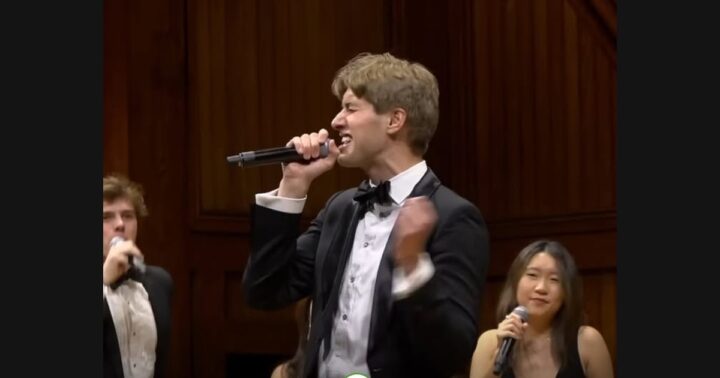
A tribute to Queen can reveal the range within the band’s songwriting rather than present one uniform idea of its sound. Adam Lambert’s 2025 Polar Music Prize selections offer that contrast directly. The first video here is Another One Bites the Dust; Who Wants to Live Forever follows as a separate selection.
Queen received the 2025 Polar Music Prize in Stockholm, with Brian May and Roger Taylor attending the ceremony. The prize’s own account emphasizes the classic band’s four songwriting contributors. John Deacon’s authorship of Another One Bites the Dust is a useful example: a repertoire associated with one famous lead voice was built through several creative identities.
A recurring groove as the organizing idea
Watch on YouTube ↗
A groove gives a performance a continuing reference through repeated rhythmic relationships. A featured voice can enter, leave space or change emphasis while that framework maintains the movement. Repetition is not the absence of development; it establishes a recognizable setting against which smaller changes become easier to hear.
For a focused pass, follow the recurring instrumental idea separately from the vocal line. Then bring them together again. The voice can sit with the pulse, press against it or let the accompaniment carry a gap. Those relationships are a more useful subject than treating the singer as the only source of energy.
A ballad changes the central responsibility
Watch on YouTube ↗
Who Wants to Live Forever presents a different task. Longer vocal phrases can place attention on continuity, arrival and the changing support around a melody. The song should not be assessed as though it were another version of the preceding groove-centered selection.
Imagine comparing two kinds of motion: a recurring pattern that keeps returning beneath new phrases, and a melodic line that seems to carry the listener toward a distant arrival. Neither excludes rhythm or melody. The distinction concerns which relationship takes the clearest organizing role.
This makes the two selections a useful miniature introduction to repertoire programming. Contrast can give an artist room to demonstrate different responsibilities without requiring every song to reach the same kind of climax.
The Queen performance is another reference, not a measuring stick
Watch on YouTube ↗
Queen’s official Budapest Who Wants to Live Forever selection keeps the composition constant while changing the performers and occasion. Compare the shape of a full phrase and its accompaniment. A difference in vocal identity is expected; the more informative issue is how each performance makes the song’s direction clear.
A tribute interpretation does not need to impersonate a previous singer to acknowledge the composition. It can preserve recognizable relationships while finding a delivery suited to the person performing it.
Lambert as a duet partner
Watch on YouTube ↗
The final Girl Crush selection with Leona Lewis changes the assignment again. A duet requires the central voice to be shared, creating entrances, exchanges and overlaps. Compare that partnership with the more concentrated featured role in the two Queen selections.
The sequence therefore offers more than four opportunities to hear a familiar singer. It moves through three performance tasks: working within a repeated groove, sustaining a ballad’s larger line and making space for a second lead voice. Keeping those tasks distinct lets the breadth of the repertoire remain audible instead of flattening every selection into the same test of vocal power.