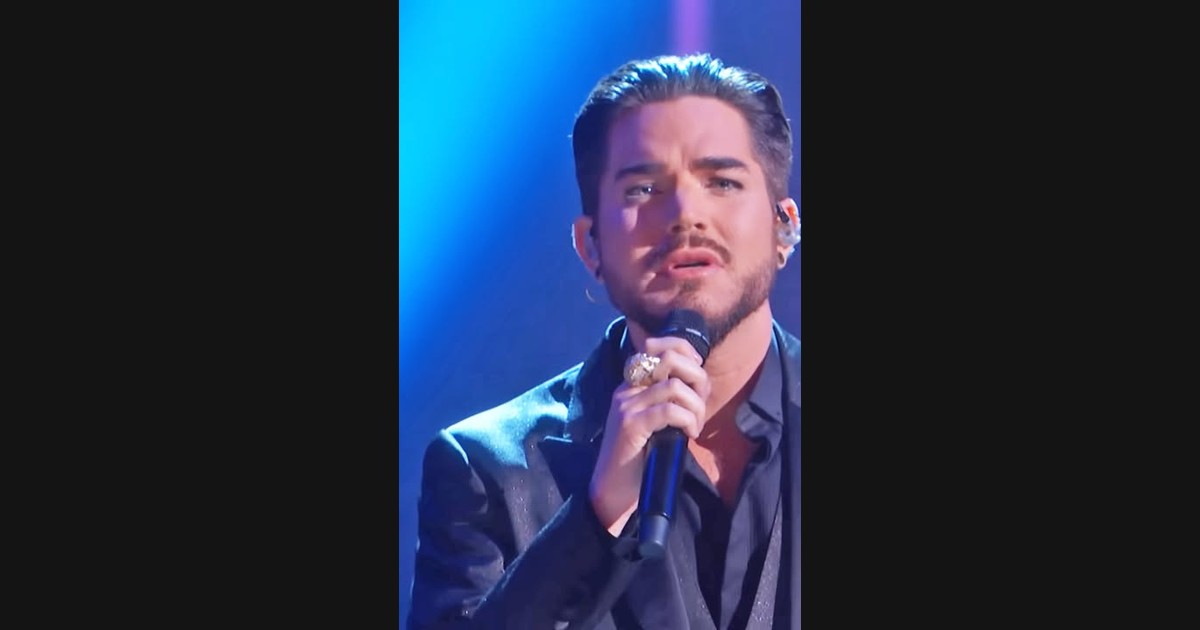
Adam Lambert’s “Believe” performance at the 41st Kennedy Center Honors can be heard as one example of a larger creative practice: choosing existing repertoire and finding a distinct way to present it. The tribute acknowledges Cher, while Lambert supplies a present interpretation rather than an attempt to become the original recording’s performer.
That practice later became the explicit basis of High Drama, his 2023 covers album. BMG’s release announcement identifies a varied selection including “Ordinary World,” “Holding Out for a Hero,” “Chandelier,” and “Getting Older.” The album provides useful context for the interpreter’s role, although it is a separate project from the Kennedy Center appearance.
A cover has more than one creative decision
The first decision is selection. Choosing a song establishes a relationship with an earlier performer, a songwriter, or a particular repertoire tradition. The next decisions concern its new presentation: accompaniment, vocal approach, pacing, and the scale of the arrangement.
Watch on YouTube ↗
Those choices need not change the composition’s identity to matter. A recognizable song gives the listener a reference against which differences become audible. Interpretation works through the relationship between what is retained and what is newly emphasized.
It is therefore useful to avoid a simple imitation test. A cover can acknowledge the artist associated with a song without reproducing that artist’s vocal color. Equally, sounding different is not automatically evidence of a completely new arrangement; some aspects may remain familiar while others shift.
The later album makes the method explicit
BMG identifies Lambert as executive producer of High Drama, alongside several producers working on the album. That credit places him within a collaborative recording project, not merely in front of a microphone after all decisions have been made elsewhere.
The record’s breadth is also relevant. Songs associated with different artists and periods can be brought into one performer’s album because the organizing connection becomes the interpreter. The catalog does not have to share one original genre or decade to become part of a coherent new selection.
The Cher video preserves the earlier reference
Cher’s official “Believe” video supplies the direct repertoire connection. Compare its presentation with the tribute as two ways of framing the same song. The question is what Lambert chooses to foreground, not whether one recording cancels the other.
Watch on YouTube ↗
For a concrete description, identify one retained feature and one changed relationship. The melodic identity may remain recognizable while the accompaniment directs attention differently. That is a more informative account of interpretation than simply calling a cover more powerful.
The audition clip belongs to a different task
The final selection is Lambert’s “Bohemian Rhapsody” audition footage. It changes both song and situation. An audition excerpt demonstrates an artist within a selection process; the Kennedy Center contribution serves a tribute program; a covers album is a planned catalog release.
Watch on YouTube ↗
| Context | Primary performing task |
|---|---|
| Audition | Present a convincing sample within the format. |
| Tribute | Interpret repertoire connected with an honoree. |
| Covers album | Build a sustained recorded project around selected songs. |
The comparison reveals continuity without pretending the occasions are identical. Lambert’s use of familiar repertoire travels through different professional settings. “Believe” remains a specific tribute performance, and its broader interest is the creative work an interpreter can do with a song already known through someone else.


