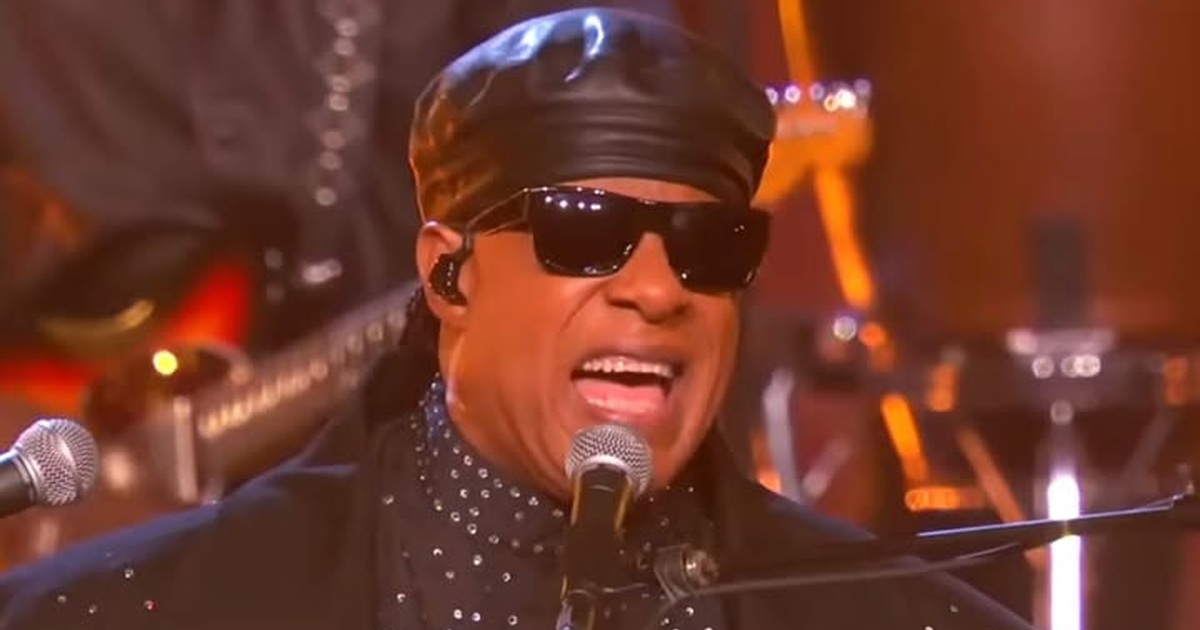
A tribute can honor a musical legacy by putting it into circulation between performers. The Rock & Roll Hall of Fame’s 2025 Sly Stone selection, presented on its official channel with Stevie Wonder and Jennifer Hudson named in the title, invites that kind of attention. The central question is what a collaboration can make clear about music first associated with another ensemble.
One date distinction matters immediately. Sly and the Family Stone were inducted into the Rock Hall in 1993, by George Clinton. The 2025 performance is a later tribute, not the group’s first induction. Keeping those occasions separate lets the newer gathering function as a return to a repertoire rather than a misleading new origin story.
The official Rock Hall tribute
Watch on YouTube ↗
Follow a musical responsibility across the stage
The Rock Hall’s history presents Sly and the Family Stone as a group identity, naming musicians including Sly, Freddie and Rose Stone, Cynthia Robinson, Jerry Martini, Larry Graham and Greg Errico. A tribute featuring several artists can be considered in that ensemble context, rather than only as a sequence of recognizable celebrity appearances.
Choose one responsibility to follow through the performance: carrying a lead phrase, maintaining a pulse or answering a musical idea. Who appears to hold it, and when does your attention move? You do not need to presume that the same person or instrument will remain central throughout.
This approach also makes transitions worth hearing. A new lead voice may change the character of a passage even while other material continues. Ask what makes that change feel connected. Is there a shared musical idea, a continuing rhythmic foundation or a clear pause that announces a new part? The answer explains a collaboration more precisely than a list of performers alone.
Preservation and interpretation are different aims
A tribute is not required to recreate the balance of a studio recording exactly. Its occasion brings different voices together, and the relationship between them becomes part of the meaning. Conversely, a familiar song title does not make every musical choice interchangeable. Listen for what keeps the repertoire identifiable as the interpreters change.
A useful two-column note separates continuity from difference. Under continuity, name one feature that helps you recognize the material. Under difference, describe one relationship created by the new performers. Keep the notes musical: a contrast of voices or a handoff is more informative than assuming a performer felt a particular emotion.
That distinction leaves room for disagreement. You may prefer the clarity of a single original recording or the possibilities of a shared tribute. Either response becomes more useful when you can identify what the format contributes, rather than treating the event’s prestige as the explanation.
A performer becomes the subject of a salute
The next clip changes Wonder’s place in the frame. The upload identifies Lady Gaga performing I Wish at a Grammy salute to Stevie Wonder. Compare the direction of the acknowledgment: an artist participating in the Sly Stone tribute is now the musician whose repertoire another singer interprets.
Listen for how recognition works when the performer and the song’s familiar musical identity are different sources of interest. Does your attention begin with the singer, then move toward the composition, or travel the other way?
Watch on YouTube ↗
A different audience frame
The final selection places Wonder’s Superstition in a Sesame Street setting, as identified by the upload. Compare the task of establishing a musical idea here with the task of representing it at a tribute event. What needs to be introduced, and what can the performance assume its audience already recognizes?
Watch on YouTube ↗
The three selections connect through repertoire and musical exchange, not through a claim that every audience responded alike. Returning to the Sly Stone tribute with those distinctions in mind makes the collaboration its subject: familiar material passed between artists, each working within a particular occasion.