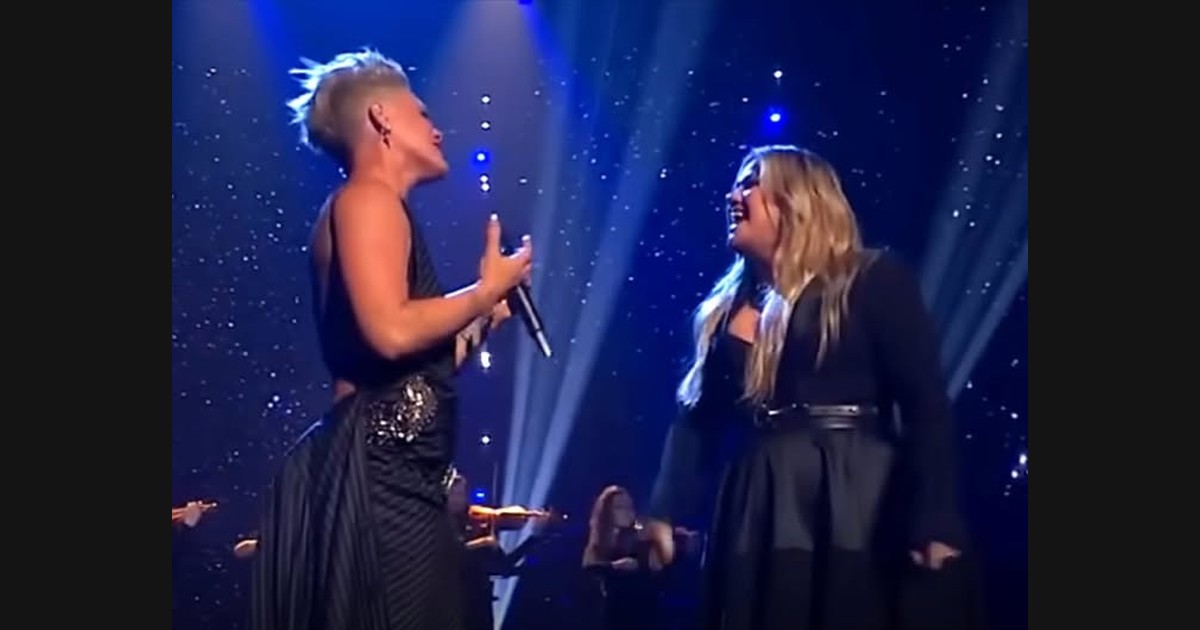
Kelly Clarkson and P!nk’s “Just Give Me a Reason” at the 2023 iHeartRadio Music Awards can be heard as a meeting between two singers. It can also reopen a question posed by the album that introduced the song: how many different forms can persistence take?
On P!nk’s 2012 album The Truth About Love, “Try” immediately precedes “Just Give Me a Reason.” The latter’s album credit features Nate Ruess. Those neighboring selections provide a useful frame for the three live presentations here, connecting a later duet to a wider set of songs rather than treating it as an isolated vocal event.
Watch on YouTube ↗
A conversation has more than one position
The title “Just Give Me a Reason” describes a request. A request needs someone to hear it, even before a second singer answers. That makes the composition particularly suited to comparing the relationship between musical statement and response.
Clarkson’s appearance formed part of the ceremony’s tribute to P!nk, who received its Icon Award. P!nk joined her in the performance. The occasion supplies an additional relationship outside the song: one artist honors another through the honoree’s repertoire. It does not make the song’s narrator a literal account of either singer’s private life.
For a focused listen, separate three functions: introducing a thought, answering it, and returning to material together. These functions do not always correspond permanently to a single singer. A duet can shift the balance as a section develops, allowing the same melodic idea to carry a different implication when it is shared.
A second live version holds the composition steady
The next selection is a P!nk live recording of “Just Give Me a Reason.” It keeps the song in place while changing the performance reference. Its embedded title does not identify enough context to assign the recording an unverified date or duet partner.
Watch on YouTube ↗
Use the second version to test one precise impression from the first. If a return seemed particularly conclusive, compare the corresponding return here. Think about the space before it, the weight placed on its beginning, and the duration of the phrase’s ending. That gives the comparison a subject beyond which rendition feels bigger.
Changing the presentation may alter the impression of a conversation without changing its underlying tension. A listener can hear uncertainty as something the song sustains, rather than a problem that every vocal flourish must solve.
Why the neighboring song matters
“Try,” presented in the final selection from The Truth About Love live in Los Angeles, changes the comparison. It is another composition from the same album, so the useful question becomes one of repertoire rather than version.
Watch on YouTube ↗
The two titles suggest different actions: asking for a reason and continuing to try. That is an interpretive starting point, not a claim that both songs describe the same people or tell a continuous factual story. Hear how each turns its central premise into a recurring musical destination.
Album order makes these songs neighbors; a live program can place them in different surroundings. Hearing both keeps P!nk’s songwriting world in view while leaving room for Clarkson’s contribution to the later tribute. A familiar duet becomes a route back into the album’s variety instead of a substitute for it.


