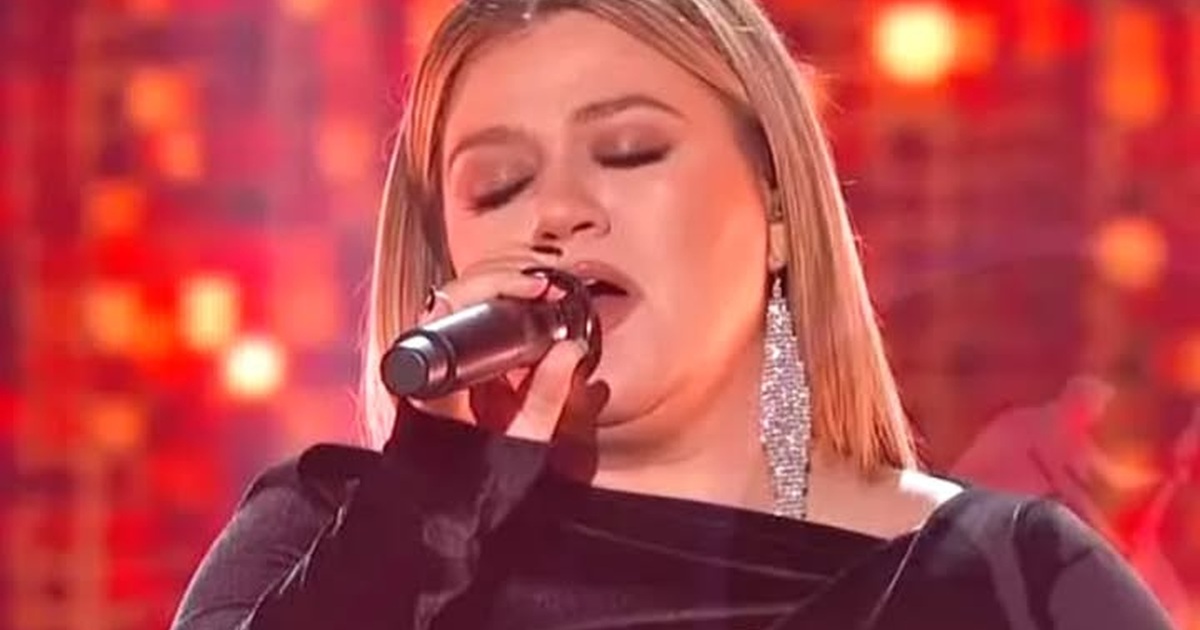
Kelly Clarkson’s “I Will Always Love You” at the 57th Academy of Country Music Awards had an explicitly named subject: Dolly Parton. The ACM’s announcement described a tribute to the ceremony’s host, scheduled for March 7, 2022, in Las Vegas. That is the original context of the performance, rather than a memorial occasion inferred from a later viewer’s encounter.
The selection honors Parton through a song she wrote. Its enormous association with Whitney Houston does not change that authorship. The three recordings here make the distinction useful: Clarkson’s tribute, Parton’s own presentation, and Houston’s interpretation.
Watch on YouTube ↗
The writer can be the tribute’s center
A song may become strongly identified with a recording made after the writer’s version. Recognizing the later interpreter and preserving the earlier writing credit are compatible. A tribute can acknowledge both without confusing their contributions.
Parton’s official catalog includes “I Will Always Love You” on Jolene, released in 1974. Her account connects it with a professional goodbye to Porter Wagoner. That history complicates the automatic assumption that every performance must be a literal romantic confession.
A song can carry a broader farewell
The relationship between gratitude and departure gives the composition a durable premise. Continuing affection and a decision to leave do not have to cancel one another out. A singer has to sustain that relationship through phrasing rather than simply choose between happiness and sadness as a fixed category.
For a close listen, follow how a complete statement develops from its beginning to its ending. Consider the room left around the line and how returning material changes the sense of resolution. That provides a musical subject beyond a comparison of vocal force.
The narrator also remains distinct from the performer. Clarkson can communicate a farewell without asking the audience to identify a specific person in her private life. A song’s established history supplies context, while each interpretation can still be heard as a complete performance.
Return to Parton’s own recording
The official Parton audio keeps the composition and its writer together. It offers a reference for hearing the musical address before moving toward another strongly associated version.
Watch on YouTube ↗
Do not treat difference in scale as a simple hierarchy. A more restrained presentation and a more expansive one can both make a song understandable through different choices. The useful comparison names the relationship between vocal line, accompaniment, and the points of return.
Houston’s recording has its own identity
The final selection is Houston’s official video. It changes the featured singer and presentation while retaining Parton’s composition. The song’s later recording life becomes visible here without being mistaken for the origin of the work.
Watch on YouTube ↗
A listener who first knew the song through Houston may bring that version as the principal reference to Clarkson’s tribute. Another listener may begin with Parton. Neither starting point needs to erase the other, provided the credits remain clear.
The ACM appearance can therefore be appreciated on several levels: a featured vocal performance, a contribution to a specific 2022 ceremony, and recognition of a songwriter whose work supports different interpretations. Keeping those levels together makes the tribute more informative than a contest to decide which voice owns the song.


