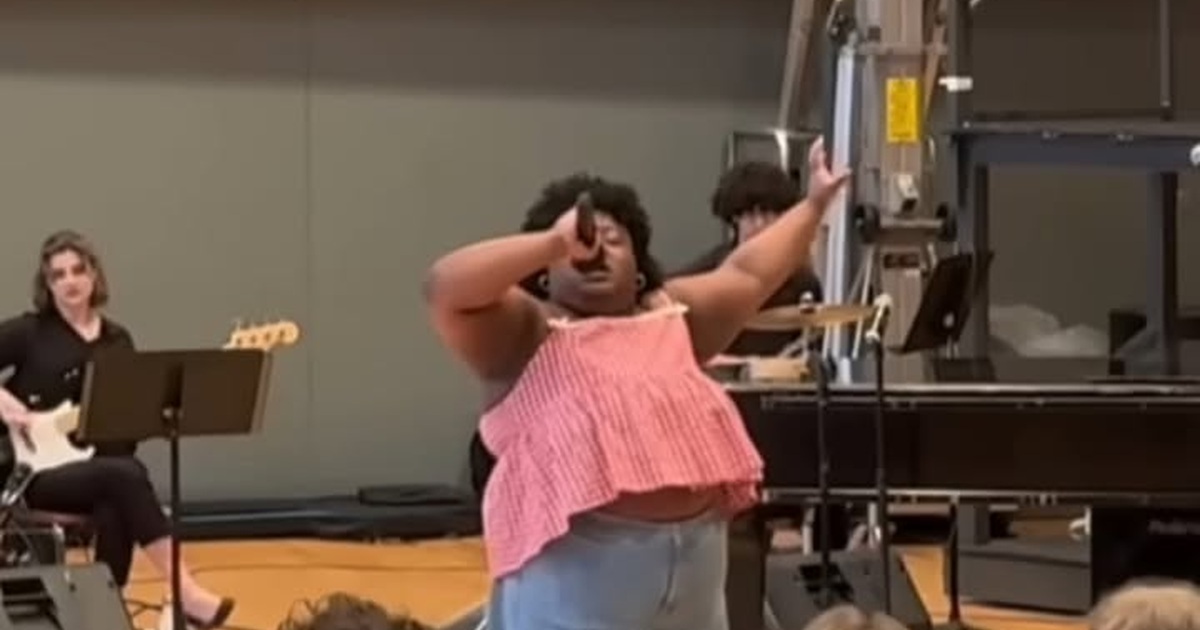
A memorable vocal performance can make the musicians around it seem like background. Erin Morton’s version of Creep offers a reason to reverse that habit. The University of Cincinnati identifies the performance as part of its College-Conservatory of Music’s annual Jam Band event, with Morton singing alongside a student ensemble. This was a collaborative musical project before it became a widely shared clip.
The university’s April 2025 account credits Professor Sarah Folsom and student Jacob Priddy with music arrangement and direction. Those names help locate the interpretation: a familiar Radiohead song has been prepared for a particular performer and group. It is more useful to follow that shared work than to explain the performance as an unexplained discovery of talent.
The CCM performance
Watch on YouTube ↗
Put the accompaniment back into the picture
Begin by following the song’s melody, then deliberately move your attention away from it for one short passage. What keeps the passage moving when you stop treating the singer as the only source of expression? You might notice a pulse, a sustained background or a change in instrumental activity. Describe what you actually find rather than expecting a particular instrument to do the work.
Then bring the voice back into focus. Is the accompaniment reinforcing the sung phrase, leaving space around it, or providing a contrasting shape? These relationships make an arrangement specific. Calling a version more emotional does not explain which musical decisions allow that response.
Distinguish the lyric’s speaker from the performer
Creep gives a singer a dramatic position involving distance, self-consciousness and the desire to belong. Performing that material does not establish a singer’s private history. Morton’s musical-theatre setting makes it especially useful to consider interpretation as the work of carrying a voice through a dramatic situation.
Choose a recurring phrase and compare its first appearance with a later return. Has your understanding changed because of the intervening music? Does a phrase feel more exposed, more insistent or simply different? The useful observation identifies a relationship within the performance, rather than treating a strong delivery as a personal confession.
For a compact record, write two sentences: one about the voice and one about the ensemble. If both sentences describe only size or power, listen again for timing, spacing or the way a phrase begins. That gives you a more precise account of the collaboration without requiring technical vocabulary.
A public invitation changes the frame
The second clip comes from guitaro5000’s public singing format. Its title foregrounds a participant’s statement about not being a professional singer. Set that introduction aside when comparing the music: how much does the introductory story shape what you expect before the singing starts?
The relevant contrast with CCM is the performance framework. A prepared ensemble project and an open invitation give the singer and accompanist different starting conditions. Listen for how each establishes a shared pace and how the partnership accommodates the vocal line.
Watch on YouTube ↗
Return to Radiohead
The final upload identifies Radiohead performing Creep at Glastonbury in 2017. Use the band’s version to check what you regard as essential to the song. Is recognition tied to its melody, its changes of section or a remembered instrumental sound? Then return to Morton and identify one element the arrangement preserves and one relationship it asks you to reconsider.
Watch on YouTube ↗
Morton’s performance need not replace the band’s recording or compete with another cover to reward attention. The ensemble credits point toward a more particular achievement: performers and arrangers making a known composition work within their own musical setting. Listening beyond the featured voice makes that work easier to describe.


