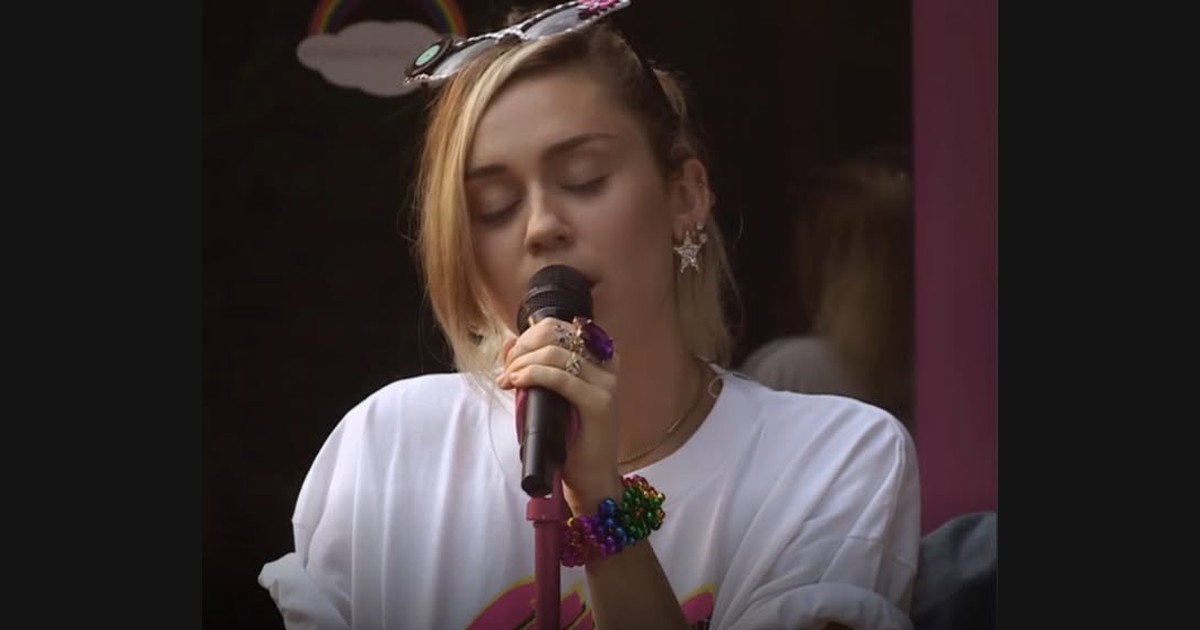
A familiar version can become a doorway into a song without being its origin. The BBC identifies Miley Cyrus’s The First Time Ever I Saw Your Face through Roberta Flack’s repertoire. Peggy Seeger’s own account supplies an earlier relationship: Ewan MacColl wrote the song for her.
In an interview republished on Seeger’s site, she describes needing a short love song for a Los Angeles show and receiving it from MacColl over the telephone. That is a concrete making history behind material that later reached listeners through very different artists.
Cyrus’s Live Lounge interpretation
Watch on YouTube ↗
A particular origin can support many later addresses
A song written for one person does not have to remain usable only by that person. Its words and musical relationships can create a situation another interpreter can inhabit. The origin remains part of the history without becoming a restriction on every future performance.
Seeger’s own discussion recognizes that openness. Her account treats the composition as something that can be addressed within different relationships. That perspective makes the song’s journey more specific than a simple claim that its meaning is universal.
Something can begin in a particular exchange, then become available through the form it takes. A later singer undertakes the existing composition rather than needing to reproduce the exact circumstances that brought it into being.
A remembered encounter is not necessarily a confession
The title organizes the song around recollection. A first encounter is revisited from another point in time, giving the speaker both an earlier experience and a present act of remembering.
That structure supplies an interpreter with a dramatic task. The singer connects a recollected moment with the person now addressing it. The piece can therefore be carried as a complete statement without establishing a factual record of the singer’s own relationship.
This distinction allows personal response without invented biography. Listeners can connect the writing with their own memories while the performance remains an interpretation of material with another documented origin.
A broadcaster’s format need not mean its own building
The BBC description locates Cyrus’s performance at Rainbowland Studios in Malibu for Radio 1’s Live Lounge. The studio and the broadcast format are connected but different credits. It would be inaccurate to assume that the series name alone places every appearance inside a BBC studio.
That context gives this rendition its own production frame, alongside the much older writing history. Neither fact needs to determine every musical response.
Another tribute repertoire choice
The next recording identifies Cyrus performing Man of Constant Sorrow in a George Clooney tribute. A different composition establishes another speaker and occasion rather than continuing the same remembered encounter.
Watch on YouTube ↗
A vocal partnership changes the company
The final official Cyrus upload presents Don’t Dream It’s Over with Ariana Grande for Happy Hippie. It adds another way existing writing can enter new company.
Watch on YouTube ↗
Seeger, Flack and Cyrus occupy different places in the first song’s history. Keeping those places visible gives the familiar cover a deeper context: a piece made within one relationship continues through other voices without losing the account of how it began.


