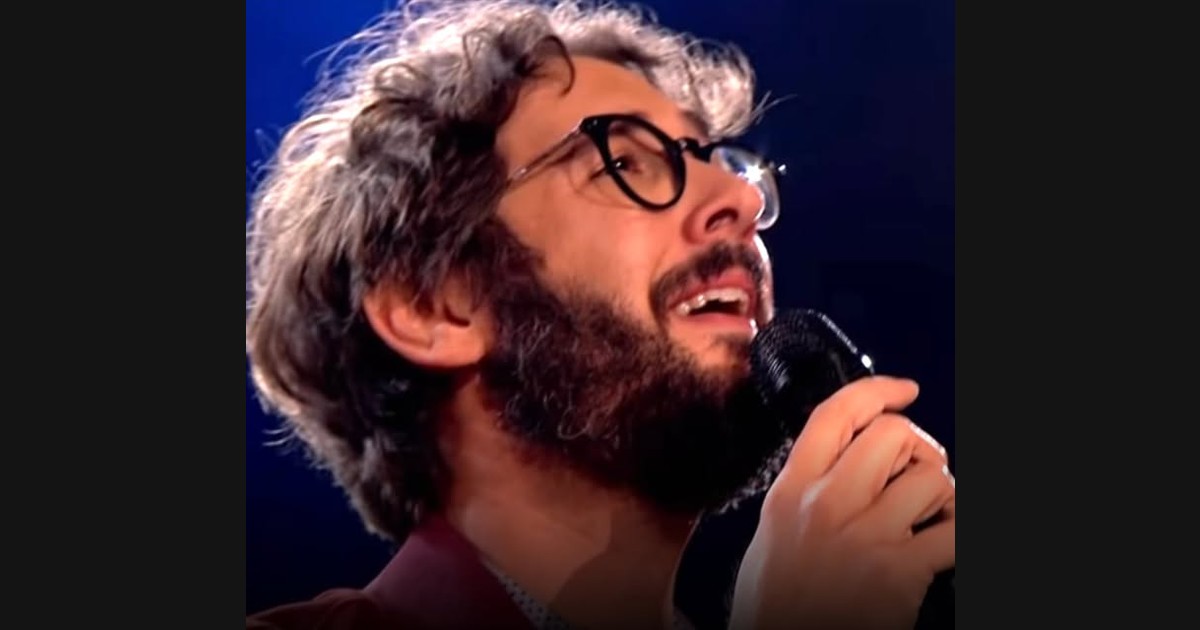
The credits for Josh Groban’s Hyde Park You Raise Me Up identify more than a singer at a large event. BBC Music names the BBC Concert Orchestra and Rock Choir alongside him. Those are three performing resources with different possibilities, rather than a soloist and an unspecified background.
The broadcaster places the recording in its 2018 Radio 2 Last Night of the Proms celebrations. That establishes the event frame. The ensemble credits supply a more practical question: how can an individual voice, instrumental players and collective voices contribute to one coherent piece?
The Hyde Park performance
Watch on YouTube ↗
Foreground is a role, not a permanent property
A voice can carry sung language while other parts sustain musical direction around it. That makes the voice a likely focus without rendering everything else inactive. Supporting work can remain essential even when it draws less immediate attention.
The distinction is useful because visual prominence and musical responsibility need not match. A familiar lead performer draws attention before the first phrase, while an ensemble can supply reference points that make a phrase understandable over time.
| Credited resource | A role to follow |
|---|---|
| Lead singer | The continuity and direction of the sung address |
| Orchestra | The instrumental frame connecting and supporting material |
| Choir | The possibility of a collective vocal statement |
These are listening categories, not a transcription assigning every note. The particular arrangement can distribute responsibilities in more detailed ways. The credits identify who participates; attentive viewing can clarify what each contribution does.
Collective voices are not simply an audience count
A named choir is a performing participant. It should not automatically be described as the crowd joining in merely because many people are visible. Those are different relationships with the piece, and a short caption cannot settle every distinction between them.
Collective singing also offers more than increased volume. A line carried by several voices can change the scale of an address. The music can become a statement undertaken together, while still retaining a lead part and an instrumental frame.
Understanding that possibility makes the support practical as well as thematic. A song can acknowledge support in its writing while performers actually support one another through shared musical work. The two ideas connect without becoming identical.
A different composition in a BBC presentation
The next recording is Groban’s The Impossible Dream for Radio 2. It offers another repertoire task rather than proof that every personnel detail from Hyde Park remains the same.
Watch on YouTube ↗
Carry the distinction between foreground and support into the comparison, but allow the new publication to establish its own credited frame.
A duet changes the vocal relationship
The final official selection is All I Ask of You from Stages Live. A vocal partnership creates another way for an address to be shared, distinct from the large collective possibility supplied by a choir.
Watch on YouTube ↗
The playlist becomes clearer when support is treated as work rather than as a vague atmosphere. Groban, the orchestra and Rock Choir are named participants in the Hyde Park item. Following their possible responsibilities gives the recording a concrete musical structure beyond the fact that many people took part.


