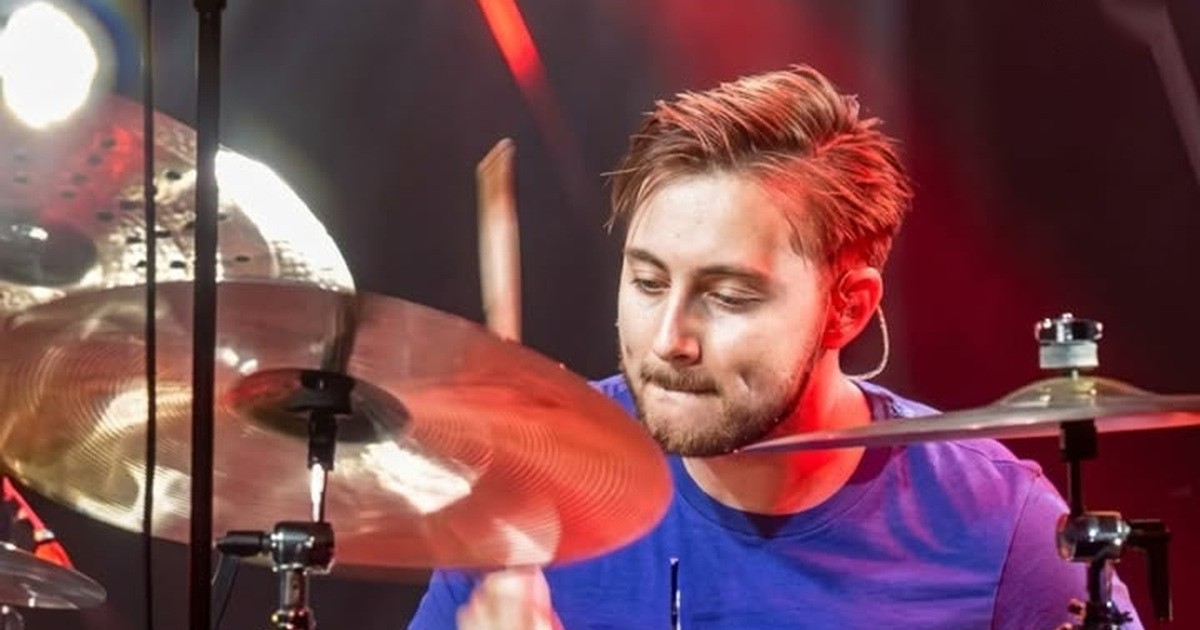
A drum solo changes an instrument’s assignment. Instead of being heard mainly in relation to a sung melody or another featured part, the drums must give listeners a sequence with its own direction. Nic Collins’s concert selection with Mike + The Mechanics is a useful setting for considering that change.
The uploader identifies De Montfort Hall in Leicester on April 22, 2023, during the Refueled! tour. That is the publisher’s event label. Drumeo’s separate presentation supplies another kind of record: a lesson organized around named Genesis material and musical examples.
The Leicester solo
Watch on YouTube ↗
A solo needs reference points
Activity alone does not create form. A listener benefits from something that can be recognized, changed or returned to. A short pattern can supply such a reference without requiring the audience to remember every individual stroke.
The pattern’s return may become meaningful because something around it changes. Density can increase or decrease; attention can move across the instrument; a pause can make the next action more consequential. These are resources for following a solo, rather than a claim that a particular event occurs at an invented timestamp.
The useful distinction is between an event and a relationship. An event attracts attention. A relationship explains why it belongs before or after something else. A complete solo gives the two levels a sequence.
Family identity is context, not musical form
Drumeo identifies Nic as Phil Collins’s son and documents his work with Genesis, Mike + The Mechanics and his own projects. The relationship explains one route through which listeners may recognize his name. It cannot explain the actual direction of a solo.
Following the work therefore requires a second kind of attention. A surname supplies a biographical connection; the performance supplies musical choices. Both facts can remain present without treating ability as something established by family identity alone.
A lesson isolates material for another purpose
Drumeo’s The Grooves of Genesis includes performance sections and exercises connected with titles such as Behind the Lines, The Cinema Show and Los Endos. Its chapter structure makes the educational purpose explicit.
Watch on YouTube ↗
A lesson can stop to explain something that a concert carries forward. Separating a pattern from its surroundings can help a learner understand it, but the extracted example is not the whole musical statement. Performance and explanation provide complementary access.
The chapter labels also should not be transferred onto the Leicester clip as if they identify its exact sequence. They belong to a different presentation with a different task.
Another date on the tour
The final uploader identifies a drum solo at The Globe in Stockton-on-Tees on April 13, 2023. It provides another concert reference rather than another camera angle automatically assigned to Leicester.
Watch on YouTube ↗
The set moves between complete statement, isolated explanation and another statement in the same broad touring context. That gives the listener more than a family introduction or a speed demonstration. A solo can be followed through recognizable references and changes, while a lesson makes some of the underlying musical work available in another form.


