A song can outlast the arrangement and circumstances in which listeners first encountered it. James Taylor’s performance of You Can Close Your Eyes with his son Henry makes that possibility unusually concrete. The song belongs to James’ earlier recorded work; the shared performance gives it another voice and another relationship through which to be heard.
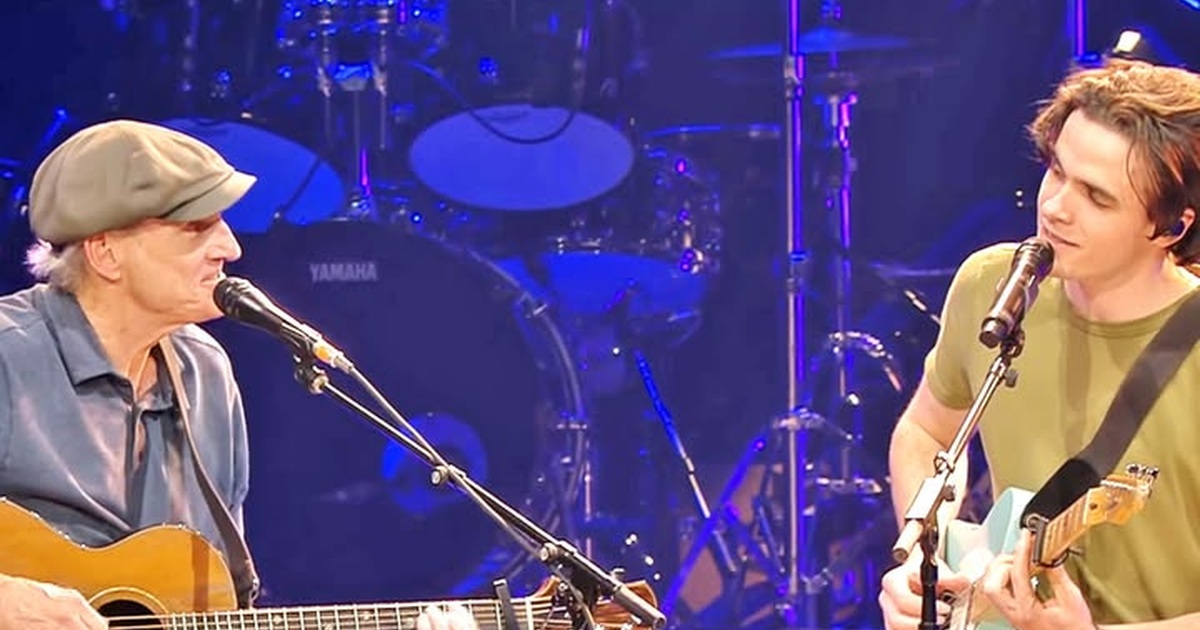
Taylor’s official upload identifies the Honda Center in Anaheim and October 30, 2021. It places the song’s earlier home on Mud Slide Slim and the Blue Horizon, his 1971 album. The distance between those dates is useful context, but the interest of the pairing is more specific than the passage of fifty years. A piece already familiar through one singer becomes work undertaken together.
James and Henry in Anaheim
Watch on YouTube ↗
A family connection is a beginning, not the whole explanation
Knowing that the singers are father and son changes how listeners approach a performance. It supplies a relationship before the first musical phrase. That knowledge can enrich the experience, but it need not decide in advance what every note means or turn the song into a literal prediction about either person’s life.
The more productive idea is transmission. A song remains available because another person can learn it, sing it and make something present from material that already has a past. Here, the writer participates in that process alongside a younger singer. The performance can acknowledge continuity while allowing two distinct performers to share the same musical space.
It is tempting to describe such moments entirely through resemblance. Similarity, however, is only one possible source of connection. Two voices can belong together because they serve a common phrase, respond to one another or preserve space for a partner. A musical relationship does not require a younger performer to reproduce an older one exactly.
What changes when reassurance is shared?
You Can Close Your Eyes offers a direct address to another person. Its reassurance is modest in scale: the song imagines company and continuity within the passage of time. It does not need a large cast of characters or a complicated setting to establish a relationship between speaker and listener.
A shared vocal setting introduces another possibility. The song’s address can seem to move between the people singing it as well as toward the audience. That is an interpretive opening, not proof that the performance documents a private family conversation. The writing leaves room for different relationships to inhabit the same material.
This is one reason an old song can become current without requiring new lyrics. A different pairing supplies a new situation around the words. The composition remains recognizable while the listeners’ sense of who is offering reassurance, and to whom, can change.
Another song, another kind of time
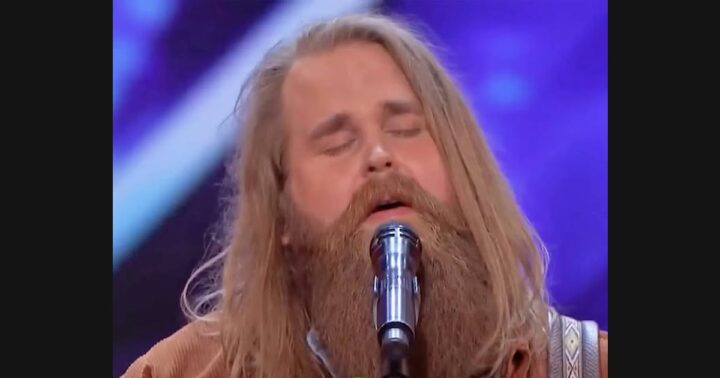
The accompanying Fire and Rain recording is labeled as a DTE performance from August 1, 2021. It offers a contrast in perspective: rather than carrying the same reassuring premise into every selection, let a different song establish the kind of reflection it requires.
Watch on YouTube ↗
A repertoire comparison works best when it respects those differences. A recognizable singer is a link between pieces, not a guarantee of the same emotional task. Consider whether you are following remembered experience, a present address or an imagined future in each song.
Company as the central promise
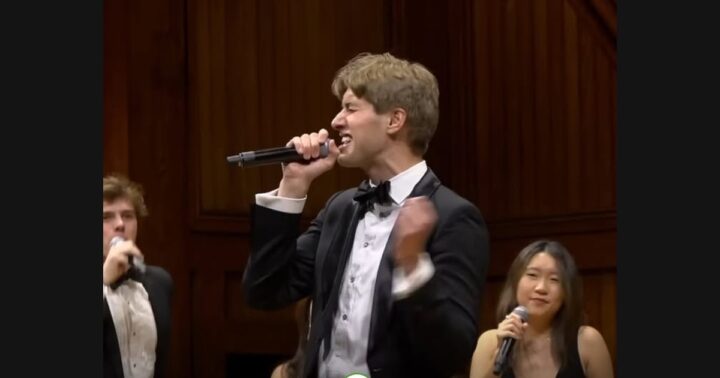
The third clip, You’ve Got a Friend from the same uploader’s DTE selection, gives companionship a more explicit place. Beside the Anaheim duet, it helps distinguish a song offering support from the musical act of two people supporting an interpretation together.
Watch on YouTube ↗
Those ideas overlap without becoming identical. The subject of a song is one thing; the relationship among the performers is another. James and Henry’s Anaheim recording is interesting because both are available at once. The song carries its history forward, while a shared performance shows how that history can remain open to another voice.