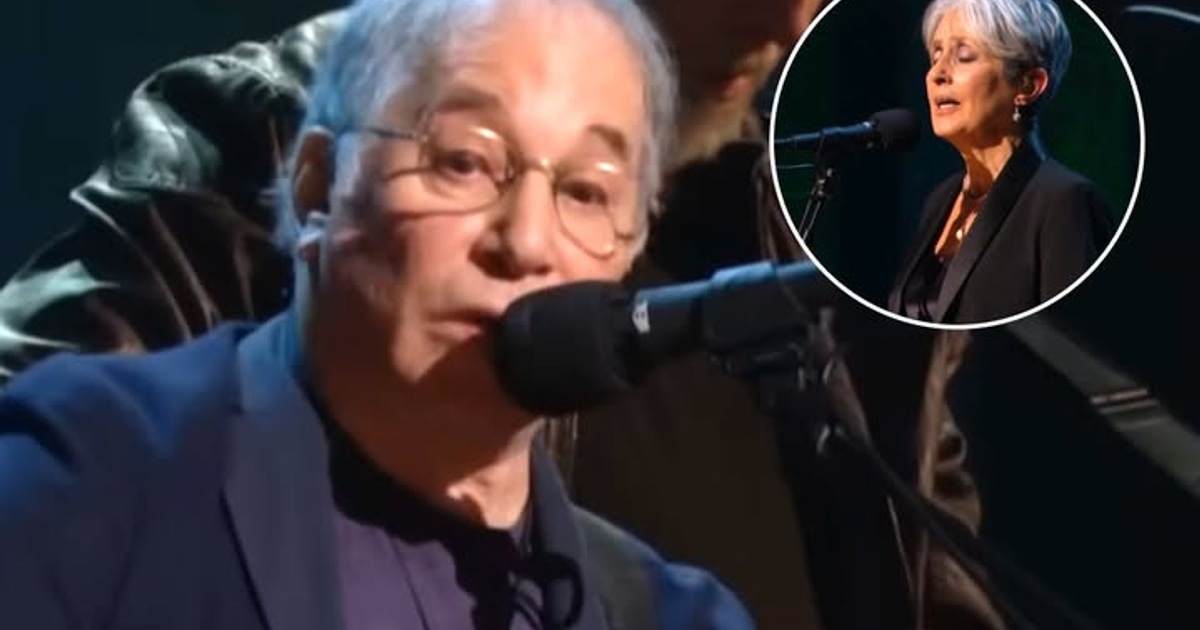
A birthday concert can become more than a sequence of congratulatory appearances when its guests share actual musical work. Joan Baez’s 75th birthday celebration at New York’s Beacon Theatre in 2016 was organized around a career-spanning program. Paul Simon’s presence in “The Boxer” gives that idea a particularly clear form: the guest contributes a composition associated with his own writing to an occasion honoring another artist.
PBS identifies Simon among the celebration’s performers. The concert and its subsequent television presentation are connected, but a broadcast date should not automatically become the date on which every individual upload was recorded.
Watch on YouTube ↗
Who is honoring whom?
The roles are usefully layered. Baez is the honoree, Simon is a guest, and the song gives both a shared task. A tribute need not consist only of someone singing the honoree’s compositions. An interpreter’s career can be recognized through the repertoire she brings into conversation with other musicians.
That is particularly relevant to a singer whose public work includes songs written by others. The identity of a performer is not limited to authorship. Selection, interpretation, and the relationships created around a piece can become an important part of a musical career.
The song supplies a third presence
In a duet, the composition is more than a backdrop for two recognizable people. Its sequence of verses and returns determines what can be shared, repeated, or contrasted. It gives the performance a direction beyond an exchange of greetings.
Listen to how a returning musical idea provides continuity. Different voices can carry a line without the piece losing its identity, because the listener recognizes the larger form. A shared refrain can then feel like a meeting point rather than another unrelated solo contribution.
This does not require guessing at the performers’ private memories. A celebration gives the song a public occasion, while the interpretation remains something the viewer can follow through phrasing and coordination. The clip can communicate companionship without establishing a detailed personal history.
Simon interpreting another writer
The second selection places Simon with David Crosby and Graham Nash on George Harrison’s “Here Comes the Sun” at the Rock and Roll Hall of Fame’s 2009 anniversary concerts. Simon’s relationship to the material changes: he is now among interpreters of another writer’s song.
Watch on YouTube ↗
The comparison illuminates the difference between bringing one’s own composition to a shared performance and entering someone else’s catalog. Both involve listening to partners, but the song carries a different authorship relationship into the room.
Another partnership on the same composition
The final clip pairs Simon with Harrison on “Here Comes the Sun.” It retains the composition from the previous video while changing the partnership. That creates a clearer comparison than selecting another tribute solely because it contains famous musicians.
Watch on YouTube ↗
The sequence moves through three relationships: Simon sharing his own writing with Baez, Simon joining a group interpretation of Harrison, and Simon performing with Harrison himself. Each combines authorship and interpretation differently.
Baez’s birthday “The Boxer” becomes more informative within that sequence. The song is a contribution to her celebration and a place where two artists can work together. The event honors a career through music that continues to be passed among writers, interpreters, guests, and hosts.


