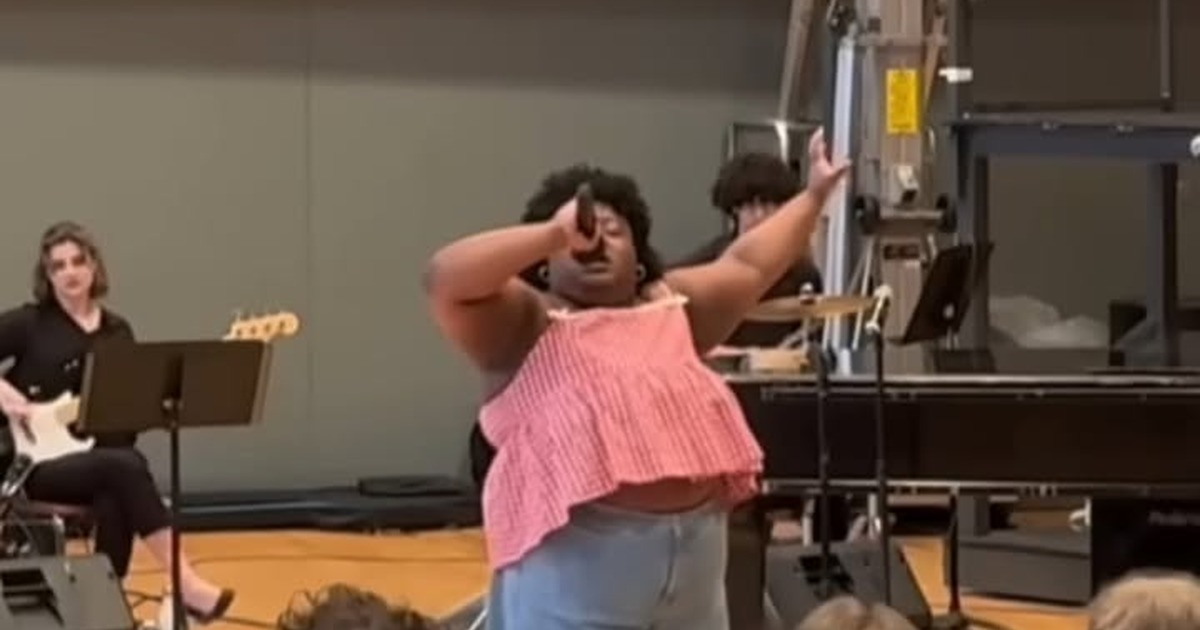
A video discovered unexpectedly by a viewer was not necessarily made without preparation. Erin Morton’s Creep at the University of Cincinnati’s College-Conservatory of Music illustrates the difference. The university identifies its Jam Band event as part of a class and recital, with students working through the year on covers and mashups.
That context changes the story from an unexplained spontaneous breakthrough to a documented piece of educational work. Morton’s performance reached people beyond the original gathering, but its classroom purpose existed before the recording traveled.
The student performance
Watch on YouTube ↗
Discovery and preparation are separate timelines
A viewer’s first encounter may last only a few minutes. The musicians’ work belongs to a different timeline: choosing material, establishing an arrangement, coordinating parts and preparing to present the result. Those stages do not become irrelevant because the audience meets the finished item all at once.
CCM describes the event as an opportunity for musical-theatre students to develop commercial music skills. Its examples include handheld microphones, lead sheets, working with instrumentalists and addressing an audience directly. These tasks connect performance training with situations beyond a staged dramatic role.
The educational purpose is therefore more specific than the broad idea that talented people happen to attend music school. A structured setting makes particular kinds of collaboration and presentation available for practice.
A handheld microphone changes the relationship
Direct audience address differs from performing within a fully staged scene. The singer needs to establish the relationship with the listeners present, while the song provides the dramatic material. That does not remove interpretation; it changes how its frame is supplied.
Commercial repertoire also gives students material that listeners may already recognize. Familiarity brings expectations into the room. The performers then have to make a current presentation coherent rather than relying on recognition alone.
These are general consequences of the format CCM describes, not claims about a private intention behind every choice in Morton’s rendition. The documented course supplies a practical frame without determining one mandatory response to the music.
The recording is another collaboration
The university credits arrangement and direction, instrumentalists, sound production and the student who captured the video. A clip’s journey depends on that last act of documentation as well as on the music it records.
It is helpful to distinguish the live audience from the later audience. People encountering a circulated video may not know the class or event. Restoring the context allows discovery to lead toward an understanding of the work rather than replacing it with a vague story about overnight success.
Another route to a musical encounter
The guitaro5000 companion is presented as a public singing encounter. It offers another route through which viewers meet a performer, with a different preparation and presentation frame from a documented class recital.
Watch on YouTube ↗
The band’s own repertoire context
The final uploader labels Radiohead’s Creep as Glastonbury 2017. That returns the composition to a band-performance reference while changing the setting again.
Watch on YouTube ↗
The connection among these clips is discovery, but their production contexts remain different. Morton’s selection deserves its educational history: a class supplied time and collaborators, a recital supplied an occasion, and a recording made that work available to people who had never entered the room.


