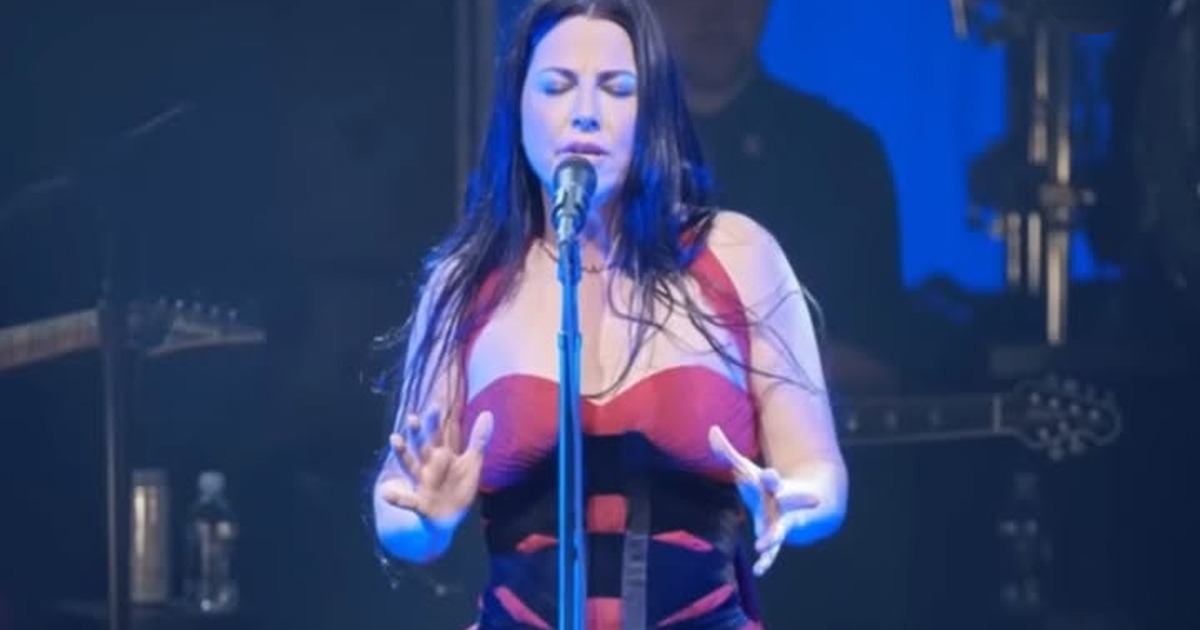
An orchestral version of a rock song does not have to mean the original arrangement with strings placed behind it. Evanescence’s Synthesis project was organized around a more substantial change: familiar material reworked with orchestra and electronic programming. “My Immortal” offers an accessible route into that idea because its recognizable vocal line gives the listener something steady to follow while the setting changes.
The first video comes from Mercury Studios, whose description identifies it with Synthesis Live. Its online publication is a later step in the performance’s life, rather than evidence that the concert took place on the upload date.
Watch on YouTube ↗
What is being reworked?
A composition and an arrangement answer different questions. The composition supplies relationships that make a song recognizable: its melody, words, and underlying musical progression. An arrangement decides how those relationships reach the listener through particular instruments, registers, textures, and transitions.
For a practical example, imagine an accompanying figure moving from a sharply defined attack to a sound that can be sustained. The notes might remain similar while the sense of space changes. That possibility explains why an orchestral reworking can be substantial without needing to replace the central tune or make every section louder.
The Synthesis chronology
The band’s official history dates Synthesis to November 2017 and describes its mixture of orchestra and electronics. The subsequent live project brought that reimagined catalog to a concert setting. A studio concept, a live performance, a concert release, and a later excerpt are related versions of the project, but they are not a single date.
That chronology also changes the language used to describe the clip. It is not a sudden discovery that Amy Lee’s music can work with an orchestra. The performance belongs to a deliberate project with its own arrangements and production, rather than an unexplained departure caught by chance.
Listen for the distribution of responsibility
Instead of trying to identify every instrument immediately, follow who is responsible for motion. Does the accompaniment mark a clear pulse, sustain a background, or answer a vocal phrase? These are musical jobs. A larger ensemble can divide them among more players, but the useful question is how those jobs fit together.
It is also worth leaving room for quiet. The presence of an orchestra does not oblige an arrangement to use all its resources continuously. Contrast depends on restraint as well as accumulation. A passage can feel expansive because there is space around it, not simply because many instruments are present.
One song, then one project
The next official upload is “My Immortal,” labelled live at London’s O2 Arena in 2022 and presented as a visualizer. Keeping the song constant provides a comparison of musical setting; the visualizer label should not be mistaken for a promise of continuous documentary concert footage.
Watch on YouTube ↗
“My Heart Is Broken” from Synthesis Live then changes the song while retaining the project. This helps distinguish choices made for one composition from the broader possibilities of the orchestral format.
Watch on YouTube ↗
The sequence offers two routes through the catalog: follow “My Immortal” between settings, or follow Synthesis between songs. Together they show why a reworking is best understood as a set of decisions about musical roles, rather than an automatic upgrade achieved by adding more instruments.


