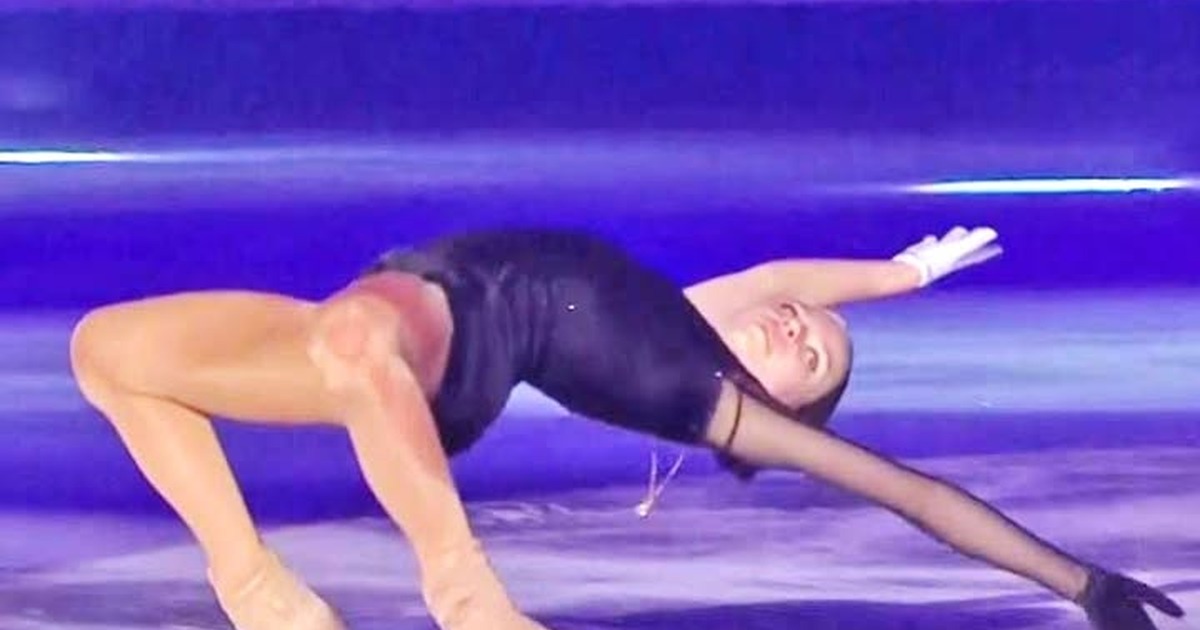
Alexandra Trusova’s Skate Canada gala should not be used as an explanation of how she won the competition. It is a separate exhibition program. That distinction is the most useful starting point for viewers who arrive because they recognize the music or have seen a short skating clip outside its original event.
The first upload identifies itself as the 2019 gala exhibition. The International Skating Union’s account places the competition in Kelowna and confirms Trusova’s victory. It identifies a different soundtrack for her competitive free skate: “Games of Thrones.” Recognizing these as two programs allows each to be appreciated on its own terms.
Watch on YouTube ↗
A gala is not a results sheet
A competitive program is evaluated within the event’s rules. An exhibition is presented for an audience without functioning as another scored segment of that competition. A gala may still contain demanding skating, but the presence of difficult movement does not make it a new attempt to earn the published result.
For the viewer, this changes the most useful question. Rather than trying to reconstruct a score from an exhibition, consider how its chosen music, movement, and presentation form a complete short performance. You do not have to recognize every element to follow a beginning, a change of emphasis, or a final pose.
Let the music organize attention
A pop soundtrack offers audible landmarks that can make skating approachable: returning musical sections, changes in density, and clear phrase endings. A movement can arrive directly on such a landmark or continue across it. Both possibilities create a relationship between the score and the skater’s route through the ice.
For an initial viewing, follow a broad path rather than counting tricks. Notice how much of the performance travels and how much gathers attention in one area. On a second viewing, choose one recurring musical idea and see whether the movement treats each return similarly. This produces a concrete observation without claiming to know the choreographer’s private intention.
The competitive program supplies a contrast
The official ISU free-skating video is the appropriate next step. Its title and accompanying results place it within the competition. It can help explain why an event may produce several clips of the same athlete that differ in music, clothing, structure, and purpose.
Watch on YouTube ↗
Keep the competition’s short and free programs distinct as well. A final standing reflects the event’s scored segments; it is not a grade for the gala. Viewers can enjoy the exhibition’s character while referring to the official results for claims about placement.
Another exhibition, another viewing position
The final clip presents Ye-lim Kim performing to “A Thousand Years” at An Evening with Champions in 2023, as identified by On Ice Perspectives. It is a separate skater and occasion, so it is useful for comparing exhibition presentation rather than ranking two athletes by a shared score.
Watch on YouTube ↗
Camera position also belongs in that comparison. A recording decides how much space is visible and how closely a viewer can follow an individual movement. If one clip feels more intimate, that may concern the way it is filmed rather than a difference in the skater’s commitment.
These three videos provide two different bridges into skating: an exhibition beside its competitive context, then an exhibition beside another exhibition. Keeping those routes separate helps a newcomer understand what each recording can show, without turning every appearance on ice into the same kind of contest.


