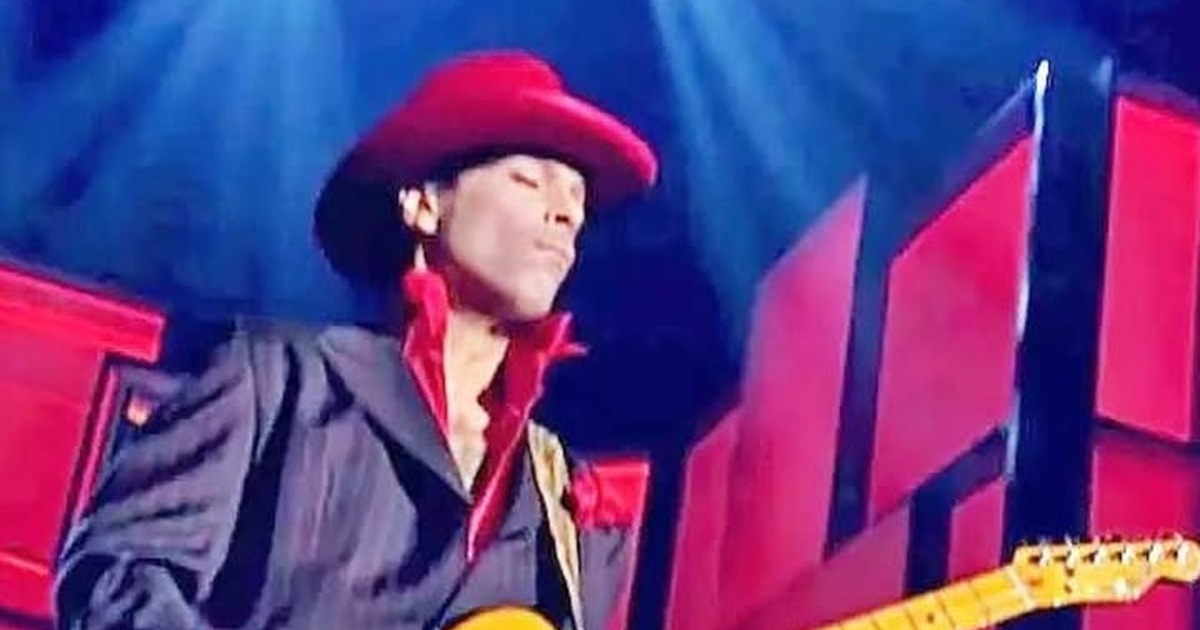
A famous solo can become so familiar as an isolated highlight that the song around it starts to disappear. Prince’s appearance in the Rock Hall’s While My Guitar Gently Weeps is a useful occasion to put that surrounding performance back into view. The featured guitar is part of a tribute to George Harrison, carried by an ensemble rather than a lone performer.
Harrison and Prince were both inducted into the Rock & Roll Hall of Fame in 2004. The museum’s catalogue identifies the collaboration with Tom Petty, Jeff Lynne, Steve Winwood and Dhani Harrison among the performers. The video here is labeled a 2021 remaster of the 2004 performance; the two dates describe different things.
Watch on YouTube ↗
A foreground needs something behind it
A solo becomes legible partly because the other musicians maintain a setting around it. Harmony, pulse and recurring material give an instrumental line something to move through. The supporting parts do not stop being important when the camera or the listener’s attention concentrates on a featured player.
This makes a useful change of perspective possible. On one pass, follow the foreground guitar. On another, attend to what continues underneath it. The second pass can explain why an instrumental departure still feels connected to the composition instead of becoming a separate piece.
The difference between extension and interruption
Instrumental features can extend an existing idea, introduce a contrasting one or change the scale of a performance. None of those roles requires the listener to imagine a private competition among the musicians. An arresting contribution can serve the song even when it changes the balance of attention substantially.
For example, a melodic idea might be recognizable through its contour, the way it moves upward, downward or around a central pitch. A player can develop that shape through repetition or variation while the ensemble maintains the underlying setting. The relationship between change and continuity is the musical subject; speed alone is only one possible detail within it.
Listen through the boundary of a feature as well as its most conspicuous passage. How a new voice arrives, and what remains after it has drawn attention, helps reveal the larger arrangement. That perspective is lost when the performance is reduced to a short extract.
Another Harrison composition, another tribute design
Watch on YouTube ↗
The official George Harrison channel’s Something selection with Paul McCartney and Eric Clapton provides a different tribute setting. Compare the space given to a featured instrumental voice and the relationship of that voice to the sung melody. Because the composition and occasion change, the goal is to understand choices rather than demand a matching effect.
A tribute does not need one standardized sound. It can emphasize the songwriter, the song’s familiarity or a particular meeting of performers, and those priorities can coexist.
A further change of vocal and instrumental balance
Watch on YouTube ↗
The related Here Comes the Sun selection changes the song again. Keep the same distinction between the part that draws immediate attention and the parts that make it possible. A less conspicuous contribution can be doing essential structural work.
Returning to the Rock Hall performance with that relationship in mind does not diminish Prince’s presence. It makes the contribution more understandable. A memorable instrumental feature is not only a sequence of notes; it is an event in a song, made meaningful by the musical space that other people sustain around it.


