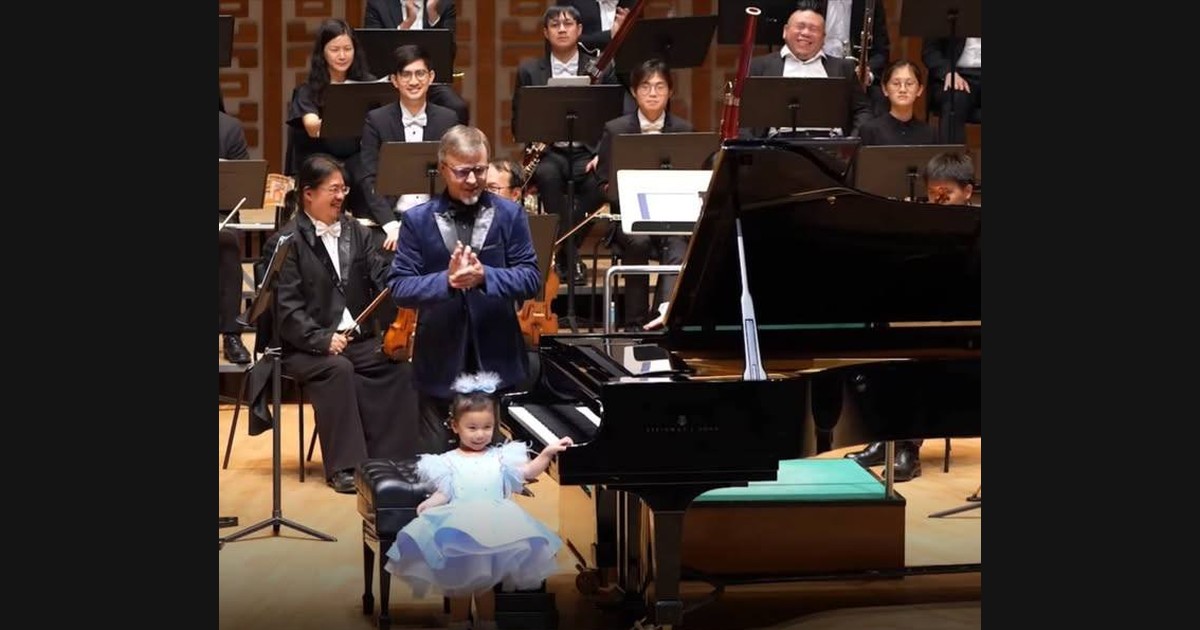
An orchestral performance gives a pianist a relationship to maintain, not simply a part to finish. The opening Joelle recording makes that relationship a useful focus for listeners interested in how a solo instrument belongs within a larger musical group.
Pianist and teacher Shirley Lo’s published description identifies Joelle playing Shostakovich’s Waltz No. 2 with an orchestra at Hong Kong Cultural Centre and identifies Joelle as her student. The collection also includes another Joelle performance labeled Marche Militaire and a separate recording featuring a young pianist named Barron. Keeping those performers and pieces distinct is the first step toward a useful comparison.
A shared pulse is a meeting point
Watch on YouTube ↗
Begin by following the recurring movement that gives the waltz its dance character. Then turn attention to the piano’s entries. The question is how an individual part joins a shared musical flow, rather than whether every moment can be reduced to a display of difficulty.
You do not need a score to notice that musical events have beginnings and continuations. Listen for an entry, stay with the phrase that follows, and then consider what the surrounding ensemble contributes while that phrase develops.
A conductor may provide visible coordination, but a recording does not explain every preparation decision. Avoid assuming a rehearsal history or a performer’s private feelings from the finished video. The musical relationship offers enough to explore without adding those claims.
Identify the work without confusing the suites
The waltz is associated with Shostakovich’s Suite for Variety Orchestra. The publisher’s catalog distinguishes that collection from the separate Suite for Jazz Orchestra No. 2, with which it has frequently been confused.
That catalog distinction helps when looking for the piece afterward. A familiar short title can appear within recordings, arrangements and longer collections. Checking the larger work’s name is more reliable than assuming every upload containing “Waltz No. 2” refers to an identical score or instrumentation.
A different piece changes the musical task
Watch on YouTube ↗
The second selection remains with Joelle but changes the title to Schubert’s Marche Militaire. Instead of treating it as another copy of the opening event, approach it as a fresh relationship between a pianist, a piece and an ensemble.
Compare how you locate the underlying movement in each selection. A march label and a waltz label point toward different dance or processional associations, but the recording itself remains the place to examine the particular arrangement.
Keeping a short list of performer, composer and piece can be helpful here. Those three fields prevent a detail from one video becoming an unsupported claim about another, especially when the thumbnails or upload titles look similar.
Another performer is not the same occasion
Watch on YouTube ↗
The last video is identified by Lo’s channel as featuring Barron. It broadens the collection to another young pianist rather than documenting a later moment from Joelle’s performance.
Age-centered headlines can make comparison sound like a contest. A more productive approach is to follow the musical job: an entry, a continuing pulse, a phrase completed with other players. Those are concrete points of attention that do not require ranking children or making predictions about their futures.
Across the selections, the ensemble is part of the subject. Listening for shared timing and musical continuity helps bring that partnership into focus alongside the piano itself.


