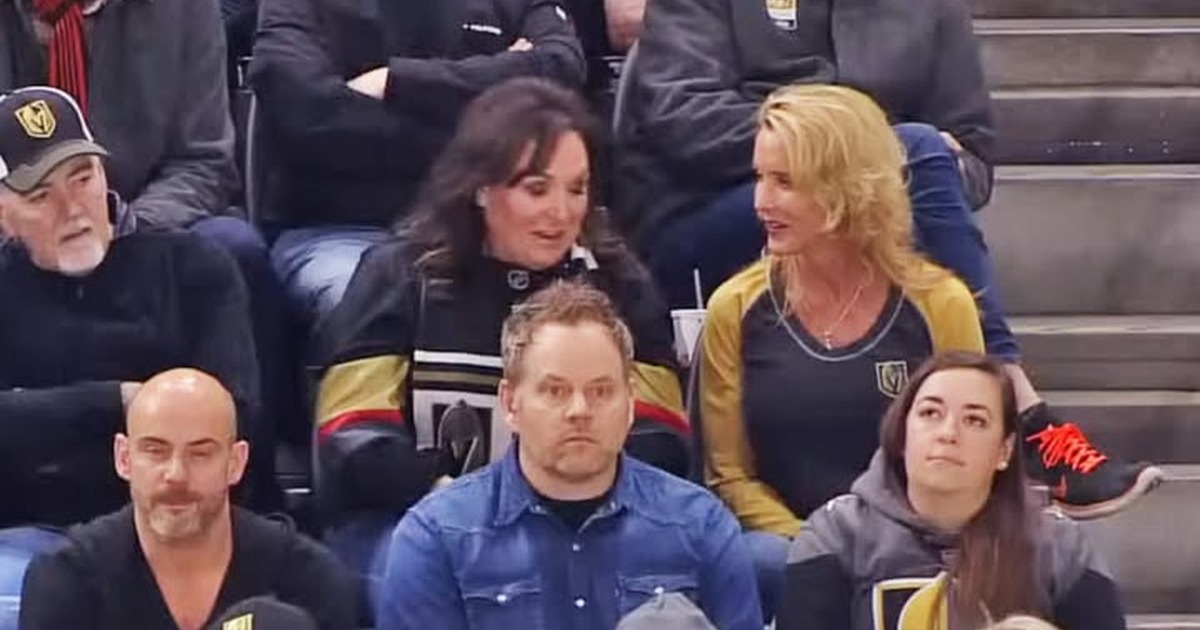
A seat in a sports arena can become a small stage as soon as a camera points toward it. Cameron Hughes’s Golden Knights video is a useful example of that change. The attraction is more than an energetic person dancing: it is the exchange between a performer, nearby spectators, a camera operator, and the much larger audience receiving the picture.
Hughes identifies himself professionally as a live event entertainer whose work includes sports games. That context matters. Calling him an ordinary spectator who unexpectedly reveals a hidden talent would give the clip a different, unsupported story. His actual field is interesting enough: making participation feel possible inside a building organized around watching other people compete.
Watch on YouTube ↗
A short journey through the arena
Think of the act as a journey for attention. At first, the focus belongs to one person. A screen can then enlarge a gesture that would otherwise be visible to only a few rows. Nearby people become part of the image, and their involvement gives distant spectators a way to understand what is happening. The broadcast picture becomes an invitation as well as a record.
This helps explain why arena movement need not resemble a precisely choreographed theater number. A gesture has to read quickly, often without an explanation. Repetition can make it recognizable. A pause can leave room for someone else to respond. The practical question is how a small action remains legible when people see it from different distances.
The soundtrack supplies a shared clock
A recorded song gives everyone the same sequence of musical events. Even people who do not dance can recognize a returning beat or refrain. That shared clock makes a spontaneous-looking exchange easier to follow: a spectator can join for one phrase without knowing a complete routine.
Keep the music and the live act separate when describing the video. The person dancing is contributing movement and interaction; the recording supplies the soundtrack. Enjoying their combination does not turn the arena moment into a live performance by the recording artist, nor does the clip tell us how every spectator responded.
When another spectator becomes the subject
The next Hughes upload centers Malcolm. Its value as a comparison is the change in attention: the entertainer’s role can include making space for another participant. Instead of asking who delivers the more spectacular move, look at how an exchange becomes understandable when its focus changes.
Watch on YouTube ↗
The third clip, identified by its uploader with the Senators, offers a further Malcolm comparison. These are separate uploads, not a continuous account of the Golden Knights occasion. Their connection is the format: a large public event briefly provides a platform for an individual’s movement.
Watch on YouTube ↗
Give the participants room
There is a useful distinction between invitation and obligation. A successful participation format can accommodate a small wave, a large dance, or someone choosing to remain seated. A viewer should resist treating visible enthusiasm as a requirement for everyone in the frame. The person who stays still is also part of an arena audience.
Seen this way, the Hughes clips belong to the craft of live event pacing. A sporting contest has gaps, transitions, and waiting time. Entertainment can give those intervals a shape. The dance matters, but so does the route by which a single seat becomes a scene that thousands of people can follow.


