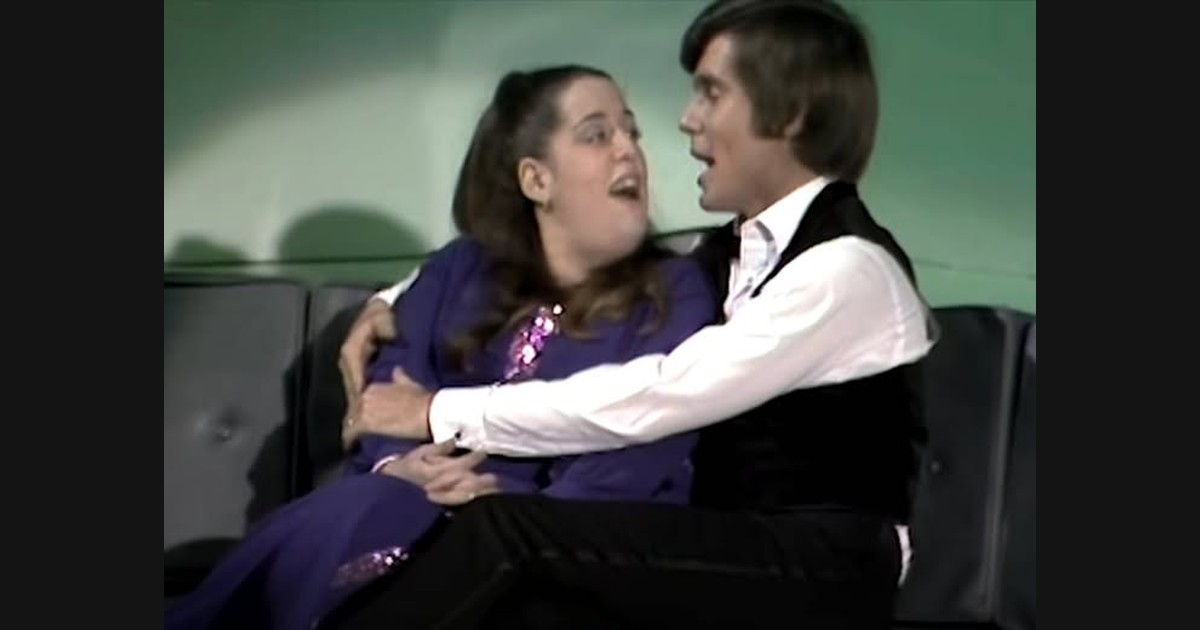
Two singers do not always need two opposing stories. In “Somethin’ Stupid,” a duet can share one dramatic perspective, allowing vocal difference to enrich the account rather than turning the song into an argument. Cass Elliot and John Davidson’s television-archive performance offers a useful example of that possibility.
The composition is credited to C. Carson Parks. The available selection includes an archive presentation, another upload, and a version explicitly labeled a fan-made stereo mix. Those source distinctions matter alongside the musical relationship between the voices.
Watch on YouTube ↗
A duet is not automatically a dialogue
A dialogue gives separate speakers statements that answer or challenge one another. A shared vocal account can work differently: two people may present related material from the same narrative position. A change of voice does not necessarily introduce another fictional character.
Listen for the relationship between the lines. Do they carry a common thought, provide contrasting perspectives, or make one phrase sound fuller through combination? Let the musical evidence guide the description rather than assuming that every duet must reenact a literal conversation.
This distinction also protects the account from invented biography. The song’s emotional position belongs to its writing and interpretation; it should not be treated as a report of a romantic relationship between the performers.
Vocal difference can support a common statement
Two recognizable sounds can remain distinct while contributing to the same musical direction. Shared timing and the preparation of a phrase ending can make the account feel connected without requiring identical tone.
Choose one complete thought and follow how it arrives. What keeps the voices related to the accompaniment? Does a combined passage change the weight of the statement compared with a more individually focused moment?
A useful description names function before preference. “The second line gives the phrase another layer” explains a relationship. Saying only that the singers sound beautiful together leaves the mechanism largely unexamined.
Watch on YouTube ↗
Another upload is another route into the archive
The companion recording returns to the Elliot–Davidson pairing. A different title or presentation does not establish another television appearance. The main archive identifies a John Davidson Show context, but an exact date should not be guessed from an ambiguous numeric format.
Compare a recognizable phrase if you want to establish what material the uploads share. Differences in captured balance or image quality need not reflect differences in the musicians’ original delivery.
Watch on YouTube ↗
A fan mix changes the sound presentation
The final upload explicitly announces a stereo mix. That label identifies an intervention in presentation, not a new performance by the artists. It should not be used to claim that the broadcast originally sounded exactly like the fan version.
Listen for what becomes more noticeable, while leaving the technical process open if the uploader does not document it. A perceived change in separation or prominence does not reveal every step used to produce it.
The comparison becomes clearer when each layer remains visible: Parks’ composition, the shared interpretation, the television archive, and the later fan presentation. That allows a duet to be appreciated as music without making its two voices into an invented private dialogue or its several uploads into several recording sessions.


