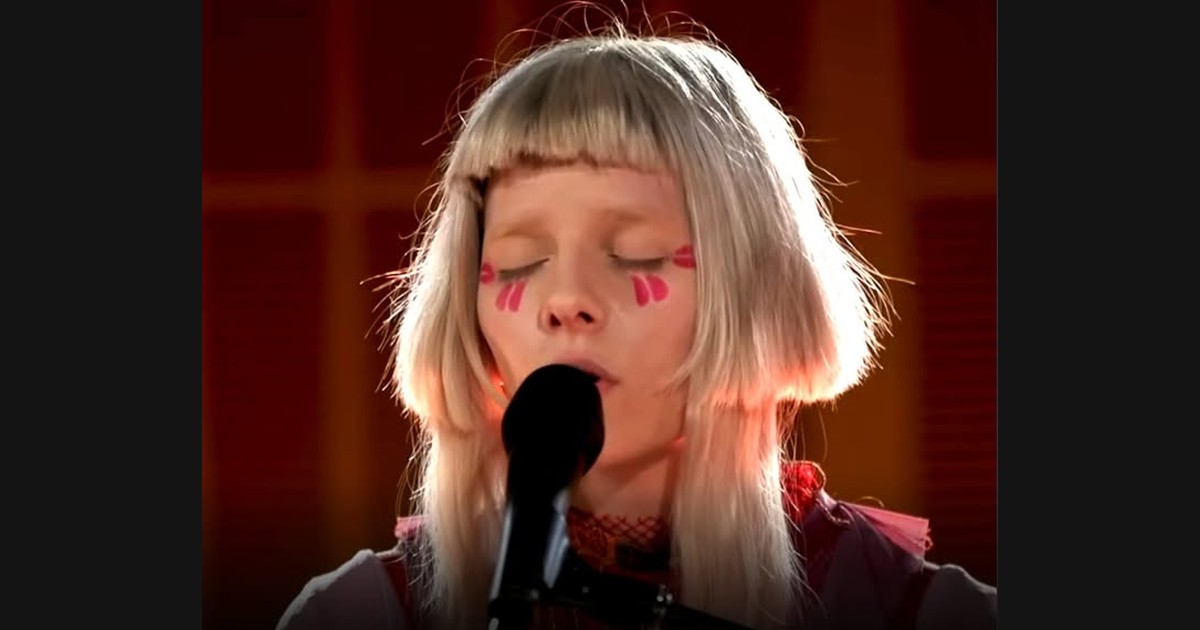
A song can travel by being performed again, translated for another audience or transmitted as a recording. AURORA’s Across the Universe cover offers a starting point for considering those different journeys. The familiar work remains recognizable while the means of carrying it change.
triple j identifies the opening recording as her Like A Version interpretation in 2019. The performance belongs to an artist choosing another writer’s song, with her voice becoming a new route into material associated with the Beatles.
Watch on YouTube ↗
A cover carries a work through another performer
Interpretation changes what a listener encounters without requiring a new composition. A singer can preserve the recognizable sequence of a work while giving its phrases another pace, emphasis or relationship with accompaniment.
The distinction is between a song and a particular recorded realization. A composition remains available for others to approach; a recording preserves one set of decisions about it. A cover therefore participates in a continuing history rather than replacing every version that came before.
AURORA’s recording can be heard on that scale: a new interpreter presents the work through a documented studio session. Its value need not depend on claiming that the original has been surpassed.
The title also acquired a literal journey
In February 2008, NASA announced that it would transmit the Beatles’ recording through its Deep Space Network toward Polaris, the North Star. The agency’s own account documented the transmission project and messages from Paul McCartney and Yoko Ono.
That event gives the title an unusual second life. A musical image becomes associated with a physical signal sent beyond Earth. The transmission is a documented technological act; it is not evidence that another civilization received or understood the song.
This is another kind of circulation from a cover. A radio transmission carries a particular recording outward, while a new performance changes the realization through which listeners encounter the work. Both can extend a song’s public life, but they do different things.
Watch on YouTube ↗
Subtitles add another layer of interpretation
The second upload labels AURORA’s performance as subtitled. Text can help another audience follow a song, while also introducing decisions about wording and timing. The presence of subtitles does not make the upload another studio performance.
It is useful to distinguish the sound being preserved from the explanation added around it. A translated line may clarify a broad thought, but it cannot reproduce every relationship between vowel, rhythm and musical phrase.
Watch on YouTube ↗
A later performance starts another journey
The final upload identifies AURORA with the Verftet online festival in 2020. It offers another presentation of the same composition, separate from the triple j session and its subtitled repost.
The range of contexts explains something about durable repertoire. A song can move through new voices, new viewing aids and even a new transmission medium without becoming the same event each time. Keeping those journeys distinct lets the listener appreciate both what is carried forward and what each presentation newly contributes.


