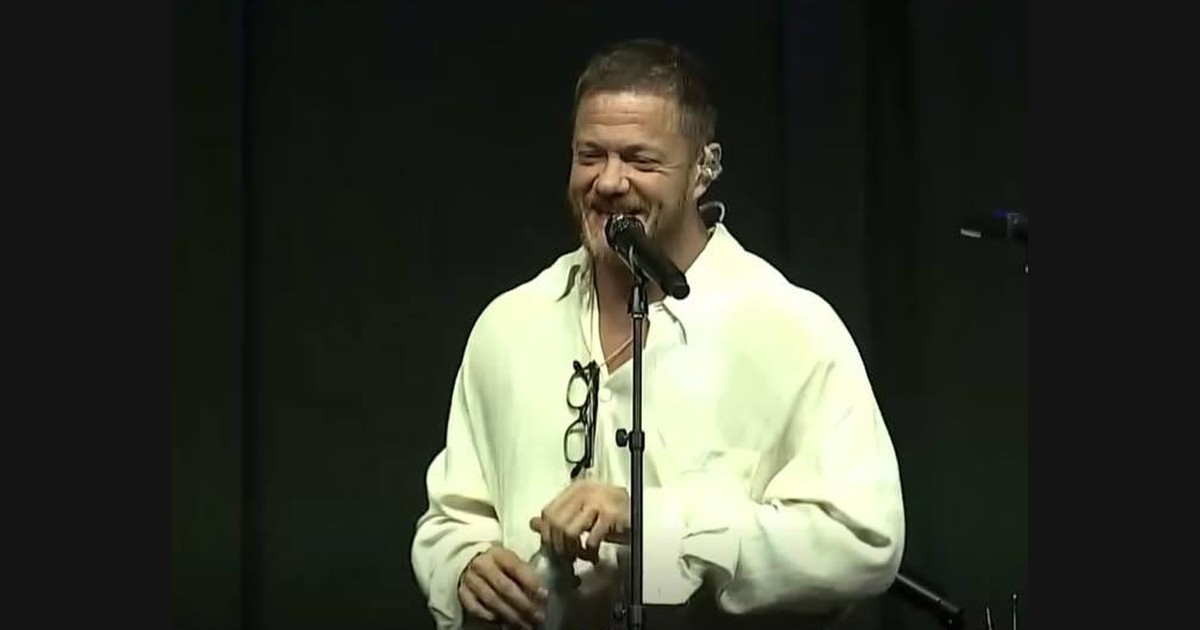
A rap song carries much of its identity through the relationship between language and a recurring musical framework. When another band performs it, the useful question is what travels across that change. Imagine Dragons’ “Lose Yourself” cover at the 2024 Tyler Robinson Foundation gala provides a concrete setting for the comparison.
The foundation’s recap identifies the September 20 event at Wynn Las Vegas and includes the song among donor requests. The composition has its own credits: the Academy lists music by Eminem, Jeff Bass, and Luis Resto, with lyrics by Eminem, for 8 Mile.
Watch on YouTube ↗
Flow is a relationship with time
Rapid delivery is only one feature of a vocal account. The placement of stressed syllables, pauses, and phrase endings against a recurring reference can make language feel urgent or controlled. More words do not automatically mean a faster underlying pulse.
Listen for a complete verbal thought rather than trying to count every syllable. Where does the phrase gather activity, and where does it leave space? How does its ending relate to the accompaniment’s continuing pattern?
Those observations help separate the composition’s rhythmic identity from one singer’s particular sound. A cover can preserve recognizable relationships while presenting the language through another voice.
The accompaniment gives the words something to move against
A recurring musical figure can remain stable while the lead delivery changes. That stability is not inactivity: it supplies a reference through which variation becomes legible. The relationship between a repeating framework and changing language can organize a long passage.
Follow the accompaniment for one section, then shift back to the vocal without losing the reference. Notice whether an accent reinforces the pattern or seems to pull attention across it. Keep the description tied to what you can hear instead of assigning an exact technical label where the uploaded mix is unclear.
A band cover is also an ensemble task. The lead vocal may attract the most immediate attention, but transitions and recurring material need a shared setting. The song does not become the work of one microphone simply because its language is prominent.
Watch on YouTube ↗
A return changes the scale of attention
The second upload provides another presentation of the same identified cover. Use it to follow how a verse connects with recognizable returning material. A change of section can alter the relationship between concentrated verbal detail and a broader musical statement.
Describe the preparation of that change. Does a phrase end decisively, continue across the boundary, or leave space for the next section? Those are useful possibilities to test without inventing a rehearsal story.
Watch on YouTube ↗
The event does not explain every musical choice
The final companion returns to the gala recording. The charity setting explains the public occasion, but it does not establish that the band had never encountered or prepared the song before. A promotional title is not a complete production record.
A useful final note names one retained feature of the writing and one relationship created by the current performers. That keeps the cover centered on music: language organized in time, a recognizable framework, and an ensemble making another artist’s composition communicate within a different event.


