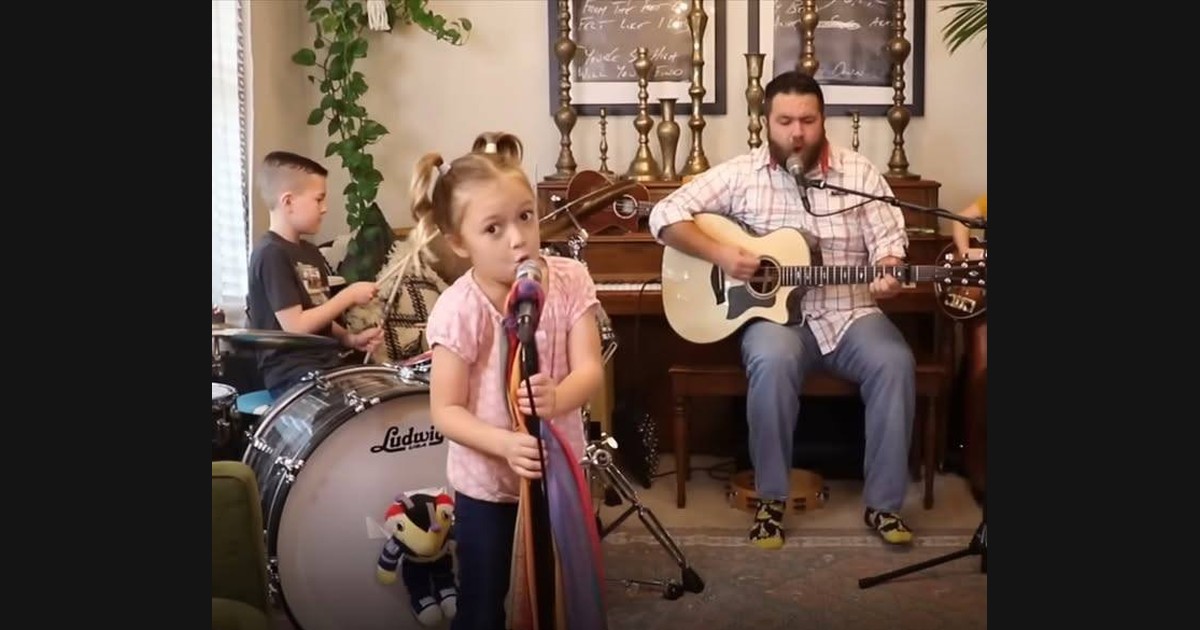
A recurring refrain can make a song feel stable while its story moves forward. “Ob-La-Di, Ob-La-Da” offers that combination: a recognizable musical return alongside the progress of a domestic narrative. Colt Clark and the Quarantine Kids’ “Rewind” presentation gives a family ensemble another opportunity to revisit that material.
The Beatles’ official catalog places the song on their 1968 self-titled album, released on November 22. It identifies Paul McCartney as its writer within the Lennon–McCartney credit. The later cover therefore joins a composition with an established history rather than creating its narrative framework from scratch.
Watch on YouTube ↗
The story changes while the reference returns
In a narrative song, a new verse can move events onward. A recurring section gives listeners familiar material to return to as that movement continues. The two functions can support one another: progression supplies new context, while repetition makes the song easy to follow.
Listen for the boundary between new information and recognizable return. What prepares that change? Does the accompaniment maintain continuity, or does the transition make another section’s arrival especially noticeable?
The distinction is useful in a shared performance because familiarity can help several participants remain oriented within the same form. That does not mean every part must duplicate the melody. Different musical jobs can contribute to a common structure.
A family band is still an ensemble
The family context attracts attention to the people, but the arrangement also depends on relationships among parts. A foreground line, a continuing rhythmic reference, and supporting material need to work together regardless of the participants’ ages.
Follow one contribution that is not the main vocal melody. What does it help the rest of the song do? A repeated pattern may connect sections; another gesture may clarify an arrival or fill a space between phrases.
This provides a musical comparison rather than a developmental claim. A short family video does not establish every rehearsal decision or explain how quickly each participant learned a part.
Watch on YouTube ↗
A revisit invites a specific comparison
The companion “Ob-La-Di, Ob-La-Da” recording keeps the composition and family identity in view. The “Rewind” label invites looking back, but a title alone does not establish every filming date, editing choice, or present age.
Choose a recognizable transition across the presentations. Describe how the new verse and recurring material connect, leaving uncertain production causes open. The most useful difference may concern phrasing or an ensemble relationship rather than a broad claim that everything has improved.
Watch on YouTube ↗
Come Together changes the musical task
The separate Beatles cover gives the family another piece of repertoire. Compare how it establishes a recognizable reference and makes room for the lead line. Do not expect the same narrative-and-refrain relationship to organize every composition in exactly the same way.
A group’s performing identity can remain apparent while its musical jobs change with the material. That adaptability is more interesting than reducing each video to the same familiar family scene.
For a final note, name one feature belonging to the Beatles song and one relationship created by the cover ensemble. Keeping those contributions separate gives the Rewind a clear musical purpose: returning to familiar material and hearing how a shared performance makes its story and recurring form communicate.


