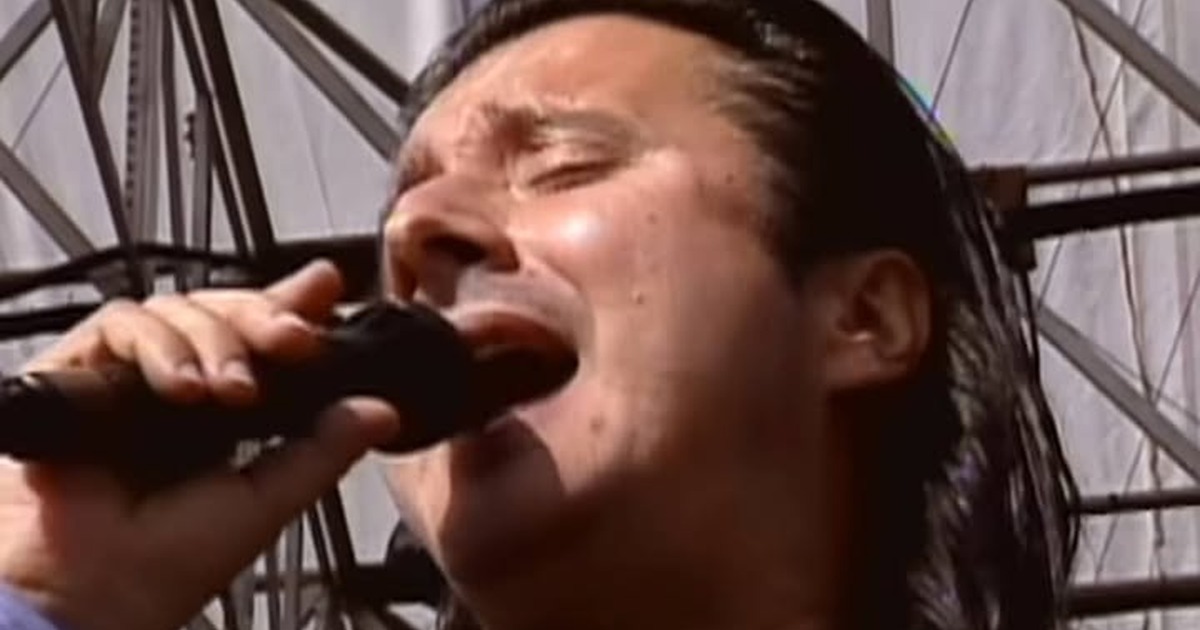
A familiar song can belong to a very different occasion from the one in which a listener first encountered it. Steve Perry’s Faithfully appearance at the Bill Graham memorial is worth approaching on those terms. Its interest comes from the meeting of a recognizable Journey song with a particular public event, rather than from a headline declaring a final or definitive performance.
The Bill Graham Memorial Foundation dates Laughter, Love and Music to November 3, 1991, at Golden Gate Park in San Francisco. The Graham archive includes Journey’s Faithfully in its record of the event. Perry appears with Neal Schon and Jonathan Cain; that configuration should not be confused with an assertion that every member of a familiar Journey lineup took part.
The memorial selection
Watch on YouTube ↗
It helps to separate three things: the people present, the song they chose and the circumstances of the appearance. A brief gathering around a song does not automatically establish a new tour, a permanent reunion or an intended farewell. The performance can be understood without attaching any of those larger stories to it.
Musically, a smaller configuration can make the division of responsibility particularly clear. A voice carries a verbal line, keyboard harmony establishes its foundation, and a guitar can extend or answer an idea. The important question is how these parts supply enough continuity for the song to remain whole.
What fewer independent parts can change
Think of accompaniment as several jobs rather than a list of instruments. A performance needs a sense of time, a harmonic setting and a way to connect one phrase with the next. A full band can distribute those jobs widely. A limited group has to combine some of them within the same part.
For example, a keyboard figure can provide both harmony and a recurring pulse. That makes it possible for another instrument to leave space without the music losing all movement. This is an arranging principle, not a claim that a sparse performance is automatically more emotional or more honest.
Houston offers a separate ballad reference
Watch on YouTube ↗
The official Open Arms clip is labeled as Journey’s 1981 Houston performance. It is a different song from a different occasion. Use it to compare the work surrounding the lead voice: how accompaniment supports a vocal entrance, how an instrumental contribution occupies a gap and how the ensemble makes a new section recognizable.
Because the composition changes, a direct note-for-note comparison would be misleading. A better comparison concerns function. Both a full-band ballad and a smaller presentation need to make a phrase feel supported without obscuring its direction.
Manila changes the singer and the musical task
Watch on YouTube ↗
The official Manila Separate Ways selection brings another Journey performance frame. Its inclusion is not evidence that it shares the memorial’s lineup. Instead, it supplies a contrast in repertoire and concert presentation. Compare the role of recurring instrumental material with the role it plays around a ballad melody.
These distinctions keep the memorial clip from being swallowed by a simplified band-history narrative. It documents musicians coming together for an occasion and giving a known song a particular setting. Paying attention to that setting reveals more than treating the upload’s most dramatic label as the entire meaning of the performance.


