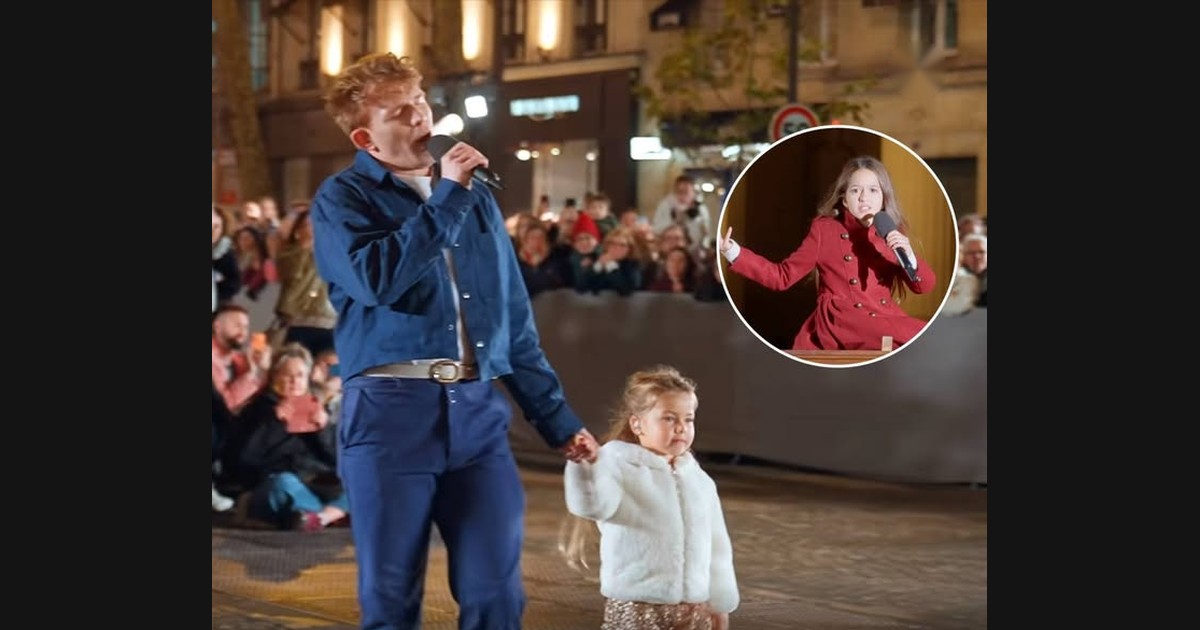
Julien Cohen and Violin Phonix’s principal Paris upload is a multi-part program rather than only a “Bohemian Rhapsody” street performance. Its published chapter map names “Believer,” a Tchaikovsky section, “Carol of the Bells,” “Silence,” and “Bohemian Rhapsody.” Recognizing that sequence prevents one familiar song from standing in for the whole concert.
The project’s published credits identify direction and production by Cohen and Violin Phonix, the duo of Christopher Cohen and Maxime Morise. They also identify different performing resources across sections. The scale comes from coordinated changes of material and personnel, not simply a headline’s artist count.
Begin with the program map
| Chapter label | What it establishes |
|---|---|
| “Believer” | The opening repertoire identity. |
| Tchaikovsky | A contrasting classical-music section. |
| “Carol of the Bells” | Another named selection within the sequence. |
| “Silence” | A separate chapter, not automatically “The Sound of Silence.” |
| “Bohemian Rhapsody” | The Queen-associated closing chapter in the upload’s map. |
Watch on YouTube ↗
The chapter labels give a listening route. They do not, by themselves, establish that every piece is presented in its original complete form. A program can use adapted selections and transitions while retaining clear repertoire identities.
A large ensemble can change between sections
The published personnel include singers, children’s choirs, dancers, strings, wind players, percussion, and featured instrumentalists across the program. That does not mean every listed person is active at every moment. A roster describes available and participating resources; the arrangement determines when they are used.
Follow one transition and notice which musical function continues while another changes. A recurring accompaniment can connect an entrance, or a quieter texture can make room for a different group. The interest is in the handover between sections as well as their individual highlights.
Credits help distinguish the kinds of work
The project separates musical direction, arrangement, video editing, and production responsibilities. Those credits identify different contributions to a finished presentation. The visible pianist or violinist is part of a larger team even when the camera foregrounds that performer.
This is also why the public setting should not be treated as proof that the entire event was accidental. A coordinated program can take place outdoors and still involve extensive preparation. The location and the method of production are separate questions.
The second clip narrows the repertoire
Cohen’s “Bohemian Rhapsody” flashmob upload supplies a separately titled presentation centered on that song. It should not automatically be described as the complete five-part concert or an identical edit of its final chapter.
Watch on YouTube ↗
Compare the actual selection before merging their histories. A recurring artist and song can appear in different projects, and a larger program can contain repertoire also performed elsewhere.
Emilio Piano supplies another publisher identity
The final “Bohemian Rhapsody” flashmob is published by Emilio Piano. Its title establishes another presentation of the Queen song, not a reason to assign Cohen and Violin Phonix’s complete production credits to it.
Watch on YouTube ↗
Keep three notes for each item: its publisher, its stated repertoire, and whether it presents a complete multi-part program or a song-focused selection. That small inventory makes this viewing set much clearer.
The principal concert’s distinctive value lies in its changing scale: several pieces and performing groups are organized into one public sequence. The chapter map lets a viewer follow that larger design instead of reducing it to a single familiar title.


