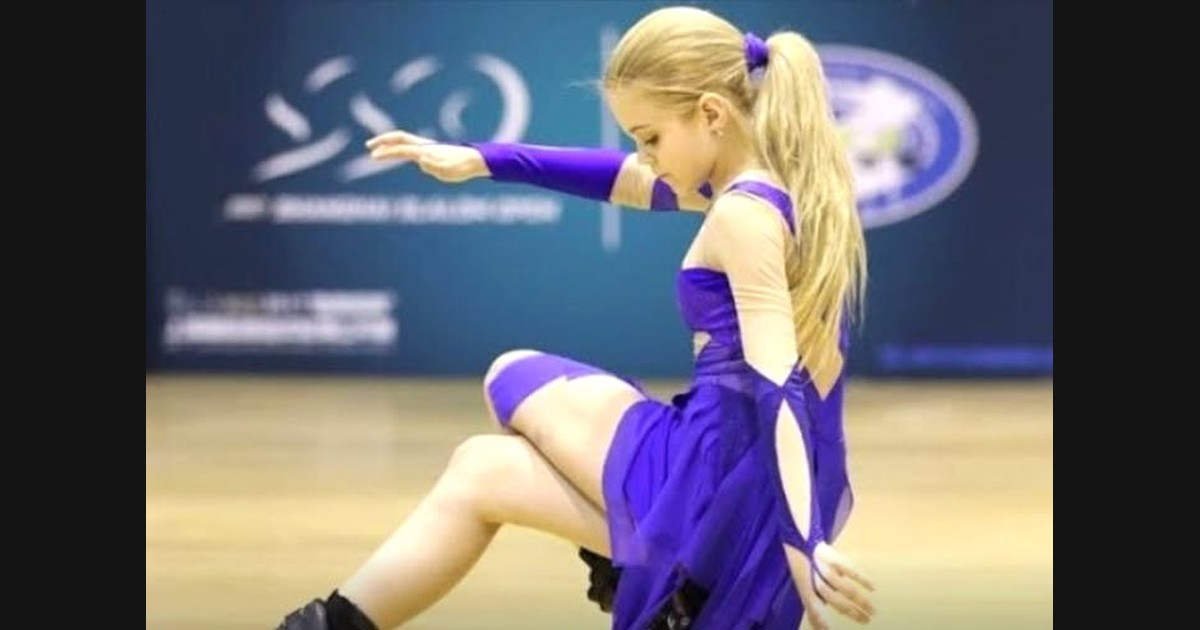
A line of cones can suggest a race, but classic freestyle slalom has another organizing purpose. The skater presents a timed routine with music, and the performance includes both technical and artistic considerations. Sofia Bogdanova’s 2018 recordings are therefore more intelligible when watched as complete routines rather than as attempts to finish the course fastest.
World Skate’s contemporary 2018 championship bulletin makes that distinction concrete: it describes a musical classic-slalom run and specifies technical and artistic assessment. The exact results in individual uploader titles should remain separate from understanding the discipline’s format.
Watch on YouTube ↗
The cones are a spatial reference
A fixed course gives a viewer something against which movement can be read. A change of direction, a transition between patterns, or a movement across the available space becomes clearer because the reference points remain in place.
Begin by following the overall route rather than trying to identify every specialist move. Where does a sequence continue along a line, and where does it change its relationship to the course? The question concerns the performance’s structure, not instructions for reproducing an advanced skating action.
A useful viewing map can mark an opening, a transition, a return, and a conclusion. Those categories explain how a routine occupies its time without requiring an outside viewer to award a technical score.
Classic and speed ask different questions
| Format | Primary viewing question |
|---|---|
| Classic freestyle slalom | How is a complete musical routine constructed within the course? |
| Speed slalom | How quickly is the designated course completed under its rules? |
World Skate’s discipline descriptions distinguish those aims. Speed of movement can matter within a classic routine, but it is not the only thing the format asks a viewer or judge to consider.
Likewise, an apparently effortless transition is not evidence that the action required little preparation. A finished competition recording shows the result of performance, not the complete learning process behind it.
An audience view may hide part of the course, so a confident impression is not the same as an official assessment from appointed judges.
Watch on YouTube ↗
Another event supplies a separate routine reference
The MarshalCup organizer’s upload identifies another 2018 Bogdanova performance. Compare a broad structural feature before comparing individual actions: how the opening establishes direction, how transitions connect sections, or how the ending relates to the music.
Do not assume that two clips show the same run because the skater and discipline match. Different event names identify separate contexts, and an uploaded placement label should not substitute for a verified results document.
Watch on YouTube ↗
Music is part of the time structure
The third recording adds another classic-slalom reference. Follow how a visible transition relates to an audible musical event. Does the movement arrive with a phrase, continue across it, or create another pattern against the sound?
A comparison can remain useful without a claim that every gesture has one intended meaning. The relationship between music, course, and continuous movement is enough to discuss concretely.
After viewing, describe one transition and one use of the fixed space. That response recognizes the routine’s construction while leaving official scoring, historical rankings, and technical instruction to evidence designed for those purposes.


