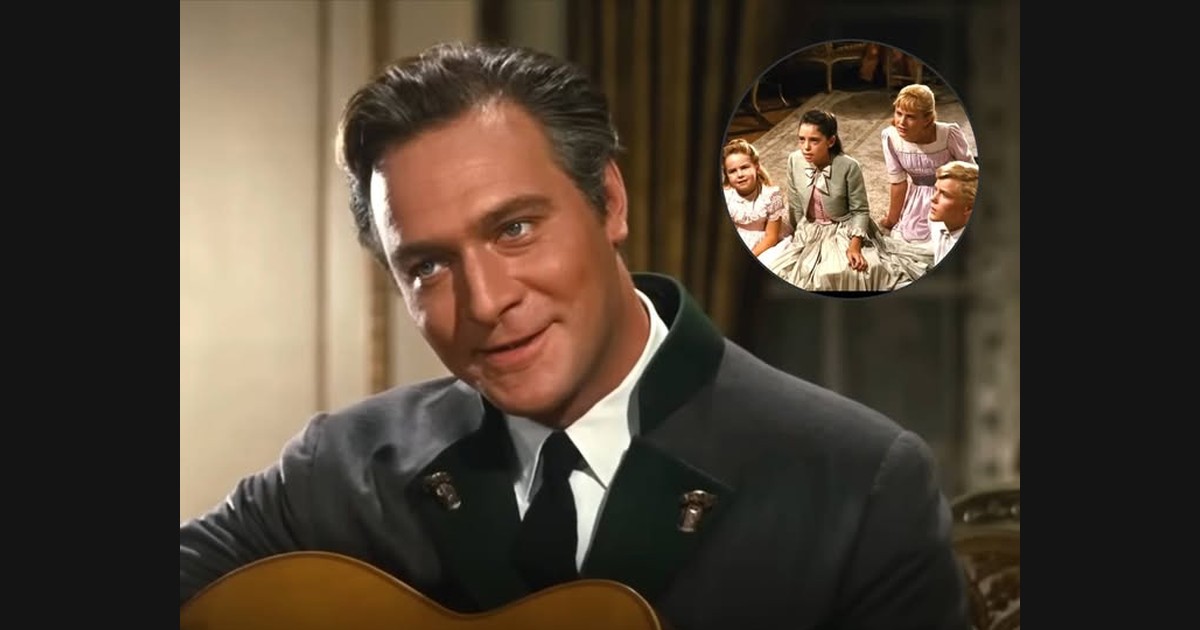
A newly released archival vocal is not a newly performed song. The “Edelweiss” clip featuring Christopher Plummer’s original singing makes that distinction essential. It pairs recorded material associated with the film’s production with familiar screen material, allowing a comparison with the voice heard in the released Sound of Music.
The 1965 film and soundtrack used Bill Lee’s singing for Plummer’s character. The alternate Plummer vocal was presented with the soundtrack’s 2023 expanded release. The later publication date therefore identifies access to an archival alternative, not Plummer returning to record a new performance in 2023.
Watch on YouTube ↗
Three contributors should remain visible
Plummer is the screen actor, Captain von Trapp is the character, and the singing voice depends on which version is being heard. Those roles can coincide in an alternate presentation and be divided in the released film without the character becoming a different person within the story.
The distinction is practical for listening. A viewer familiar with the film may initially hear the character through an established vocal reference. Replacing that reference with an alternate recorded voice can change the sense of delivery even while the screen performance remains recognizable.
That does not establish that the released choice was wrong or that the actor could not sing. The surviving alternate itself is evidence of recorded singing; the reason for the final production decision requires a separate documented explanation.
Compare a complete phrase
Choose a musical thought you can identify across the versions. Listen to its beginning, direction, and conclusion. What changes in emphasis or sound character, and what remains recognizable because it belongs to the composition?
Keep the comparison descriptive. A phrase may feel more conversational, more sustained, or more clearly articulated to a particular listener. Such observations are more informative than treating an alternate as automatically more authentic merely because the screen actor supplies the voice.
Watch on YouTube ↗
The film version is the released reference
The official 1965 film selection restores the version associated with the released screen work. A musical film is a collaboration among acting, singing, accompaniment, editing, and other production choices. The familiar result reflects those choices together.
Notice whether your memory guides your response. A voice heard many times can feel inseparable from an image. Hearing another documented version makes that association visible without requiring the original viewing experience to be discarded.
Watch on YouTube ↗
The audio credit clarifies the division
The Bill Lee and Charmian Carr audio reference identifies performers without relying on the screen image to assign every sound. It is a useful reminder that a soundtrack’s singing credit and a film’s acting credit answer different questions.
Craft’s expanded release also includes other kinds of archival material, but their presence should not blur this specific comparison. An alternate vocal, a demo, and an instrumental are different documents rather than interchangeable labels for any previously unreleased track.
The strongest account preserves both versions’ identities: a released film performance using Lee’s voice, and an archival Plummer vocal made newly available much later. That distinction lets listeners appreciate the differences without inventing a new session, a hidden rivalry, or an unsupported explanation of the original production’s decisions.


