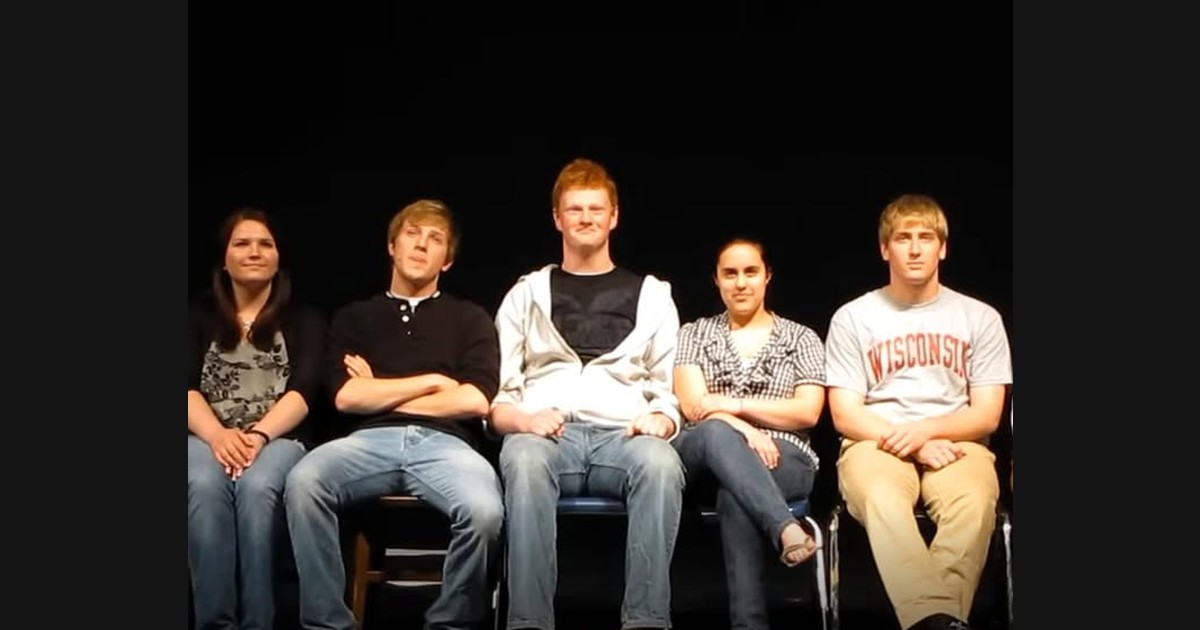
A comic pause can belong to the stage, the audience or the person preparing a recording. Apollo High School’s variety-show clips offer a concrete reminder of that distinction. The uploader of the 2012 teacher skit says they tried to reduce laughter between lines, accounting for silent moments in that video.
The opening Funny Talent Skit is identified by the same uploader with the school’s 2011 variety show. The two later selections come from the 2012 programme. They are related examples of a school stage in use, rather than parts of one continuous routine.
Watch on YouTube ↗
Performance timing survives through a recording frame
Wordless comedy depends on the relationship between actions and the attention around them. A gesture can establish an expectation; another action can continue or redirect it. The time between the two is part of how a sequence becomes intelligible.
A recorded version adds another layer. Its frame determines which performers remain visible, and its audio determines how much of the surrounding room a later viewer hears. The stage event and its online presentation are connected, but they are not identical experiences.
This matters especially when discussing a pause. Silence in an upload cannot automatically establish that everyone on stage stood without a response. The recording may preserve some parts of the room more clearly than others, or the publisher may have made an explicit adjustment.
The teacher skit’s note makes one adjustment visible
The 2012 teacher-sketch description is unusually useful because it names the intervention: the uploader attempted to quiet laughter between lines. That is a specific statement about that video. It should not be silently extended to every Apollo recording.
It also changes how a viewer can interpret the gaps. A moment that feels empty online may have had an audience response in the room. Conversely, a close, audible reaction can make an excerpt seem more continuously animated than another camera position would.
Watch on YouTube ↗
Audience response and performer control are different things
Comedy made for a room has to allow people time to react. A performer may continue, hold or reestablish attention before the next part. A later viewer encounters that timing through whichever portions of the response the recording retains.
The useful question is therefore not simply whether the sketch moves quickly. It is whether the relationship between setup, action and continuation remains understandable. Speed can remove necessary information as easily as a long delay can lose momentum.
Watch on YouTube ↗
The senior skit belongs to its own number
The 2012 senior-sketch upload points viewers toward the teacher skit as another selection. That cross-reference places the recordings within a shared programme without making their performers or comic structures interchangeable.
Keeping these distinctions improves the viewing. The 2011 number can be considered on its own sequence, while the 2012 teacher video carries an explicit note about its sound presentation. The archive preserves performances, but it also preserves choices about how those performances reach a later audience. A recorded pause deserves that context before it becomes a claim about comic timing.


