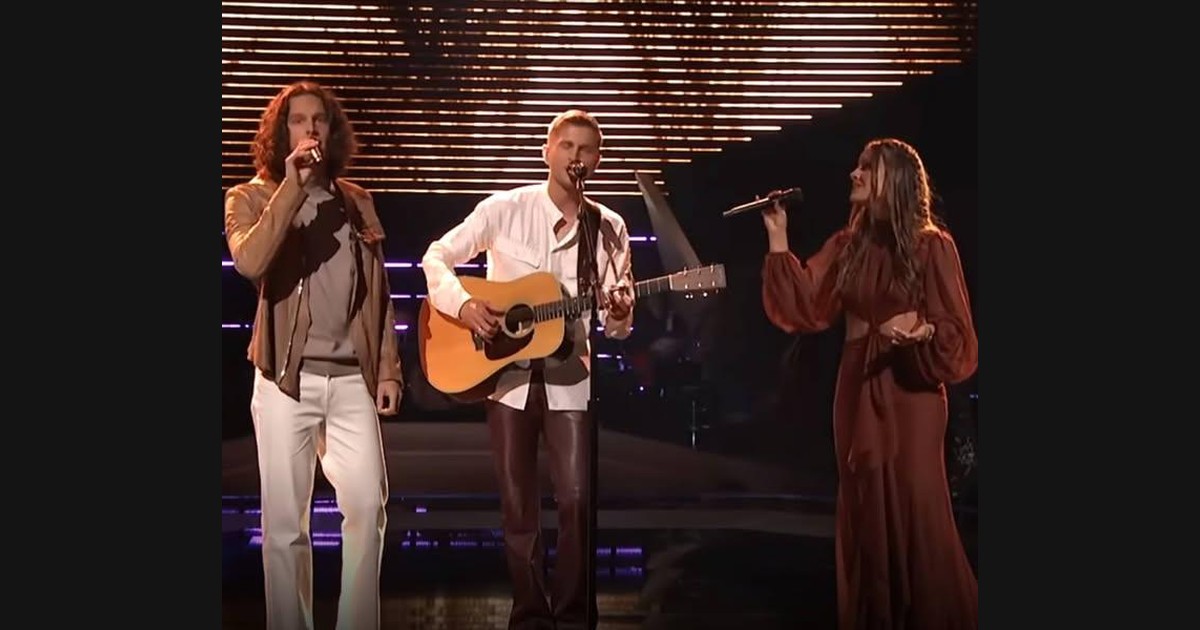
Girl Named Tom’s “Dust in the Wind” return is connected with an earlier Voice chapter, but it is not simply a newly uploaded version of the same television appearance. The official program labels the principal video an All-Star Showdown return. The other selections provide an artist-published acoustic version and footage identified with season 21.
Goshen College’s own 2026 announcement confirms the returning sibling trio as Bekah, Joshua, and Caleb Liechty and identifies their earlier season-21 win. That supplies a concrete timeline without turning the reunion with familiar repertoire into a claim about an entire current season’s outcome.
A returning song creates a comparison
When a group revisits a familiar selection, listeners can compare more than vocal power. The same composition provides a reference for how the performers organize their parts and maintain continuity together.
Watch on YouTube ↗
Three singers can carry different musical responsibilities without requiring three separate lines at every moment. They may share a melody, support it with other pitches, or leave space for a single part to become more prominent. The number of people and the number of active musical lines are related but not identical.
Family identity does not explain every musical choice
The trio’s sibling relationship is documented background. It should not become a substitute for describing how the ensemble works, or a claim that coordinated singing happens automatically without preparation.
A useful listening focus is the end of a phrase. Notice how a line settles and how the next entry connects with it. Shared releases and clear transitions can contribute as much to an ensemble’s coherence as simultaneous entrances.
| What stays constant | What can change |
|---|---|
| The composition. | The occasion and presentation. |
| The named trio. | The balance and distribution of vocal parts. |
| A recognizable melodic route. | The accompaniment and pacing around it. |
The artist’s acoustic version is another setting
The second clip is published by Girl Named Tom and explicitly labeled a live acoustic version. It retains the group and song while supplying a presentation outside the principal All-Star television frame.
Watch on YouTube ↗
Compare a complete corresponding passage rather than assuming every version uses the same take. The official artist label is useful for identifying the piece, but it does not automatically make the recording part of the same session as a program upload.
The season-21 clip looks backward
The final selection is a third-party upload identified with season 21. That is an earlier program reference, not an additional 2026 All-Star appearance. Keep its label attached to its own footage.
Watch on YouTube ↗
The chronology makes the set meaningful: a group returns to material associated with its television history, while another artist-published version shows the song continuing within its repertoire. The three documents need not be identical in arrangement to remain connected.
Use the comparison to describe continuity
Choose one recurring phrase and follow its melodic outline through the set. Then describe the relationship between the featured line and its support in each context. This keeps the comparison grounded in the song rather than a generalized claim that the group has changed completely or remained untouched by time.
The return is most useful as another chapter in a documented performance history. The trio, composition, and vocal cooperation supply continuity; the program and recording contexts give each version its own place.


