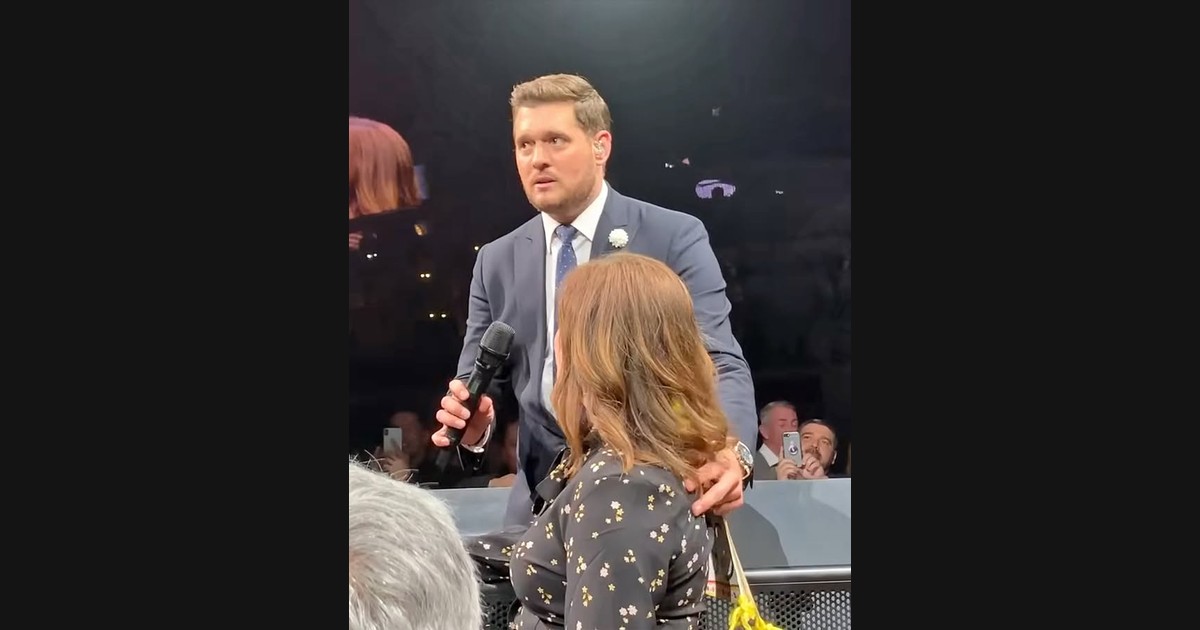
Diana Fairbanks’s own recording of singing A Whole New World with Michael Bublé includes a useful performance detail: he asked her to sing first, taking what she calls the prince’s part. A familiar duet became a shared task with an agreed starting point.
Fairbanks identifies the occasion as Oracle Arena in Oakland on 3 April 2019. The recordings preserve a concert encounter, while her firsthand description keeps the guest singer’s contribution visible within it.
Watch on YouTube ↗
A duet begins by establishing who does what
Knowing the same song is not quite the same as knowing which part to begin. A duet can contain separate entrances, answering phrases and material shared later in the piece. Agreeing on a starting role gives both people a practical route into that structure.
The detail also separates a fictional role from the identity of the performer singing it. A person can carry a character’s musical lines without being that character. On a concert stage, the useful responsibility is making the part legible to a partner and an audience.
That turns the encounter into something more than a celebrity allowing a fan to sing. The two participants have to maintain the same musical world, with an entry that gives the other voice somewhere to respond.
The song’s title was itself a collaborative decision
Composer Alan Menken has recalled giving lyricist Tim Rice a working title focused on the world being at someone’s feet. Rice changed it to A Whole New World. Menken’s firsthand account gives the familiar title a history of collaboration before any later duet takes place.
The change is revealing without requiring a quotation of the lyrics. A title centered on a shared world opens the idea outward. It suits a dramatic exchange in which one perspective can become an experience another person joins.
The song belongs to Aladdin, with music by Menken and lyrics by Rice. Its ability to travel into a concert setting depends partly on that clear relationship between invitation and response.
Watch on YouTube ↗
Two recordings keep one occasion in view
Fairbanks’s second upload also identifies the Oakland arena and date. It gives another presentation of the encounter, not a second documented visit to Bublé’s stage. That distinction helps keep the performance’s sequence attached to the right occasion.
It is useful to follow the duet as a complete exchange rather than selecting only a few confident notes. The interest includes how a guest establishes a beginning and how the shared song continues around it.
Watch on YouTube ↗
The students helped the request become visible
KCRA’s local report explains that Fairbanks’s students made a sign to attract attention at the concert. That adds a specific community contribution to the story without turning the classroom into an invented rehearsal programme.
The musical result remains a partnership between two people sharing known material in a public setting. The sign helped create an opportunity; the song supplied roles through which that opportunity could become a performance. Fairbanks’s own account makes both her participation and the practical beginning clear.


