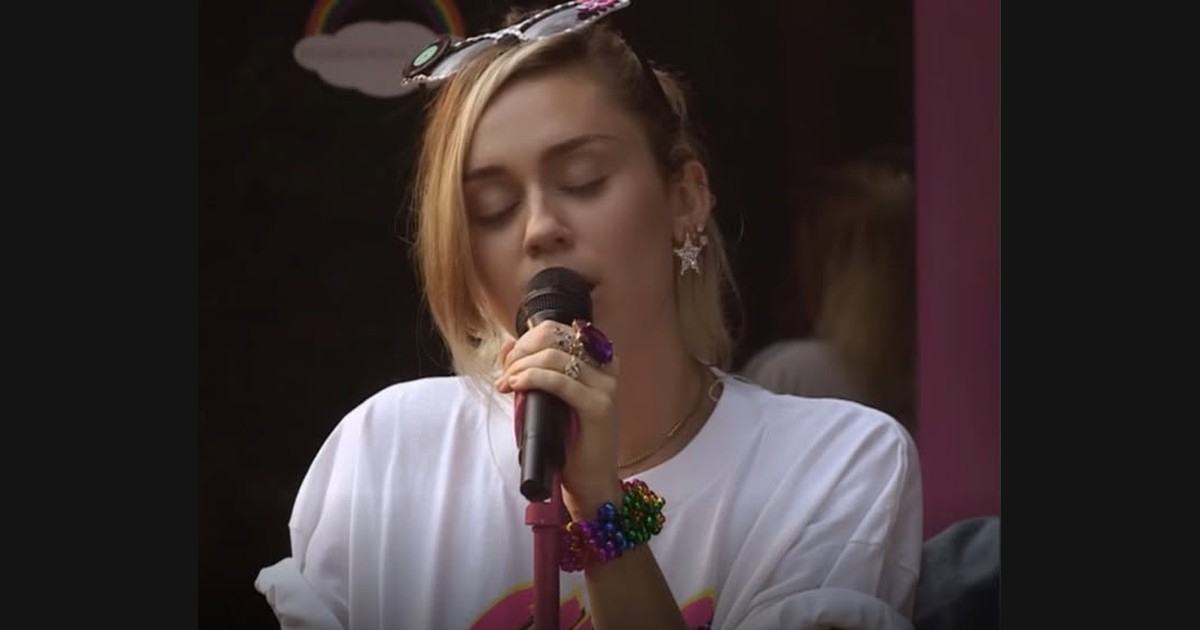
Two songs can reveal different artistic possibilities without requiring an argument about which represents the real singer. Miley Cyrus’s The First Time Ever I Saw Your Face and Midnight Sky give their narrators different relationships with time, intimacy and independence.
The BBC identifies the opening cover as a performance from Cyrus’s Rainbowland Studios in Malibu for Radio 1’s Live Lounge. The Midnight Sky companion also belongs to the broadcaster’s Live Lounge output. They are separate selections, not consecutive sections of one medley.
Watch on YouTube ↗
The ballad looks back to a beginning
The First Time Ever I Saw Your Face takes first encounters as its organizing idea. A narrator looks back toward moments that have acquired lasting significance. The dramatic action is remembrance: the performance has to make a past experience feel consequential in the present.
That creates a particular kind of intimacy. The song does not need a detailed chronology of an entire relationship. Selected beginnings carry the emotional argument, giving a performer room to dwell on how an encounter is remembered rather than to report everything that followed.
The title’s emphasis on the first time also changes the function of repetition. A recurring musical shape can return the listener to another aspect of an originating experience. The song’s continuity comes from that common viewpoint, even as its images move onward.
A cover does not require a literal confession
A singer can inhabit this position without describing their own private history. Interpretation involves choosing how to address the material: whether a phrase feels immediate, reflective, tentative or settled. Those choices can be considered without assigning every word to an actual partner.
The distinction leaves more room for the artistry. A useful question is how the performance organizes a thought over a complete phrase, not which private event a viewer can attach to it.
Watch on YouTube ↗
Midnight Sky turns the address outward
Midnight Sky offers a contrasting narrator, asserting independence and movement beyond another person’s control. Where the ballad locates meaning in a remembered connection, this song gives separation and self-direction a more public shape.
The difference concerns dramatic stance as well as tempo. A song can move faster without being independent in subject, or remain measured while expressing defiance. Here, the narrator’s relationship to another person changes the job the performance has to do.
Compare the central gesture of each song. One asks the listener to remain with a memory; the other declares a present position. A performer needs different kinds of emphasis to make those actions legible, even when the recognizable voice remains the same.
Watch on YouTube ↗
The returning ballad is a useful reference
The third upload returns to The First Time Ever I Saw Your Face, placing the ballad beside the intervening contrast. It does not establish a newly documented concert or require a second biographical explanation.
Heard this way, the selections demonstrate the value of repertoire range. Cyrus can approach attachment and autonomy as different dramatic tasks. The interest lies in how the singer gives each task a convincing shape, rather than forcing both songs into one story about her life.


