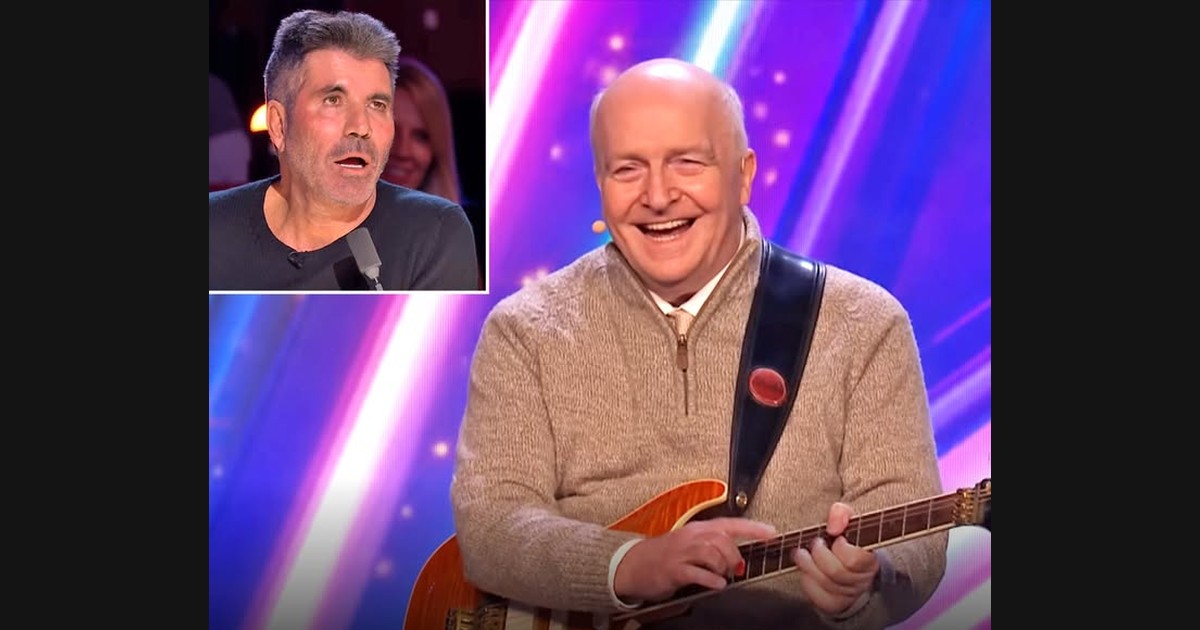
Kenny Petrie’s Britain’s Got Talent guitar audition is presented by the program as a surprise. That television frame is only one way into the clip. The musical material also invites a more concrete focus: how a short guitar feature connects recurring ideas with changing lead phrases.
The official upload identifies Petrie and the 2022 audition. That is a clearer point of reference than a later headline’s current-age label or a claim that he had never performed before. The clip documents a particular appearance, not the complete history of his playing.
A riff and a lead phrase do different jobs
A riff is a recurring musical figure that can supply recognition and continuity. A lead phrase is a more extended foreground statement, which may develop, answer, or move away from that reference. A compact guitar presentation can use both without becoming a complete performance of every song it briefly evokes.
Watch on YouTube ↗
Begin by retaining one short idea that returns. Listen for its recurrence while the surrounding notes change. This establishes a reference point, making it easier to follow the feature as a sequence rather than as an undifferentiated display of fast movement.
Recognition alone is not a complete repertoire list. A brief resemblance to a familiar guitar figure does not justify naming a composition unless the musical identification is clear. It is possible to describe the function of a passage without inventing a song-by-song medley.
The beginning and ending of a note matter
Articulation concerns how notes are begun, connected, and released. Two passages can contain similar pitch material while differing in how clearly each note is separated or how smoothly one leads into another. Speed is only one variable in that relationship.
| Listening focus | What to describe |
|---|---|
| Attack | How distinctly a note begins. |
| Connection | Whether successive notes feel separated or joined. |
| Duration | How long a note remains part of the phrase. |
| Release | How the note ends or leads onward. |
These terms help explain a guitar feature without guessing at every piece of equipment. The finished sound does not, by itself, reveal a complete signal chain, and a visible instrument is not proof of which settings produced each effect.
The later audition presentation changes the wrapper
The second official upload calls Petrie’s clip an unforgettable audition. Treat that as another program presentation of the appearance, not automatically as another audition in a later season.
Watch on YouTube ↗
For a comparison, follow the same musical passage in both items. A differently selected opening or a reaction cut can change the viewer’s sense of pacing without showing that the guitarist changed the performance itself.
The broader rock feature has its own selection
The final official video carries the broader “never too old to rock out” framing. Keep that program title separate from the evidence about Petrie’s particular audition. It is an invitation to a themed viewing selection, not a complete musical biography.
Watch on YouTube ↗
A useful second pass returns attention from that framing to the phrase: where an idea starts, where it settles, and how the next idea takes over. An audition has limited time, so transitions and endings help its material feel connected.
The performance can remain entertaining as a television surprise while also being heard as guitar playing with structure. Following riffs and phrases gives the viewer something more durable than simply counting fast notes or repeating the program’s reaction language.


