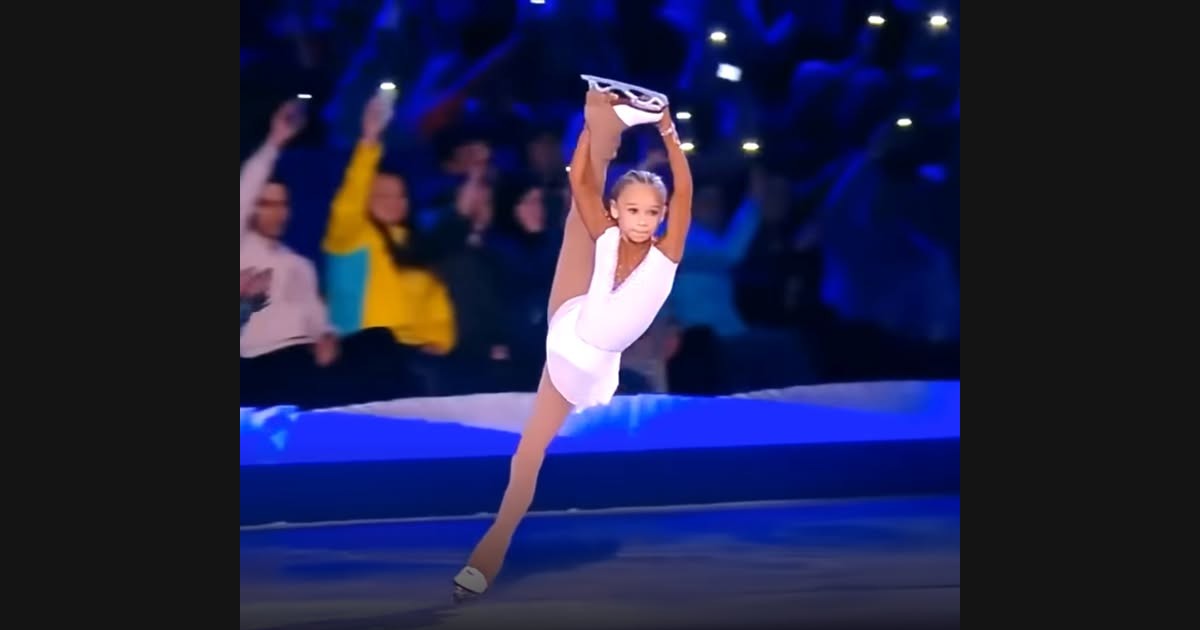
Veronika Zhilina is the skater in the featured “Hallelujah” routine, but naming the skater does not identify the singer on the soundtrack. The program’s own published description credits Alexandra Burke’s rendition. Leonard Cohen is the songwriter behind the composition. Those three names answer three different questions about one performance.
This is a useful distinction for anyone trying to locate music heard in a skating clip. Searching only the skater and song title can return other routines, other singers, and republished excerpts. Start by separating the participant on the ice from the recorded performer and the composition.
Three credits belong beside the clip
| Question | Identification |
|---|---|
| Who performs the routine? | Veronika Zhilina. |
| Whose song is it? | Leonard Cohen’s “Hallelujah.” |
| Which singer does the program credit? | Alexandra Burke’s rendition. |
Watch on YouTube ↗
The roles are connected through a production, but they remain distinct creative contributions. A skater can interpret a recorded song through movement without singing it. A singer can perform a composition without having written it. A songwriter’s credit does not identify every later recording used in a routine.
A credited rendition is not automatically an exact audio master
The program description supplies a dependable lead for identifying the musical interpretation. It does not, by itself, establish that every republished clip uses an identical edit, level, or master. Television excerpts can also present a selection of a longer routine.
That is why a precise answer can remain bounded: the program credits Burke’s rendition, while a specific upload’s detailed audio edition needs its own evidence. This is enough to guide a listener toward the relevant singer without inventing a complete soundtrack-production history.
The second skating upload is another document
The companion clip again identifies Zhilina with “Hallelujah.” Use it to keep the routine recognizable while checking the uploader and presentation. It should not be counted as a new skating event merely because it has another title or publication date.
Watch on YouTube ↗
If your purpose is music identification, compare corresponding passages rather than unrelated sections. A different point in the same song can suggest a larger change than a different edition actually contains. Match the melodic passage first, then consider what the available credits establish.
Burke’s performance supplies a named reference
The final selection comes from the official X Factor channel and presents Burke singing “Hallelujah.” It gives a viewer a direct reference for the singer named in the skating program. It is not proof that the television singing performance itself supplied the routine’s exact audio.
Watch on YouTube ↗
The difference matters: “the program credits this singer’s rendition” and “this exact live take is the soundtrack” are not equivalent claims. The first follows the supplied credit; the second would require a more detailed production source.
The composition has a separate catalog history
Cohen’s official catalog places “Hallelujah” on the 1984 album Various Positions. That background identifies the work before these later interpretations. The title alone should not be treated as proof that the music is an anonymous traditional hymn or that the routine has a specific personal dedication.
With the credits separated, the viewing path becomes straightforward: recognize the skater, identify the song, and use the program’s named singer as the recording reference. The routine can then be appreciated without making its visual performer responsible for every element of the soundtrack.


