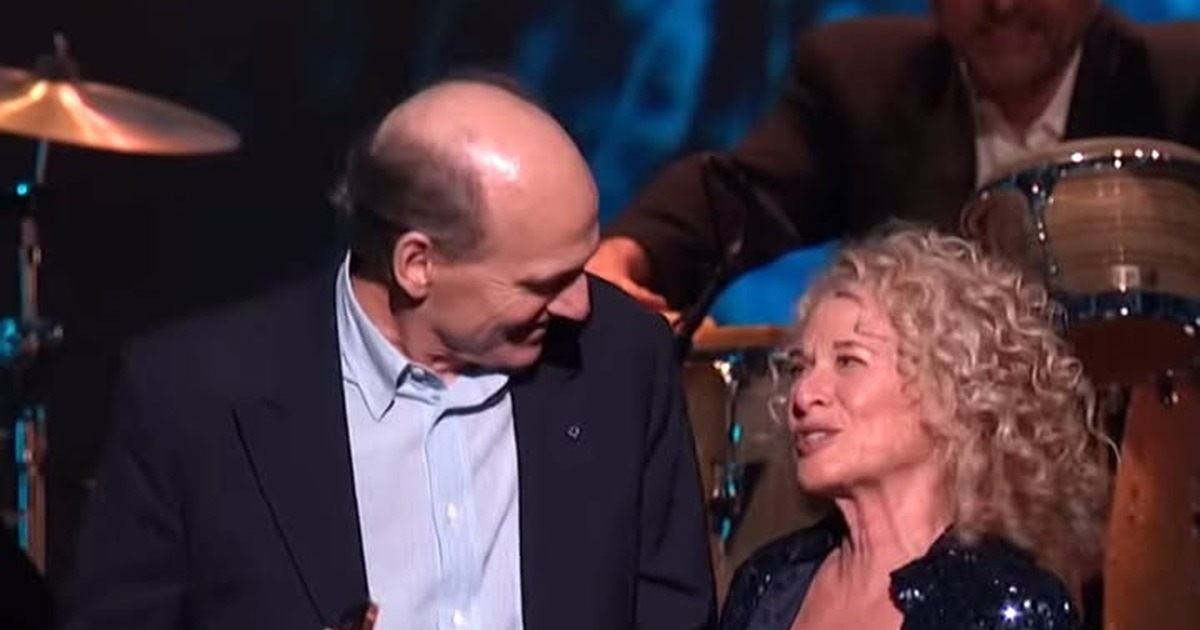
A songwriter’s catalogue becomes a concert through selection: some songs are chosen, performers are paired and a running program gives separate compositions a shared occasion. Carole King’s Will You Love Me Tomorrow with James Taylor offers an entry into that process. It belongs to a MusiCares tribute whose purpose was broader than presenting one familiar song.
King’s official catalogue dates the gala to January 24, 2014, in Los Angeles. The concert film was released on June 23, 2015. Those dates describe the event and its later publication, while the featured composition belongs to an earlier songwriting history.
The MusiCares selection
Watch on YouTube ↗
A catalogue is not the same thing as a program
A catalogue contains work accumulated across different periods and contexts. A concert makes a new arrangement of that work, deciding what can represent a career on one occasion. A tribute can therefore connect songs that were not originally conceived as neighboring statements.
The official release lists a wide selection, including So Far Away, Beautiful, Up on the Roof and Will You Love Me Tomorrow. It also documents numerous guest artists. The selection is evidence of curatorial breadth; it does not require assuming why every performer was chosen or what a particular pairing privately meant.
This framework gives the main clip a specific place. King is both the artist being honored and a performer of material from the catalogue. Taylor’s documented accompanying role adds another relationship inside a program organized around her work.
Use a song to ask a programming question
Imagine describing the selection for someone who has not seen the entire concert. Include three things: the composition, its performers and the occasion. Those details explain more than a claim that the appearance summarizes a whole career.
Then consider what a familiar song can contribute to a retrospective program. It can connect listeners arriving through different recordings, give a guest a recognizable point of collaboration or bring the songwriter’s own interpretation into view. These are functions a selection can serve, not conclusions about the organizers’ undocumented intentions.
Another concert provides another selection of the work
The related clips come from King and Taylor’s Live at the Troubadour. Their official release announcement identifies November 2007 reunion performances, published in a 2010 concert release. The footage is therefore separate from the 2014 MusiCares event, even when a video title foregrounds the later release year.
You’ve Got a Friend is one entry in that concert’s track list. Consider how the same performers can carry a different composition within another program. The continuity is the partnership; the song and event change.
Watch on YouTube ↗
A second piece makes the program visible
It’s Too Late gives the comparison another point. Two selections from one concert help reveal that a set is not a single sustained mood. Different compositions can supply contrast while the performers remain a connection between them.
Compare how each selection establishes its beginning and leaves its ending. What makes it seem complete as an individual song, and what makes you curious about its place among other material? Keep those questions attached to the available clips rather than inventing transitions not included in them.
Watch on YouTube ↗
Returning to MusiCares, the main selection can now be understood as both an interpretation and a programming choice. The documented gala, film release and catalogue create three useful layers of context. Hearing them separately lets a tribute represent a body of work without requiring one performance to stand for everything its songwriter has made.


