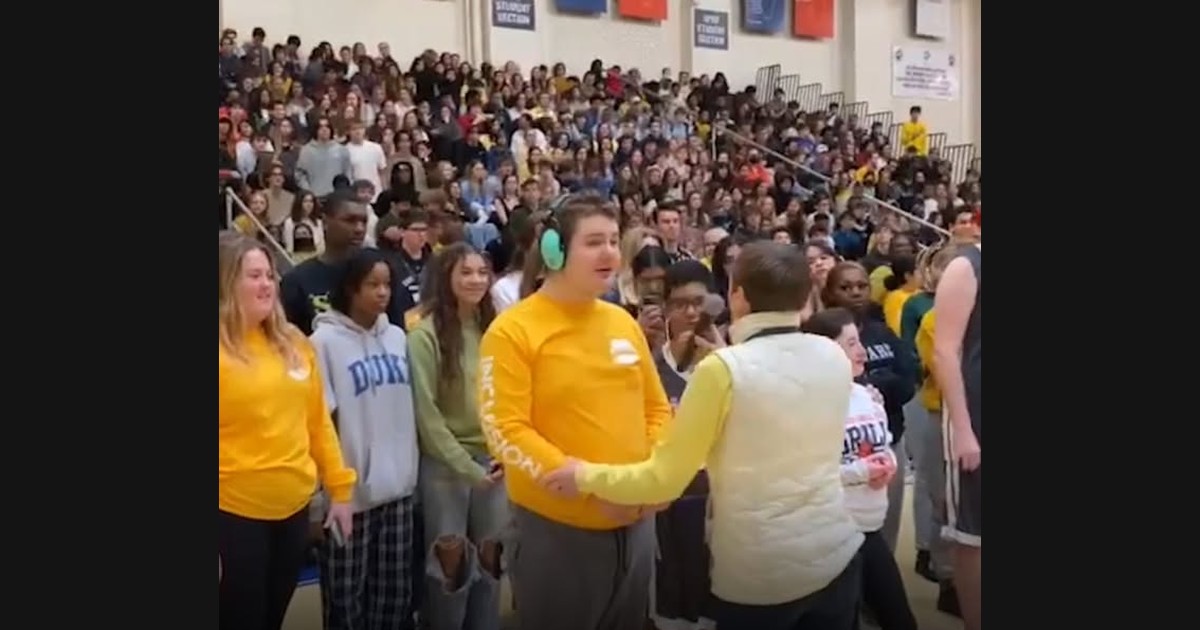
A national anthem occupies an unusual musical position. A featured singer may carry the melody, while the surrounding participants already know the song and understand its place in the occasion. The performance can therefore belong both to an individual voice and to a wider group of listeners.
The three separate recordings below offer ways to consider that relationship. They should remain distinct occasions rather than being combined into a single school or sporting event. Their common reference is “The Star-Spangled Banner,” not a shared cast of participants.
Watch on YouTube ↗
Familiarity supplies a common route
A widely known melody gives participants an idea of where the music is going. That expectation can support listening, singing, or simply following the progression. The featured performer still makes choices about pace, phrasing, and the space between ideas.
For the first recording, follow the musical line rather than a descriptive label attached by an uploader. Notice how a phrase is sustained and how one thought moves into the next. A title does not, by itself, establish a person’s medical history or explain the meaning of every visible action.
This keeps the discussion centered on participation. A voice can be appreciated for what it contributes to the occasion without becoming evidence for a sweeping claim about ability, difficulty, or personal experience.
A song with separate words and musical history
The Library of Congress’s catalog of an 1814 printed score identifies Francis Scott Key and composer John Stafford Smith. That historical document reminds us that the familiar anthem has a history beyond any one contemporary performance.
A public rendition is an interpretation of that inherited material. Some listeners attend to the text, others to a recognizable melodic contour, and others to the collective occasion. Those forms of attention can coexist without every participant responding in exactly the same way.
Watch on YouTube ↗
Support can become part of the performance
The Trail Blazers’ official recording identifies Maurice Cheeks helping Natalie Gilbert sing the anthem. NBA’s later retrospective places that occurrence in 2003. The relevant relationship is concrete: another person joins a featured singer rather than leaving the musical task entirely isolated.
Consider what shared singing changes. A second voice can provide a reference and make continuation a joint activity. Describing that visible support is more precise than inventing what either participant privately felt or treating the moment as a medical explanation.
It also changes the usual boundary between performer and surrounding occasion. The song continues through cooperation, giving the musical event a shared form without requiring an entirely new composition.
Watch on YouTube ↗
A separate sporting context
Malea Emma’s own upload identifies a UCLA men’s basketball setting. It supplies another example of a featured anthem performance within a larger program. Keep its performer and occasion separate from Gilbert’s recording rather than letting the shared song erase those differences.
Compare how the beginning establishes a musical reference and how the conclusion returns attention to the wider event. Those boundaries help explain why an anthem performance has a different public function from an independent concert number.
After the selections, describe one relationship between a singer and the surrounding participants. That observation can recognize musical contribution and support while leaving unverified biography, imagined emotions, and unrelated uploader claims outside the account.


