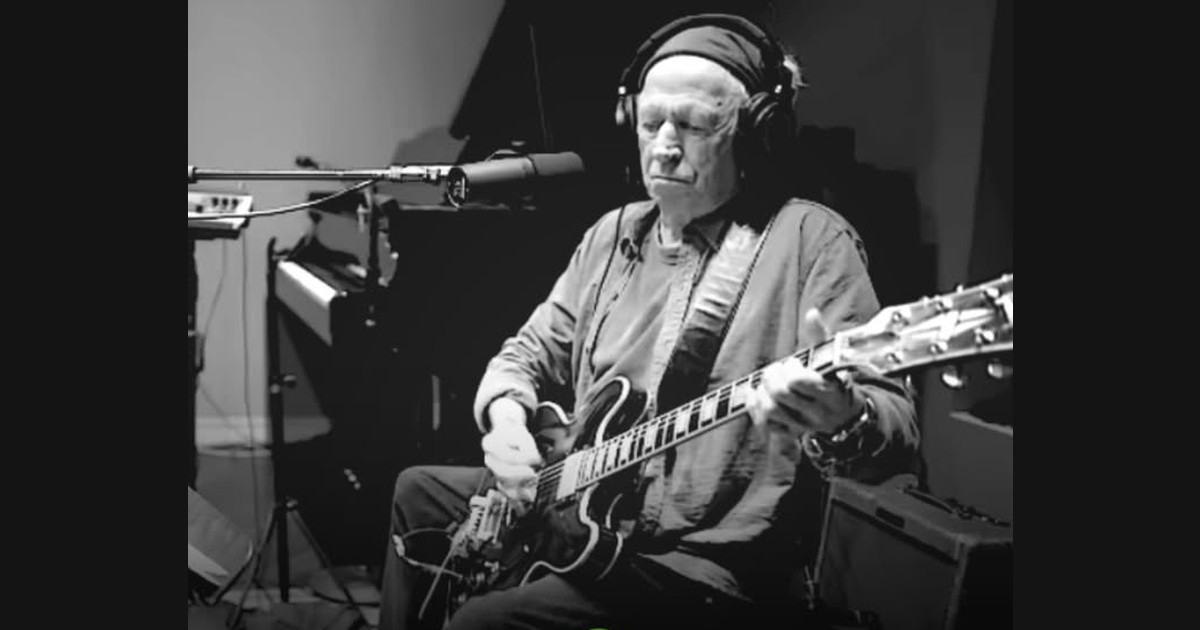
Keith Richards’s “I’m Waiting for the Man” is a contribution to a Lou Reed tribute project, not an unidentified new Rolling Stones track. Richards’s official announcement places the recording on The Power of the Heart: A Tribute to Lou Reed, alongside newly recorded interpretations by several other artists.
The announcement dates the digital single and music video to March 1, 2024, and identifies Light in the Attic’s physical tribute release for April’s Record Store Day. Those details give the performance a project and release context beyond the familiar guitarist’s name.
An anthology organizes different interpreters around one writer
A tribute album can achieve continuity without using the same singer or band on every track. The common reference is the songwriter or repertoire being honored. Each contributor then supplies a separate interpretation within that wider selection.
Watch on YouTube ↗
For Richards, the credit identifies a cover of Reed’s song. A listener can recognize Richards’s public recording identity while keeping the composition attached to Reed. That relationship is more precise than assuming that a recognizable voice or guitar approach establishes authorship.
The anthology context also discourages an unhelpful expectation of imitation. A new interpreter can acknowledge the source while retaining an individual approach. The relevant question is how existing material is presented through another performing identity, not whether the result duplicates an earlier record.
The performance and project have different scales
| Scale | What belongs there |
|---|---|
| Song | Reed’s composition. |
| Track | Richards’s recorded interpretation. |
| Album | A multi-artist selection organized as a Reed tribute. |
| Video | The presentation through which this track is encountered. |
Each level can have its own credits. The musicians appearing around a featured artist belong to a particular recording, while the complete album can involve many other performers. A single clip is therefore not a complete personnel list for the anthology.
A live duet changes the collaborative task
The accompanying “Love Hurts” clip identifies Richards with Norah Jones. It changes both song and performing relationship. The interest is now in a shared vocal performance rather than another version of the Reed tribute track.
Watch on YouTube ↗
Compare the organization of responsibility: one featured interpreter within a tribute recording, then two named performers sharing a different composition. A duet can distribute phrases or combine voices; the presence of another singer changes the arrangement’s possibilities without proving anything about who wrote the song.
The Queen reference changes the repertoire entirely
The final video is Queen’s official “Bohemian Rhapsody.” It is a separate work, included here as another example of a recording with a strong public artist identity. It should not be presented as part of the Reed anthology or as a Richards collaboration.
Watch on YouTube ↗
The connection is at the level of listening to an established recording identity, not a shared session or song. Keeping that boundary clear allows the companion to stand independently rather than forcing a false historical link between unrelated clips.
Return to the actual tribute
Richards’s contribution becomes clearer when its purpose is named: a new interpretation within a collection honoring Reed. Follow how the performed line and accompaniment sustain the song’s continuity, while the official project credit supplies its release history.
The track can then be heard as one artist responding to another’s repertoire, with the anthology providing a frame for difference rather than a demand that every contributor sound alike.


