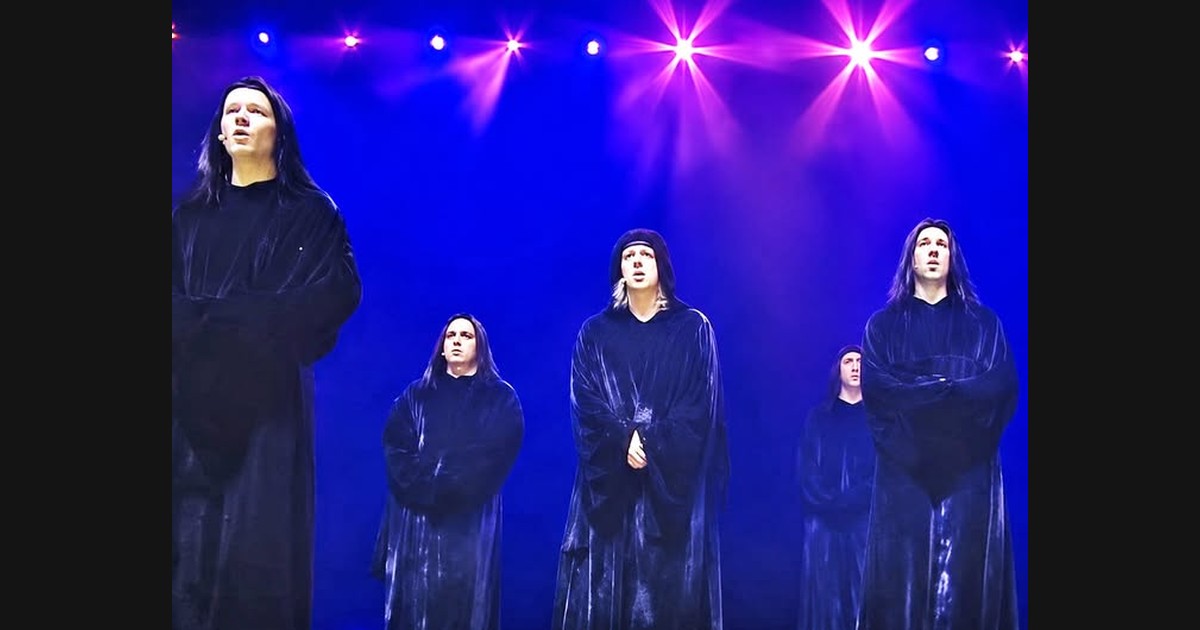
There is a productive tension in Gregorian singing The Sound of Silence: many voices deliver a song whose narrator struggles to make contact. The scale of the ensemble can suggest community, while the writing presents the difficulty of being understood. Those ideas do not have to cancel each other.
Gregorian’s official channel identifies the opening recording with the Epic Chants Tour of 2013 and licenses the footage from Nemo Studios. That places the music in a designed concert production. The useful interpretive question is what happens when an individual perspective becomes a shared vocal statement.
Watch on YouTube ↗
One narrator does not require one singer
A grammatical viewpoint and the number of performers are separate matters. A chorus can speak as a single character; one singer can tell a story populated by many people. Adding voices changes the sound and public scale of a passage without automatically changing who is speaking.
Here, that distinction provides a way through the apparent contradiction. Collective singing can make an isolated narrator’s concern into a public appeal. It can also make the separation described in the song feel more striking, because the listener hears cooperation while considering a failure of communication.
This is an interpretation to test against the complete performance, not a claim about the private intentions of every singer. The strongest reading is the one that accounts for both the composition and the choices of its new setting.
Follow the difference between size and direction
An ensemble texture can be impressive immediately. Its dramatic usefulness depends on where a phrase is going. If attention stays only on the number of voices, the changing argument within a song can disappear behind a constant impression of grandeur.
Try separating two observations. First, follow the musical weight: how full or exposed does a passage feel? Then follow the thought: is the narrator describing, addressing, warning or searching? The relationship between those two paths is more revealing than treating every increase in intensity as the same emotion.
A repeated phrase can gain urgency through its place in the sequence, even when its outline stays recognizable. This is why hearing the whole song matters. Musical return happens after intervening material; it arrives with a different context.
Watch on YouTube ↗
A music video changes the visual argument
The official Sound of Silence video supplies another presentation of Gregorian’s interpretation. A produced image can direct attention toward a symbol, a setting or a particular figure. A concert recording instead keeps the act of collective performance available as part of the meaning.
The two formats need not be treated as rival claims to authenticity. They provide different routes into the same relationship between a song’s individual voice and an ensemble’s public sound.
Watch on YouTube ↗
A different kind of address in Hallelujah
The companion Hallelujah performance belongs to the same named tour but brings another composition into that vocal world. Its title carries associations of praise, while the song itself invites a more complicated reading than a simple celebration.
That contrast keeps repertoire in view. Gregorian’s identity provides continuity, but the words and dramatic position of each song still matter. The most rewarding comparison follows what the ensemble is being asked to express, rather than assuming the same vocal scale means the same thing every time.


