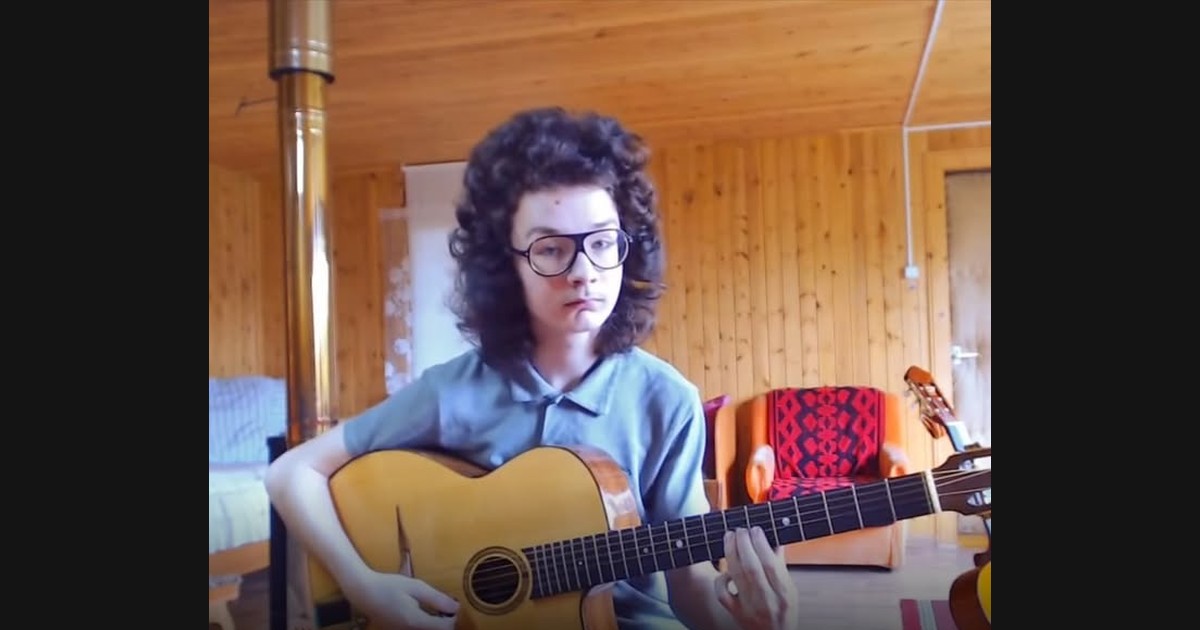
A melody can remain recognizable when its sound changes. That makes guitar covers useful for listening beyond note choice: the beginning of a sound, how long it remains prominent, and how it connects with the next sound can all affect the musical result. Max Ostro’s “Rhumba” offers a focused starting point for that kind of attention.
Ostro credits the piece to DiDuLa. Rather than approaching the cover as a race through the notes, consider how individual sounds acquire a place within a phrase. The companion “Groove On” feature and David Daza’s “Rhumba” cover allow different parts of that question to be compared.
Watch on YouTube ↗
Pitch and sound character are separate observations
Pitch helps identify a melody, but it does not describe everything about a note. Two sounds can occupy the same pitch while differing in their onset, texture, and duration. Those differences contribute to what listeners often gather under the broad word “tone.”
Choose a short, recognizable phrase and follow the beginning of each sound. Does the sequence feel sharply separated, smoothly connected, or mixed? Then follow how the sounds end. A phrase’s identity can depend on both its attacks and the space left between them.
These are listening descriptions, not equipment diagnoses. A recording alone may not reveal how an instrument, a player’s actions, amplification, and processing contribute to the final sound. Naming the audible effect is more defensible than assigning it confidently to an unseen setting.
A phrase is more than a row of notes
Once the individual sounds are clear, consider their direction together. A phrase may seem to gather momentum toward an arrival, linger around an idea, or open into another passage. Its organization gives local details a larger purpose.
Try describing the same passage twice: first through sound character, then through movement. “The notes are clearly separated” concerns articulation. “The phrase presses toward its ending” concerns direction. Keeping those categories separate can explain why similar material feels different across interpretations.
Watch on YouTube ↗
Another piece tests the listening method
The JTC “Groove On” feature changes the musical framework. Rather than expecting every phrase to resemble “Rhumba,” use the same categories to notice what the new setting invites. Does a recurring idea make articulation easier to follow? Does a longer line shift attention toward continuity?
JTC identifies the backing as a Martin Miller track. That context reminds us that a lead line is heard against something: accompaniment can make an attack stand out, fill a gap, or change the apparent weight of a sustained sound.
Watch on YouTube ↗
The same piece in another player’s account
Daza’s cover returns to “Rhumba,” giving the composition more continuity across the comparison. Find a phrase you recognize and describe its sound and direction without assuming that any difference must be an error.
A useful result is specific and limited: one version makes a connection more noticeable, or a particular arrival feels more clearly prepared. Avoid broad claims about which player possesses more feeling; the recordings support discussion of decisions more readily than private emotional states.
Returning to Ostro afterward can make the cover’s detail easier to hear. The tune remains the reference, but the way sounds begin, continue, and relate becomes part of the music rather than a decoration added after the notes.


