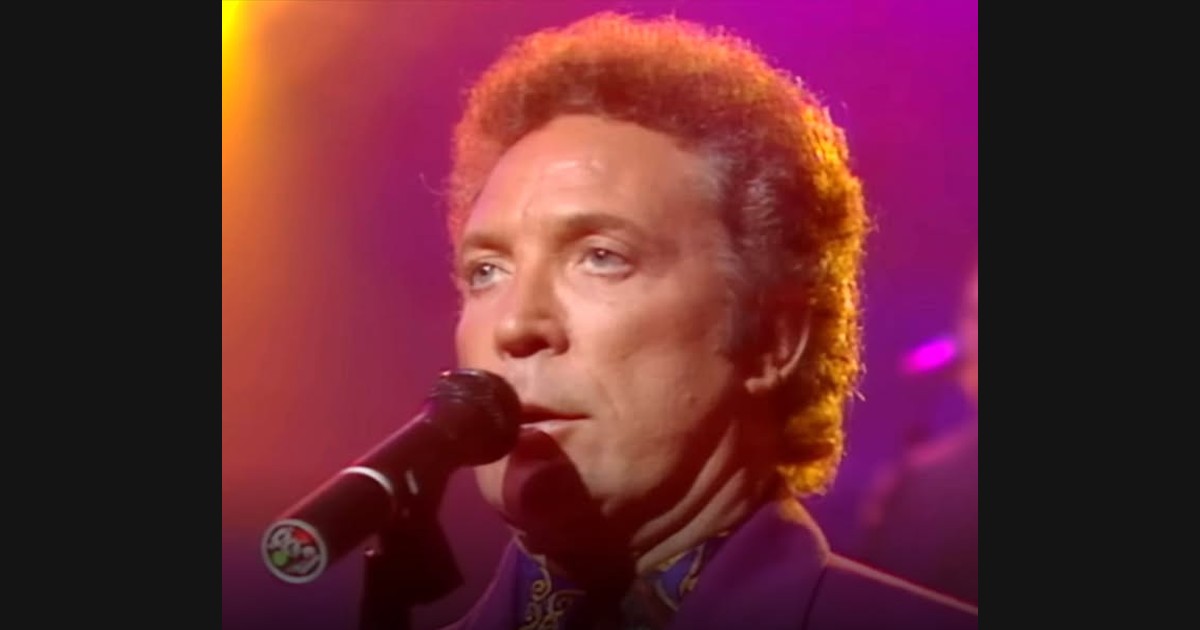
A collaboration can be a duet even when only one of its featured musicians sings. Tom Jones and David Gilmour’s television performance of Purple Rain brings a lead voice and a lead instrument into the same musical conversation. Their different responsibilities are the point of the pairing.
Jones’s official archive identifies the appearance as episode two of The Right Time, dates it to 13 June 1992, and names Gilmour as the accompanying guitarist. The footage is licensed from ITV Archive. This is a particular television interpretation of Prince’s song, rather than a later reunion assembled from separate performances.
Watch on YouTube ↗
A lead instrument does more than fill gaps
In a song with a prominent singer, guitar accompaniment and lead guitar are different jobs. Accompaniment can establish the repeating harmonic ground; a lead line can develop a phrase with a beginning, a destination and a release. The latter deserves attention as a statement, rather than background decoration.
A voice has consonants, vowels and the natural divisions of language. A guitar can approach a note from below, hold it, change its intensity and leave a space without having to complete a word. These are different kinds of articulation. Matching every vocal gesture would reduce the possibilities of the partnership.
For a focused comparison, follow the end of a sung phrase into the next instrumental passage. Listen for continuity of tension rather than a literal repetition of the tune. A response can feel connected because it sustains the emotional direction, even when its notes take another route.
The band makes room for two foregrounds
Voice and guitar are not the entire arrangement. A featured musician needs a harmonic and rhythmic setting that remains legible while attention changes hands. Otherwise, every handover would feel like the beginning of a different piece.
This makes restraint an active part of ensemble playing. Supporting parts do not need to announce themselves every time the foreground changes. A repeated pattern can give a new phrase its bearings; an established pulse can let a longer melodic thought stretch without losing its place.
The useful distinction is between intensity and constant activity. More notes are not the only way to build a passage. Space, duration and the relationship between a phrase and its accompaniment can carry an argument just as clearly.
Watch on YouTube ↗
Three uploads, one historical collaboration
The second recording presents another upload of the Jones and Gilmour collaboration, with a remaster label in its title. That label describes the later presentation; it does not identify a new performance or establish how the original television audio was recorded.
Comparing versions is most useful when it returns attention to musical proportions. An isolated guitar highlight can make the instrumental contribution appear to be the whole event. The complete song shows why a featured passage has a particular place after the preceding vocal material.
Watch on YouTube ↗
The third upload also returns to The Right Time. It belongs alongside the official archive as another presentation of the collaboration, not as evidence of a separate concert. Jones carries the song through language; Gilmour offers another way for a melodic line to speak. Hearing those responsibilities separately makes their meeting more interesting.


