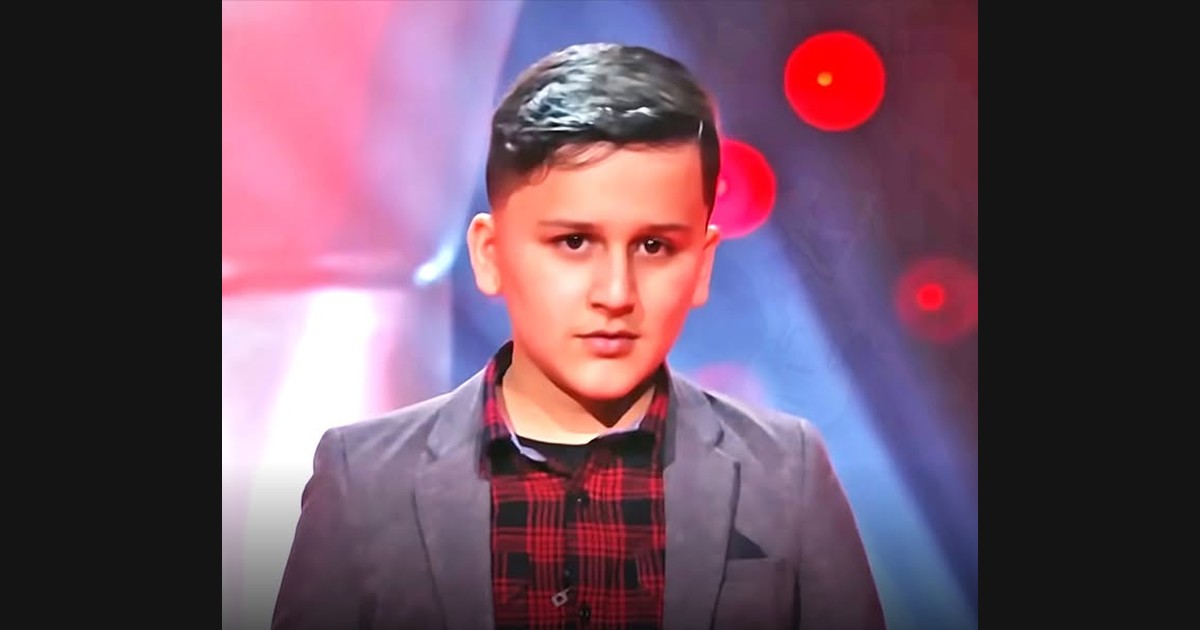
A singer returning to the same song does not necessarily repeat the same task. Abu’s official The Voice Kids Vlaanderen uploads identify “My Heart Will Go On” in two different program settings: a blind audition and a sing-off. Keeping those labels clear creates a more useful comparison than treating every circulating clip as another audition.
The song provides a constant across the selections. Celine Dion’s official catalog credits its writing to James Horner and Will Jennings. The melody and musical form can remain recognizable while the performer encounters another place within a competition’s sequence.
Watch on YouTube ↗
The audition introduces a musical account
A blind-audition presentation asks the audience to encounter a performer within a particular television format. That setting can attract attention toward decisions by the coaches, but the song offers another line of interest: how a complete musical thought is introduced and sustained.
Follow the phrasing before looking for a reaction. Where does an idea begin, and what makes its conclusion feel clear? How does the accompaniment continue through a pause in the singing? These observations concern the performance itself rather than a guess about what a coach felt.
A famous song also brings expectations from outside the program. Viewers may remember a film, a recording, or another cover. Identifying your own reference helps distinguish recognition from an assessment of this particular interpretation.
Another round changes the surrounding stakes
Watch on YouTube ↗
The official sing-off label establishes a different program task. It does not by itself tell us every rehearsal decision, why the song was selected again, or what the performer privately hoped to change. Those questions require more than a finished upload.
The repeated composition nevertheless makes a focused comparison possible. Choose a phrase you can identify confidently in both recordings. Consider its pacing, the placement of emphasis, and how it connects with the next idea. A specific comparison is more useful than declaring that a singer improved simply because one clip belongs later in a program.
Also distinguish the audible performance from the captured presentation. Different editing, accompaniment balance, or framing can change what seems most prominent. Where the cause of a difference is uncertain, describe the effect without assigning an unsupported explanation.
A compilation adds another title, not necessarily another occasion
Watch on YouTube ↗
The final feature packages audition material for another audience. A dramatic title can foreground age or visible reactions, but those labels should not replace the official program-stage information. An age stated in a historical clip is not a current biography.
For the same reason, a compilation should not automatically be treated as a third independently established performance of the song. It is another presentation to identify before drawing conclusions about chronology.
A compact comparison can use three headings: song, round, and delivery. Under song, note what remains recognizable. Under round, record only the official label. Under delivery, describe one phrase-level observation supported by the sound. That method leaves room to appreciate Abu’s interpretation without inventing personal motivations, predicting a result, or allowing a reaction-centered headline to become the whole musical story.


