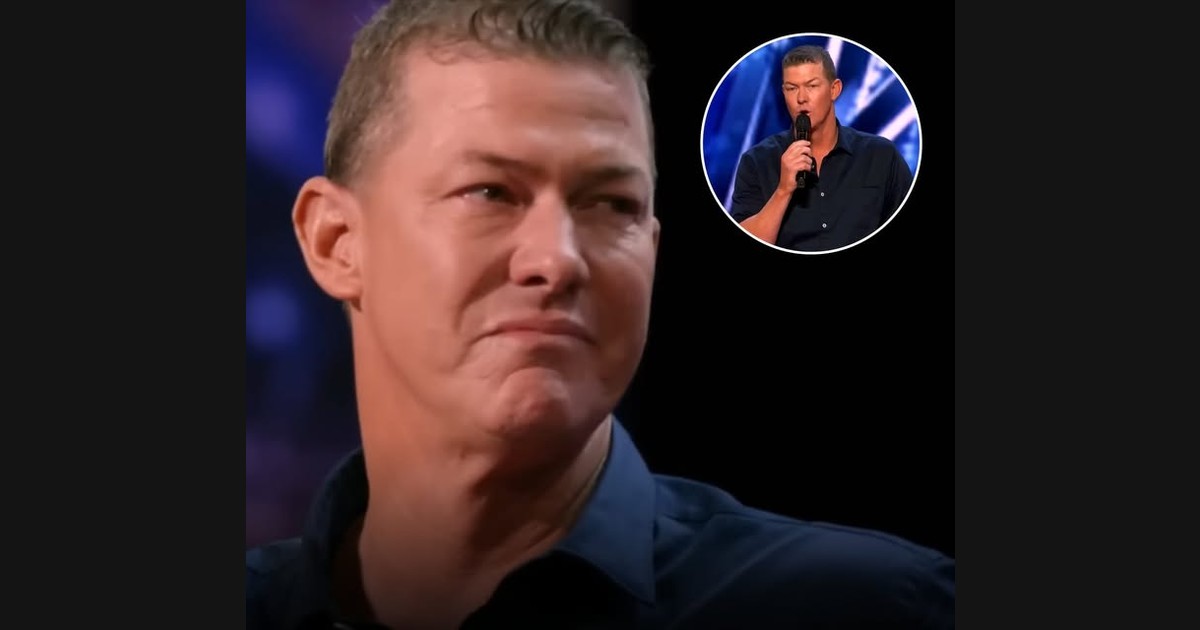
Songs do not all speak from the same point in time. Some look backward over a life; others address an unresolved situation in the present. Matt Mauser’s “Against All Odds” audition and his “A Mi Manera” video make that difference worth considering before the discussion turns toward vocal force or biography.
The first song is a Phil Collins composition, credited by the Academy for the 1984 film. The second is identified by Mauser as a Spanish version of “My Way.” Their contrasting narrative positions give the same performer different kinds of musical address.
Watch on YouTube ↗
An appeal directed toward someone
The full title “Against All Odds (Take a Look at Me Now)” points toward an act of address. A speaker wants another person to attend to a present situation. The listener can therefore consider not only what the narrator remembers, but what the narrator is trying to communicate at this moment.
That distinction affects how a phrase might be heard. A statement can sound like explanation, appeal, disbelief, or an effort to make someone understand. Those possibilities belong to interpretation; they do not require us to know precisely what the performer was thinking while singing.
Follow the direction of a complete thought. Does a phrase seem to move toward a response that never arrives within the song? Does a repeated idea sound more settled or more unresolved when it returns? The question concerns the composition’s dramatic position rather than an attempt to reconstruct a private conversation.
Past events can remain active in the present
A song can mention what has happened while still being oriented toward what the speaker wants now. Remembered events and present address operate on different levels. The musical setting may connect them through recurring material, letting an earlier idea return with another emphasis.
A useful note has two headings: “remembered” and “addressed now.” Place a broad narrative observation under each without copying the lyrics. Then consider whether a musical return connects the two. This gives the writing a structure beyond a general label such as heartbreak.
Watch on YouTube ↗
A retrospective stance changes the task
“A Mi Manera” provides a contrasting position. Mauser’s own description explicitly frames its video as a look back through photographs and film of family and friends. Retrospection organizes experience from a later vantage point rather than simply asking an absent person to respond.
Listen for the sense of a phrase arriving at a conclusion. Compare that with the feeling of an appeal remaining open in the audition song. These are possible dramatic effects to examine, not rules that every interpretation must follow.
The images add their own account of time. A photograph can point to an earlier moment while the vocal performance happens in the present. Keeping those layers distinct helps explain how a music video can create a retrospective frame without making every sung statement a literal caption for an image.
Watch on YouTube ↗
The audition feature returns to the television context around “Against All Odds.” It should remain identified as related presentation material rather than a separately established performance date.
After comparing the selections, describe where each narrator seems to stand in relation to time. Is the song asking, remembering, assessing, or concluding? That vocabulary explains something specific about Mauser’s repertoire: the same voice can inhabit different dramatic positions, and an expressive performance does not have to reduce them all to the same personal story.


