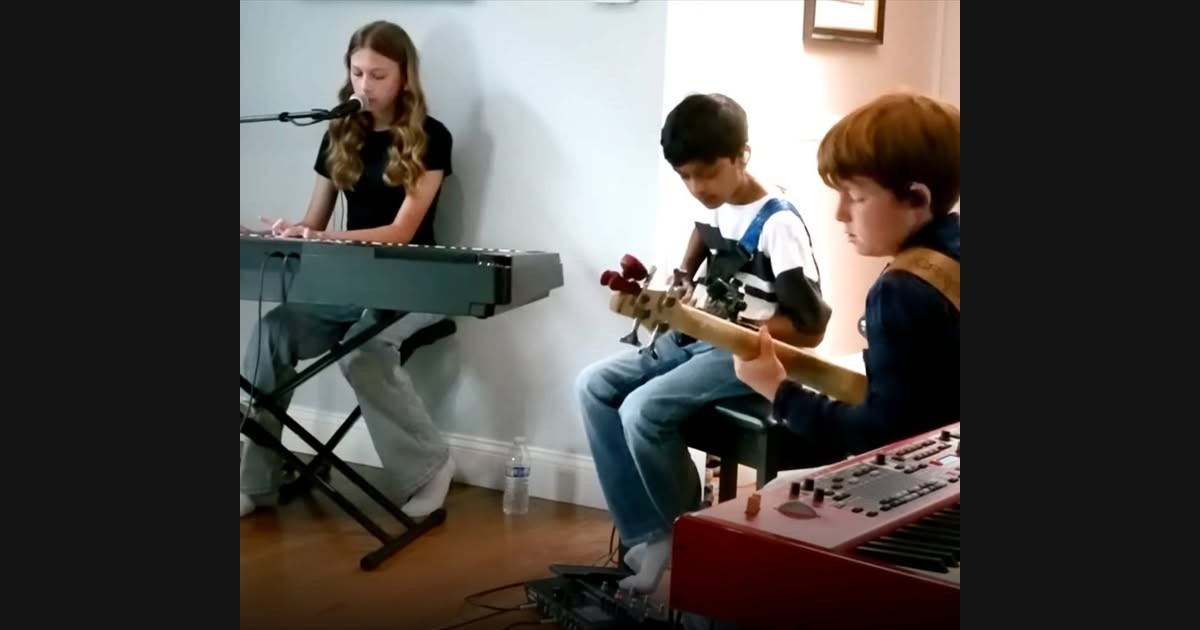
A reaction video contains two performances of attention: musicians play, and commentators explain what they notice. The Graystones’ “I Can’t Tell You Why” appears here through Glenn and Adrian’s Rock Talk, whose upload explicitly presents a reaction to the cover. Knowing that format helps a viewer separate the band’s work from the discussion around it.
The companion selections provide two useful references: the Graystones’ own “Hold the Line” recording and the Eagles’ official “I Can’t Tell You Why” video. They allow the conversation to move between commentary, a direct band presentation, and the source artist’s repertoire.
Watch on YouTube ↗
Observation and interpretation are different layers
A reviewer might identify an audible event, explain a musical relationship, or offer a preference. Those are not interchangeable claims. “Another part enters” describes an event; “the entrance supports the vocal” interprets its function; “I prefer this balance” expresses a judgment.
Use those categories while watching the discussion. They make it easier to decide what you can check in the performance and what belongs to the commentators’ response. Agreement is not required for the format to be useful. A specific observation can direct your attention toward something you might otherwise have missed.
Interruptions also change the experience of a song. A pause can help explain a detail while breaking the continuity that gives the detail its original place. If the presentation returns to a passage, consider both the isolated feature and its relationship to what surrounds it.
The cover is still an ensemble
For the band material, follow relationships rather than a succession of individual talents. A foreground melody needs a setting; accompanying parts can supply continuity, motion, or a response between phrases. The important question is how those functions fit together.
A close recording environment does not establish that the audio is unprocessed, that there were no earlier attempts, or that every visible action explains the complete mix. Those production claims are separate from appreciating the ensemble’s musical organization.
Watch on YouTube ↗
A direct Graystones reference
The band’s official “Hold the Line” upload changes the song while retaining the performing group. It gives a viewer a direct artist presentation beside the commentary-led entry point. Its credit to J8KE also reminds us that collaborators should be identified according to the recording rather than assumed to be permanent members.
Compare how a lead idea is supported in each selection. Do not expect two different songs to demand identical textures or pacing. Adaptability can involve making the band’s roles serve the particular composition instead of imposing one unchanged treatment.
Watch on YouTube ↗
Return to the Eagles’ song
The Eagles’ official catalog places “I Can’t Tell You Why” on The Long Run, their 1979 album. Their video supplies a source-artist reference outside both the Graystones cover and the reaction format.
After the comparison, write one observation of your own before revisiting a reviewer’s conclusion. Name a phrase, a transition, or a supporting role you can hear. That simple step keeps commentary useful as an invitation to listen while preserving your ability to distinguish the performance, its source material, and another person’s explanation of it.


