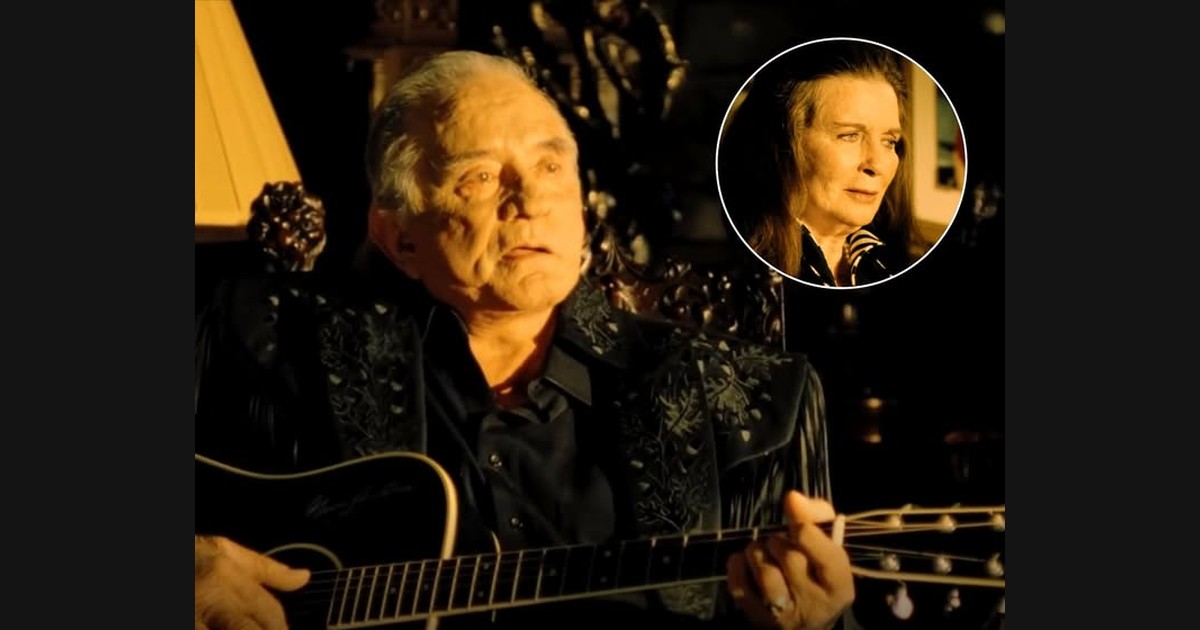
Johnny Cash’s “Hurt” has two connected identities: a recording of an existing song and a directed music video. Cash’s official site identifies Mark Romanek as director, while the album catalog places the track on American IV: The Man Comes Around, released in November 2002.
The film brings a close performance frame together with archival material. The soundtrack continues while the images move among different periods and kinds of scene. That relationship makes time part of the presentation rather than simply background information about when the recording was made.
Watch on YouTube ↗
A cover supplies another speaking voice
Cash interprets Trent Reznor’s composition rather than claiming it as a newly written Cash song. A familiar performer can make a work strongly associated with his own public identity without changing its authorship.
The distinction is important because the video’s biographical associations are powerful. Images connected with the performer can encourage a listener to hear the words through a life story. That is a presentation the film creates, not proof that every line was written as a literal description of that life.
Archive images change the relationship with the present
An archival image carries another time into a current sequence. When it appears beside a later performance image, the viewer can compare periods without being told every date aloud. The continuing song supplies the thread holding those changes together.
This differs from a conventional concert document. A concert video primarily records an occasion; a directed music video can assemble material from several sources to develop an interpretation. It has a visual argument as well as a musical progression.
For a focused viewing, follow the relationship between a complete musical thought and the images around it. Does an earlier image add context to the ongoing line? Does the return to the performer change your sense of time? These questions examine the construction without inventing private memories or assigning a diagnosis to an expression.
The album places Hurt within a wider selection
The official American IV listing includes established material such as “Bridge Over Troubled Water,” “Personal Jesus” and “In My Life.” “Hurt” belongs to that broader practice of interpreting a varied songbook.
The album context matters because it keeps the song from appearing as an isolated accident. The performer is making repertoire choices, while the video gives one of those choices a distinctive visual form.
A live recording is another kind of document
The second upload presents a Cash performance labeled 2003. Its publisher calls it his final live appearance, but that broader historical claim is not needed for the musical comparison here.
Watch on YouTube ↗
A live record supplies a particular stage occasion. It does not have to perform the same work as Romanek’s image sequence to be valuable.
Another period in Cash’s performance catalog
The official “Folsom Prison Blues” video identifies a live Denmark recording. It gives listeners a further public setting for Cash’s music.
Watch on YouTube ↗
The three presentations remain distinct: a directed interpretation, a later live recording and another concert reference. “Hurt” is especially revealing because its film adds a relationship between past images and continuing sound. The song becomes part of a visual meditation on time while remaining a composition interpreted by Cash, not an unedited diary accidentally caught on camera.


